Our Lady of Guadalupe Wood Carving: A Warm Center for Catholic Prayer and Home
Some sacred images become familiar not because they are merely decorative, but because they give the eye a place to rest during prayer. Our Lady of Guadalupe is one of the most recognizable Marian images in Catholic life, carrying associations of tenderness, dignity, hope, and closeness to ordinary people. When interpreted as a colorful wood carving, the image also brings the warmth of natural material into the home. It can quietly connect faith, craftsmanship, and the daily rhythms of family life.
The BGCOPPER Our Lady of Guadalupe wood carving offers one way to bring this devotional image into a prayer corner or thoughtfully arranged living space. Its purpose need not be dramatic. Like a cross, a candle, or a well-used prayer book, sacred art can simply help create an atmosphere of attention—an invitation to pause, remember, and pray.
Why Our Lady of Guadalupe Holds a Special Place in Catholic Devotion
The devotion to Our Lady of Guadalupe is closely connected with the reported Marian apparitions to Saint Juan Diego in Mexico in 1531 and with the image associated with his tilma. Over the centuries, the Guadalupe image has become especially important throughout Mexico and the Americas, while also finding a home in Catholic communities around the world. Catholics commonly recognize Our Lady of Guadalupe as Patroness of the Americas, and many also turn to her in prayers for families, mothers, and unborn children.
Several visual details make the image immediately recognizable: the bowed head, hands joined in prayer, a mantle surrounding the figure, and the radiant form that frames her. These elements are often read as signs of humility, prayerfulness, and maternal care. Sacred art does not replace prayer or the life of faith; instead, it can support remembrance. The image may recall Mary's response to God, her place in the story of Christ, and the Christian call to receive others with compassion.

The Quiet Warmth of Carved Wood
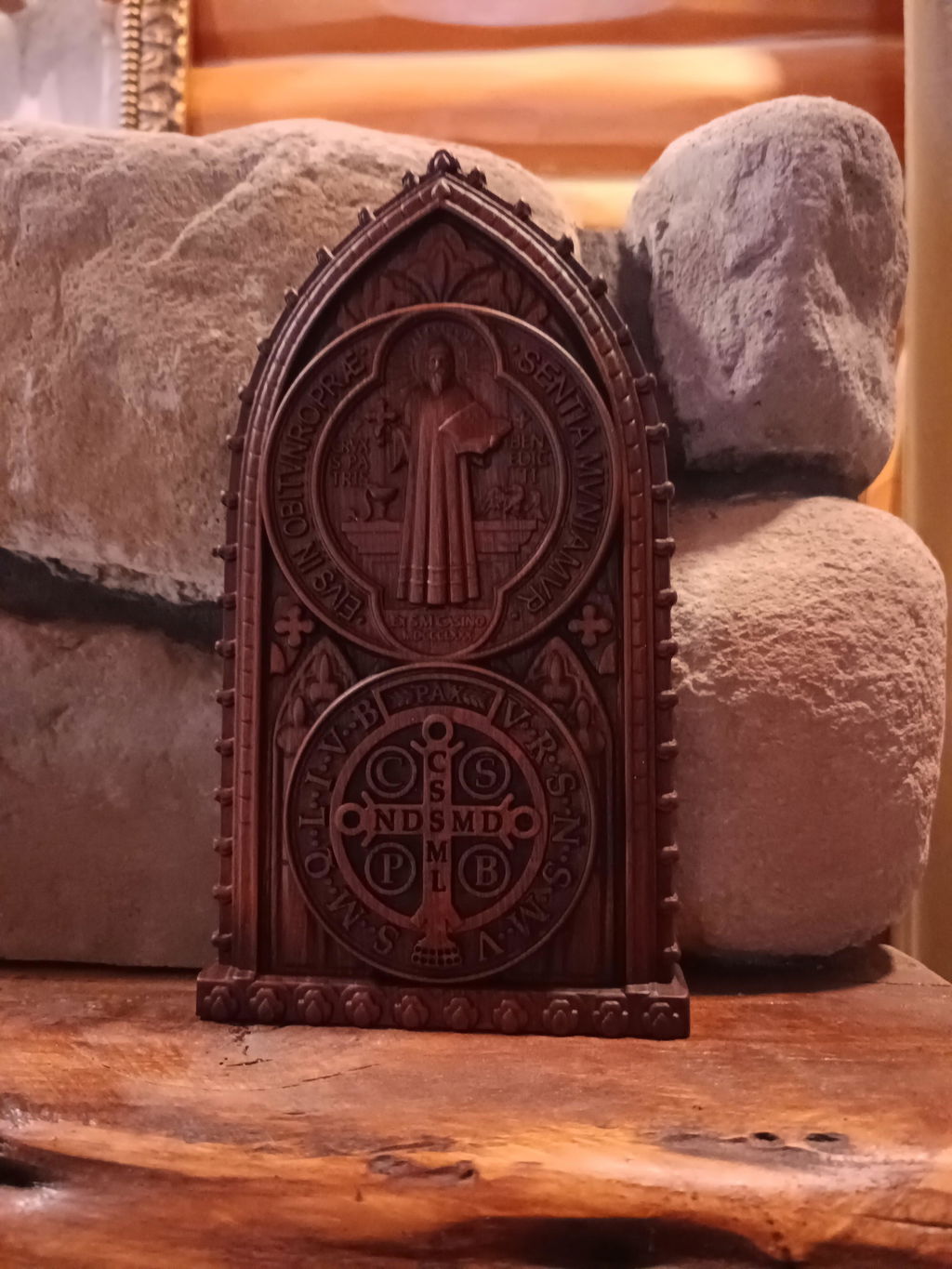
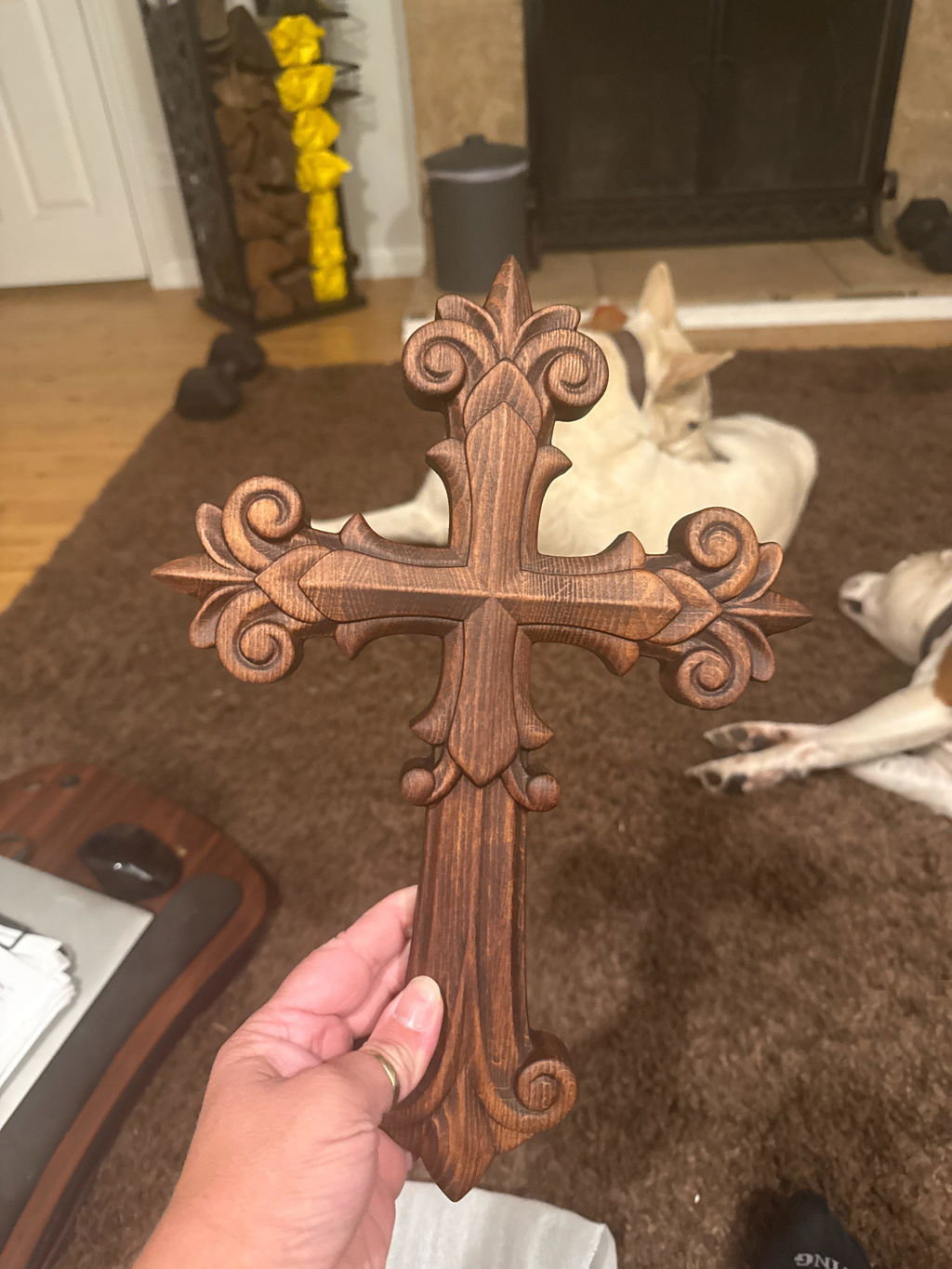
Wood has a distinct presence in Christian home decor. Its grain, tone, and tactile character can feel grounded and approachable, especially beside textiles, books, candles, or simple pottery. Unlike a glossy or highly formal decorative surface, carved wood often suggests the patient work of shaping a natural material. Small changes in contour and depth help light move across the image, allowing the piece to look subtly different from morning to evening.
This particular design is described as a solid wood carving and uses color to emphasize the familiar form of Our Lady of Guadalupe. The combination of carved relief and painted detail creates a balance between rustic warmth and visual clarity. It can work in traditional Catholic decor, but it can also sit comfortably in a more restrained interior where one meaningful object is allowed to become the focal point.
There is also a useful symbolic harmony between wood and Christian imagery. Wood is humble, enduring, and closely tied to ordinary human work. Without making the material carry more meaning than it should, many believers appreciate the way it recalls simplicity and craftsmanship. A wooden devotional piece therefore feels at home in spaces intended for reflection rather than display alone.

Creating a Catholic Prayer Corner at Home
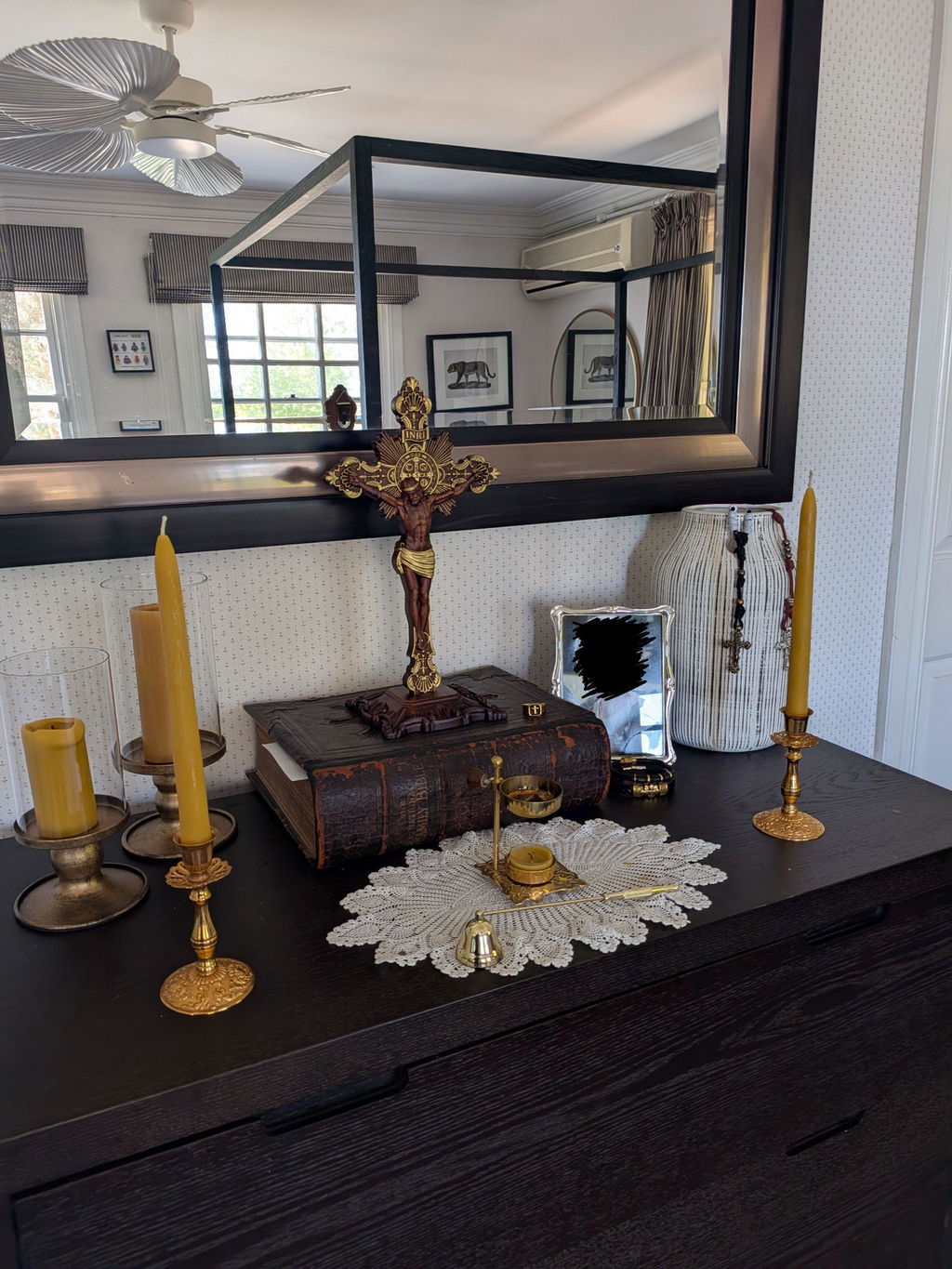
A home prayer corner does not require a separate room. A quiet shelf, a small table, or a section of a bedroom can become a consistent place for prayer. The most helpful arrangement is often simple: a sacred image, a Bible or prayer book, perhaps a rosary, and a candle used safely. Placing the image at a comfortable viewing height can make the space feel intentional without making it crowded.
An Our Lady of Guadalupe carved wall piece can serve as the visual center of such a corner. Colors from the carving may guide the surrounding palette: warm neutral walls, natural linen, muted red or green accents, and gentle lighting. In a family setting, the image might be placed near a shared prayer area. In a smaller home, it can provide a devotional focus without occupying a tabletop.
Consistency matters more than scale. Returning to the same place for a few quiet minutes can help mark the beginning or end of the day. The image may accompany the Rosary, personal intentions, prayers for children and parents, or simple silence. During Advent, Marian feast days, or family anniversaries, seasonal flowers or a small cloth can refresh the setting while keeping the central arrangement calm.
Living With Sacred Art Beyond the Prayer Space
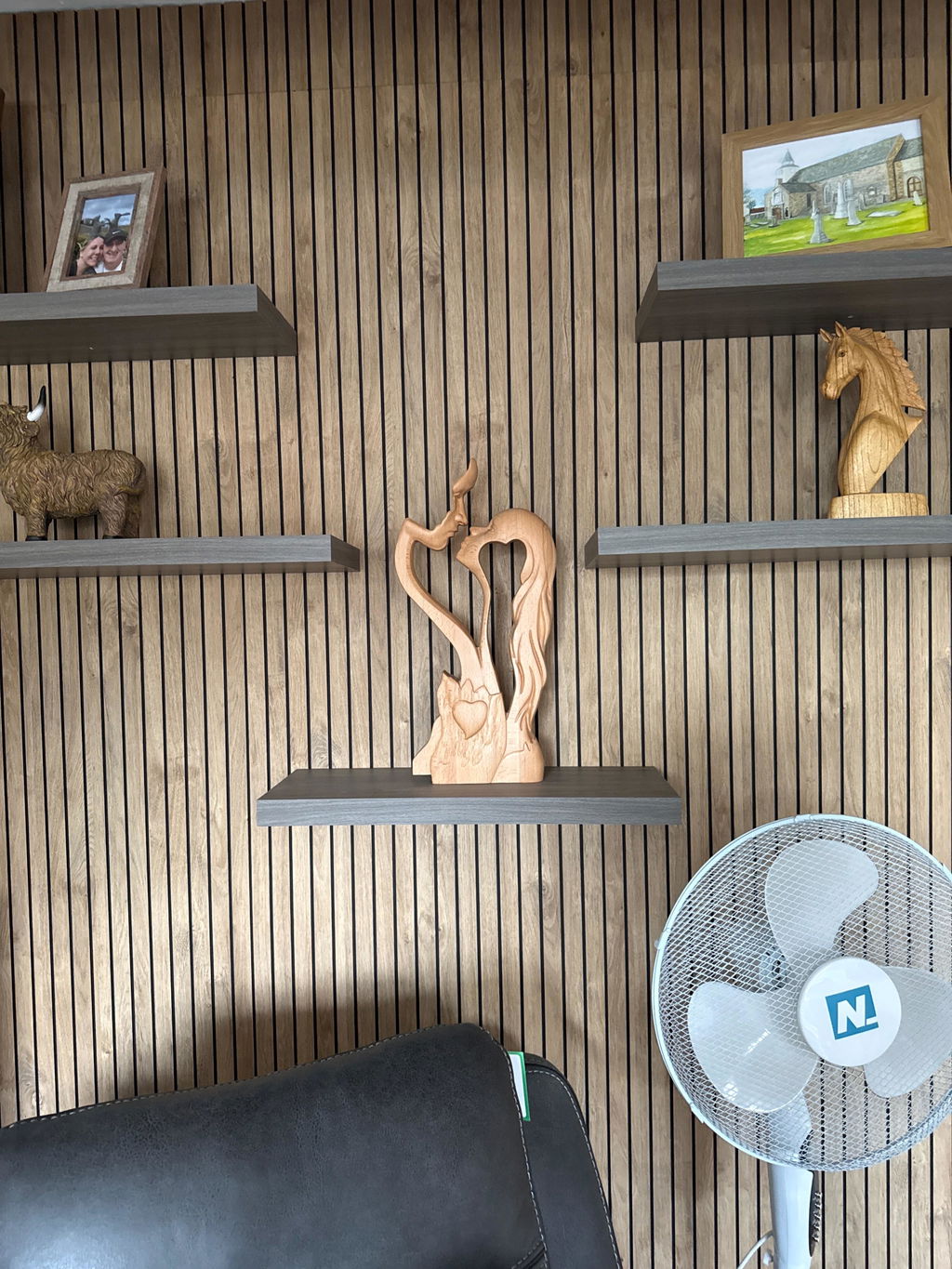
Religious art can also belong naturally in a hallway, entryway, or living room. In an entry, an image of Our Lady of Guadalupe may express the household's faith with gentle hospitality. In a living room, it can be grouped with family photographs and objects gathered over time, showing that faith is part of family memory rather than separate from it.
To avoid visual clutter, give a carved piece enough open wall around it. Natural light from the side can reveal its relief, although prolonged harsh sunlight is generally best avoided with decorative objects. Nearby wood furniture can create continuity, while a contrasting wall can make the colorful design easier to see. The goal is not to reproduce a church interior, but to let one sacred image bring depth and stillness to an everyday room.

A Thoughtful Faith-Inspired Gift
A devotional carving can be meaningful for occasions when the giver wants to acknowledge both faith and home. It may be considered for a baptism, First Communion, Confirmation, wedding, anniversary, Mother's Day, or house blessing. Our Lady of Guadalupe can carry particular resonance for recipients with Mexican or wider Latin American heritage, but her image is cherished far beyond any single culture.
The most thoughtful presentation leaves room for the recipient's own relationship with the devotion. A short handwritten note can explain why the image brought that person to mind without making assumptions about how it will be used. For a new home, the note might offer a prayer for peace and hospitality. For a mother or grandmother, it might express gratitude for her care. For someone facing uncertainty, it can simply communicate remembrance and companionship.
Because sacred gifts are personal, it is wise to consider the recipient's tradition and taste. Some people prefer vivid devotional art; others favor quieter natural tones. Looking closely at the carving's color, form, and intended hanging location helps ensure that the gift feels chosen with care rather than selected only for an occasion.
A Gentle Reminder in the Rhythm of Daily Life
The lasting value of Christian wood carving is often found in repeated, ordinary encounters. A person passes it on the way out the door, notices it while gathering the family, or looks toward it during a difficult evening. Over time, the object may become connected with prayers, feast days, and memories that cannot be planned in advance.
BGCOPPER's colorful Our Lady of Guadalupe carving brings together a beloved Catholic image and the approachable texture of solid wood. Whether placed in a dedicated prayer corner or integrated into the home, it can encourage a quieter kind of attention. Sacred decor is most meaningful when it points beyond itself—toward prayer, gratitude, compassion, and the hope carried through everyday acts of faith.