Pentagram Wooden Candle Decor: Symbolism, Craft, and a Reflective Home
Objects arranged around candlelight can change the character of a room. A simple wooden form, a quiet flame, and a few personally meaningful items often create a setting that feels more deliberate than decorative clutter. The BGCOPPER pentagram wooden disc candle holder brings those elements together in a circular, engraved design intended for an assembled display. Its visual language is distinctive, so understanding that language is an important part of choosing where and how to use it.
This piece is made from pine wood and uses laser engraving to define its central star and surrounding details. According to the product information, the finished arrangement measures 26 cm and includes a large round wooden plate, five small candle holders, and woodworking glue for assembly. Those practical details matter, but the deeper appeal of the design comes from the relationship between geometry, natural material, and symbolic meaning.
The pentagram and pentacle: reading the symbol with care
A five-pointed star is commonly called a pentagram. When the star is enclosed by a circle, it is often described as a pentacle. Meanings vary across periods, communities, and personal practices; no single interpretation covers every use. In many contemporary pagan or nature-centered traditions, the five points may be associated with earth, air, fire, water, and spirit. The enclosing circle may suggest unity, continuity, protection, or the cycles of nature.
The star has also appeared in different historical artistic and religious contexts, but it should not automatically be presented as a standard Christian or Catholic devotional emblem. For a Christian prayer corner, familiar symbols such as the cross, an icon, a rosary, or an image of a saint usually communicate Christian devotion more clearly. Someone creating an interfaith, comparative-symbolism, or personal reflection space may still appreciate the design, provided its context is understood rather than blurred.

Why wood changes the feeling of symbolic décor
Symbolic objects can feel formal when rendered in polished metal or stone. Wood has a different presence. Grain, tone, and small natural variations soften strong geometry and make an object easier to place alongside books, dried botanicals, crystals, textiles, or other natural materials. Pine also provides a light, warm foundation that can suit neutral interiors without losing the clarity of the engraved pattern.
Laser engraving creates contrast through line and surface rather than applied color. This keeps attention on the shape itself and allows candlelight to introduce changing highlights and shadows. The result can work as a focal point on a table, shelf, or dedicated reflection area. Because the product is designed for DIY assembly, placing its components can also become a small act of intentional preparation rather than a purely passive decorating task.
Creating a calm reflection or meditation corner
A reflective corner does not need to occupy an entire room. A stable tabletop or shelf can be enough. Begin with visual restraint: leave open space around the wooden disc, choose one or two supporting objects, and avoid mixing so many symbols that none retains meaning. A folded cloth, a journal, or a small natural object can add texture without competing with the star pattern.
Lighting should support the purpose of the space. When using candles, place the display on a stable, heat-appropriate surface, keep flames away from wood, fabric, paper, dried plants, and other combustible materials, and follow the candle maker’s instructions. Never leave a burning candle unattended. Flameless candles may be a practical alternative where open flame is unsuitable, especially in shared homes or spaces used by children or pets.

Respectful placement in Christian and Catholic homes
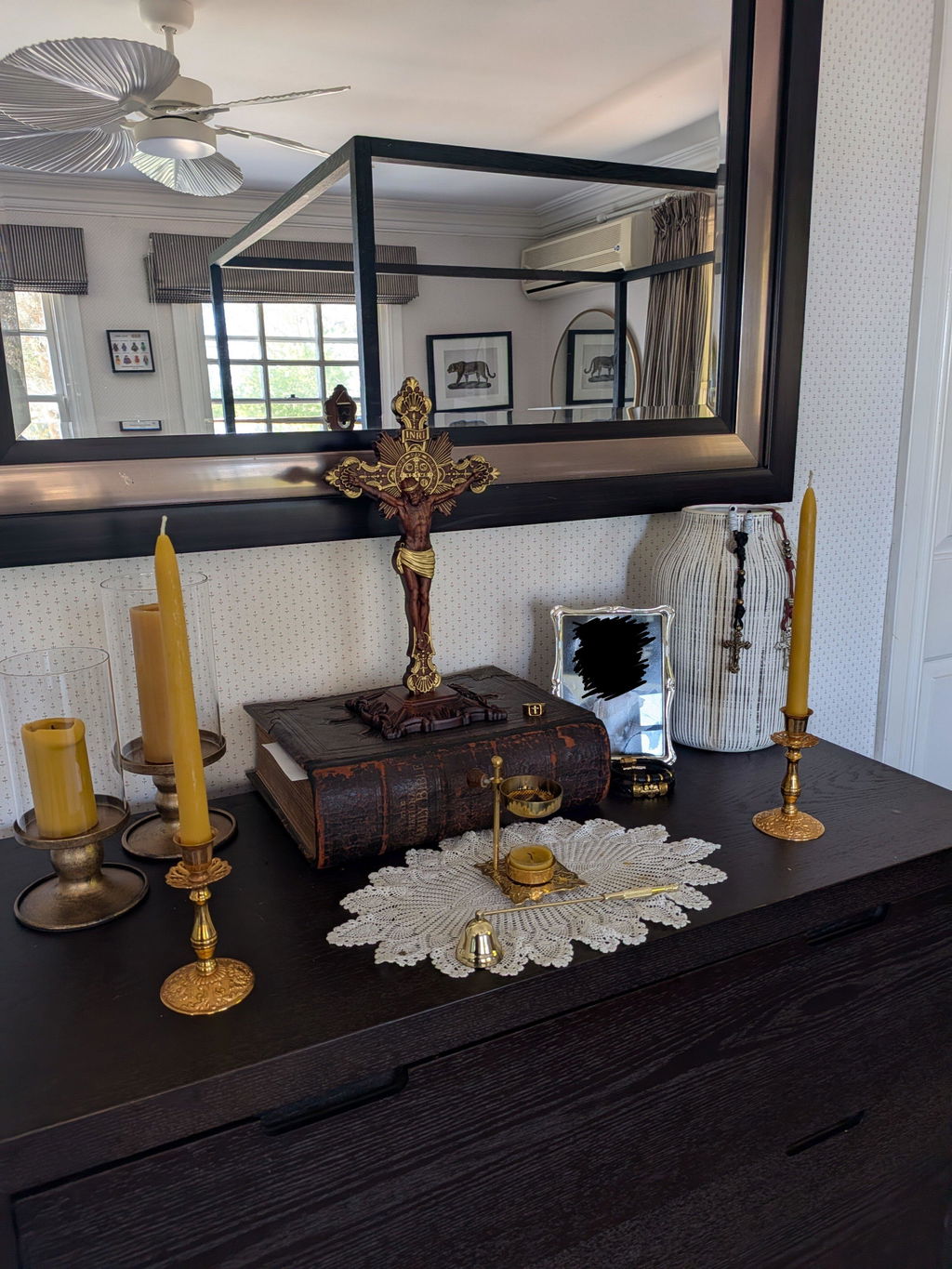
Homes often contain objects from several parts of family life: inherited décor, travel keepsakes, artistic motifs, and explicitly religious items. A Catholic or Christian household considering this wooden design may wish to distinguish between an aesthetic or historical-symbolism display and a devotional area used for prayer. That distinction helps preserve the meaning of crosses, sacred images, Scripture, rosaries, and other articles chosen specifically for Christian practice.
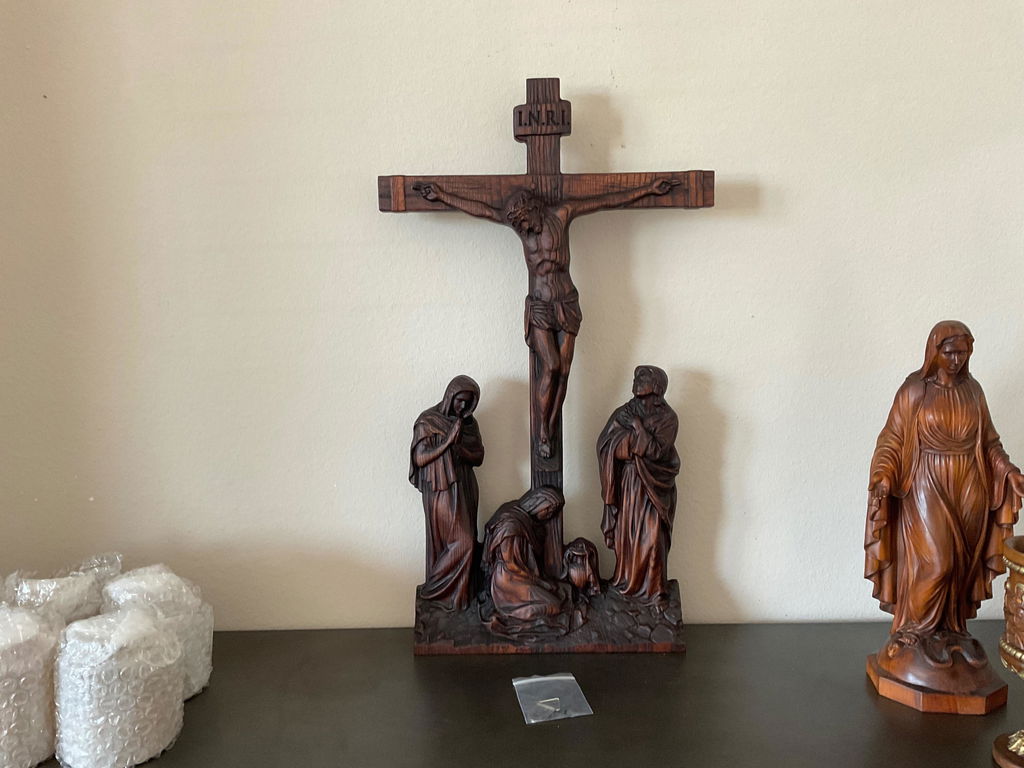
There is no need to force every decorative object into a Christian interpretation. Honest context is more respectful than assigning a meaning the object does not clearly carry. The pentacle description associated with this product emphasizes elemental and pagan symbolism, so it may be best suited to someone who values that tradition, studies comparative symbolism, practices meditation, or simply appreciates geometric wood décor. For shoppers seeking specifically Christian wood carving, a design centered on Christ, the cross, the Nativity, an angel, or a saint would offer a more direct devotional connection.
A thoughtful gift for the right recipient
Symbolic gifts are most meaningful when they reflect the recipient’s own interests rather than the giver’s assumptions. This design could suit a person interested in tarot décor, crystals, nature symbolism, ritual aesthetics, meditation spaces, or the history of sacred geometry. It may also appeal to someone who enjoys assembling and arranging their own tabletop displays.
Before giving it, consider whether the five-pointed star and circle have a positive, understood meaning for that person. A brief note explaining why you chose the piece can make the gesture feel personal: perhaps you admire their study of symbolism, their carefully arranged reading corner, or their preference for natural materials. The product page for this engraved wooden candle display provides the supplied components and product details, which are useful to review before deciding whether it fits the intended setting.

Caring for an engraved wooden piece
Wooden décor benefits from gentle handling. Keep the surface dry, avoid harsh cleaning products, and remove dust with a soft cloth. Prolonged moisture and strong heat can affect natural wood, so placement deserves as much thought as styling. Check assembled elements periodically and move the piece by supporting its base rather than lifting a small attached component.
Ultimately, the strength of this design lies in its clarity: a circle, a five-pointed star, natural pine, and places for candlelight. Used with informed symbolism and careful styling, it can anchor a quiet corner without overwhelming it. Whether selected for personal reflection, nature-centered practice, or a meaningful gift, its best setting is one in which the symbol is understood and the surrounding space is allowed to remain calm.