The Symbolism of the St. Benedict Medal: A Complete Guide.
A meditation on one of Christianity's most enduring sacred objects — its history, its prayers, and the quiet power it carries.
Who Was St. Benedict?
St. Benedict of Nursia (480–547 AD) is regarded as the father of Western monasticism. Born into a noble Roman family, he turned away from privilege and comfort to seek God in solitude — first as a hermit in the caves of Subiaco, and later as the founder of twelve monasteries, including the great abbey of Monte Cassino.
His Rule of St. Benedict — a guide to communal religious life built on prayer, work, and humility — remains one of the most influential spiritual texts ever written, still followed by Benedictine communities around the world today. The Church honors him as Patron of Europe, and his life was marked by miracles, spiritual warfare, and an unshakeable trust in divine providence.
It is from this life — and from the trials and protections he experienced — that the medal bearing his name draws its meaning.
The Origins of the Medal
The St. Benedict Medal as we know it today was formally approved by Pope Benedict XIV in 1742, though its roots reach back much further. A medal was discovered at Metten Abbey in Bavaria in 1647, covered in letters and symbols that puzzled scholars for decades. The key to decoding them was finally found in a manuscript dating to 1415 — revealing that each letter was the first word of a Latin prayer of protection and exorcism.
Since then, the medal has been used in blessings, exorcisms, and as a sacramental by millions of the faithful across centuries and continents. It is one of the most recognized sacred objects in the Catholic tradition — not because of superstition, but because of the depth of prayer encoded within it.
The Front of the Medal

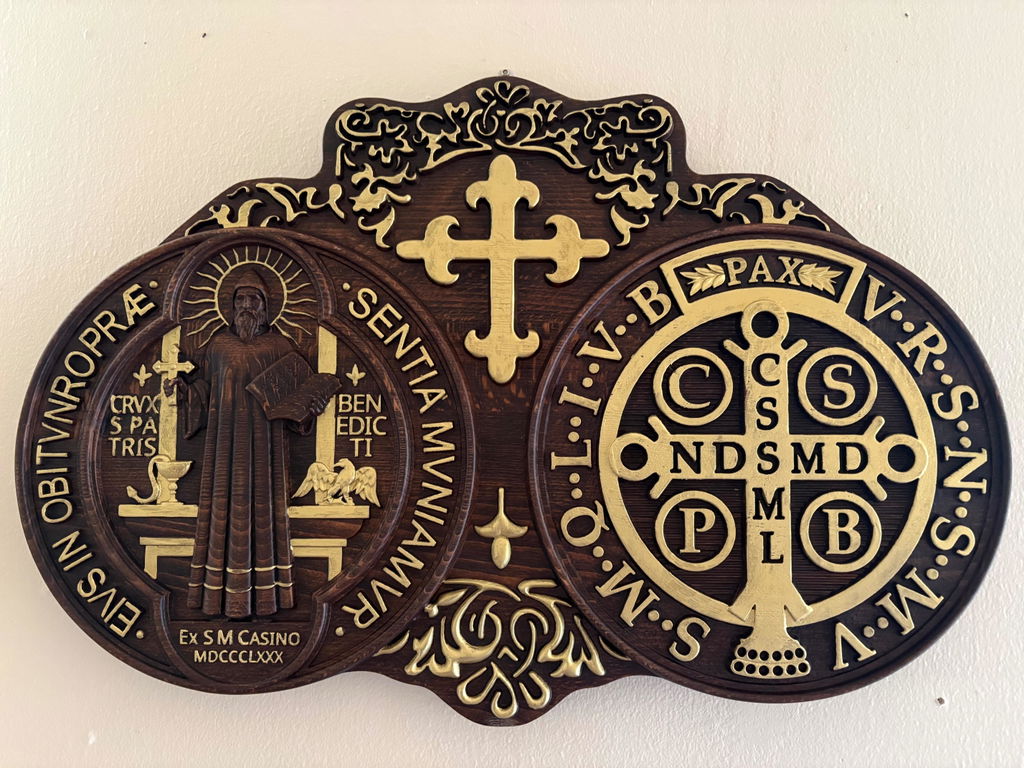
The double-sided St. Benedict medal — front and back, each carrying its own layer of sacred meaning.
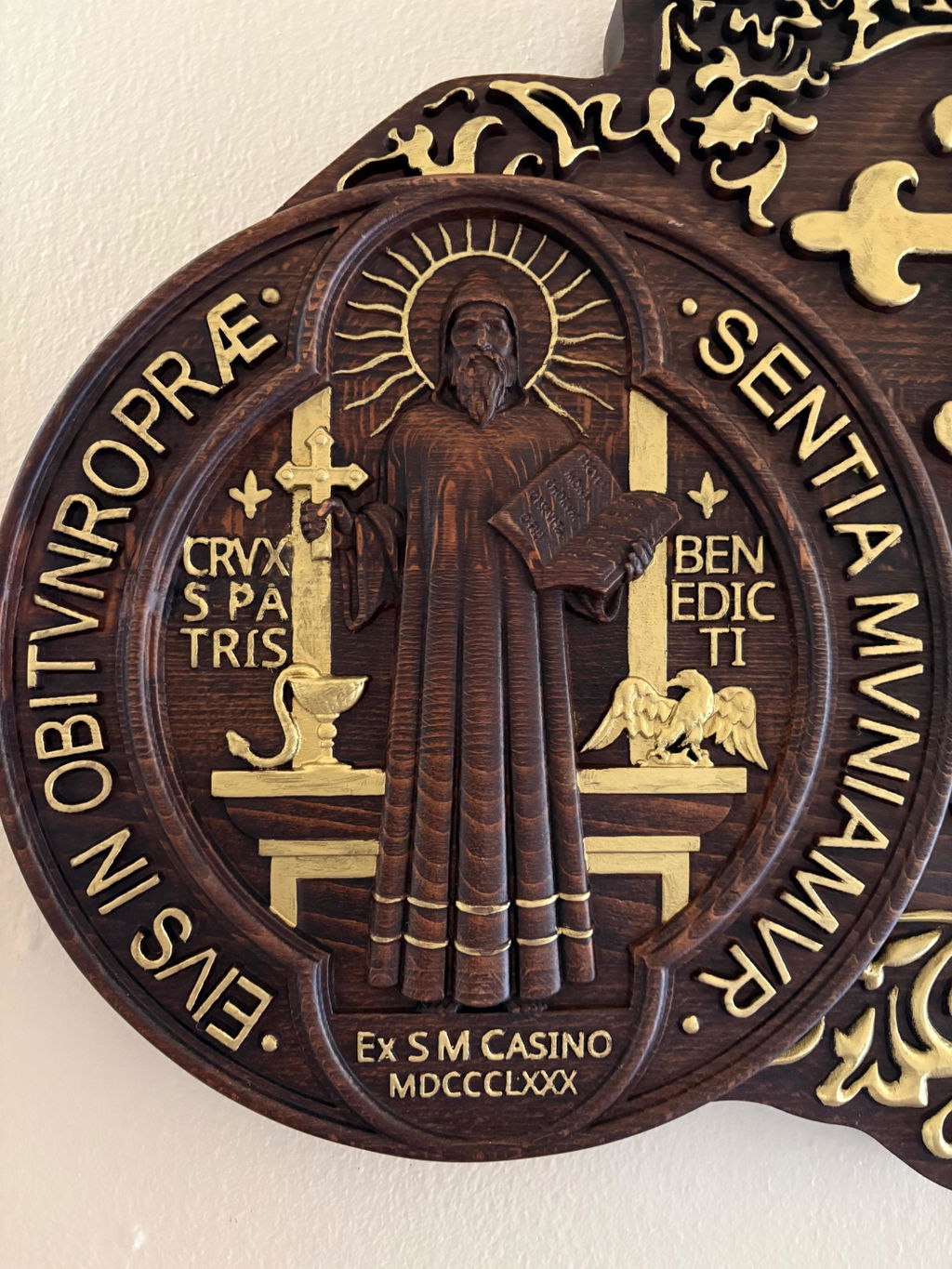
At the center of the front stands St. Benedict himself, robed in the black habit of his order. In his right hand he holds a cross — the sign of Christ's victory over death. In his left, the Rule — the fruit of a life given entirely to God.
To his right stands a broken cup. To his left, a raven. These are not decorative — they recall two of the most famous miracles of his life. A jealous priest once poisoned Benedict's wine; when Benedict made the sign of the cross over the cup, it shattered. The same priest later sent a poisoned loaf of bread; a raven, Benedict's faithful companion, carried it away before any harm could be done. These images speak of a life under divine protection — and of the power of faith to disarm even hidden dangers.
Around the image, the inscription reads: Crux Sancti Patris Benedicti — "The Cross of the Holy Father Benedict." The entire medal is framed as a cross-centered devotion.
The Back of the Medal — The Exorcism Prayer
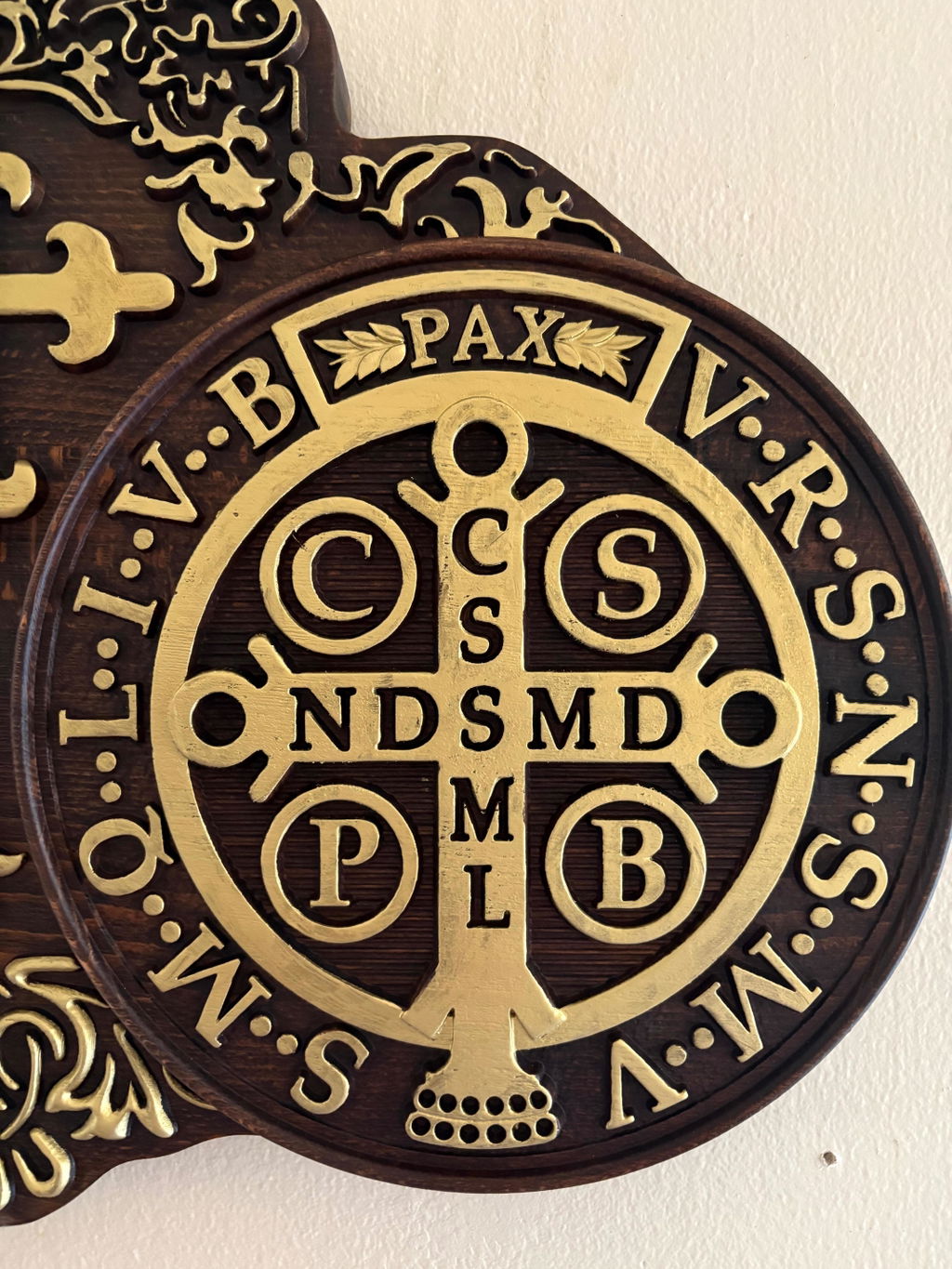
The back of the medal is where its most powerful symbolism lives. A large cross dominates the center, surrounded by a ring of letters — each one the first word of a Latin prayer that has been prayed against evil for centuries.
On the vertical bar of the cross:
C S S M L — Crux Sacra Sit Mihi Lux
"May the Holy Cross be my light."
On the horizontal bar:
N D S M D — Non Draco Sit Mihi Dux
"Let not the dragon be my guide." — a direct rebuke of Satan, called the ancient dragon in Scripture.
Around the cross, the circle of letters reads:
V R S N S M V — Vade Retro Satana, Nunquam Suade Mihi Vana
"Begone, Satan — do not suggest to me thy vanities."
S M Q L I V B — Sunt Mala Quae Libas, Ipse Venena Bibas
"Evil are the things thou profferest — drink thou thy own poison."
These are not incantations. They are prayers — declarations of faith spoken in the face of spiritual darkness, rooted in the conviction that Christ has already won.
At the very top of the back: PAX.
Peace. The single word that is the motto of the Benedictine Order — and the deepest longing of every human heart.
What the Medal Means to Those Who Carry It

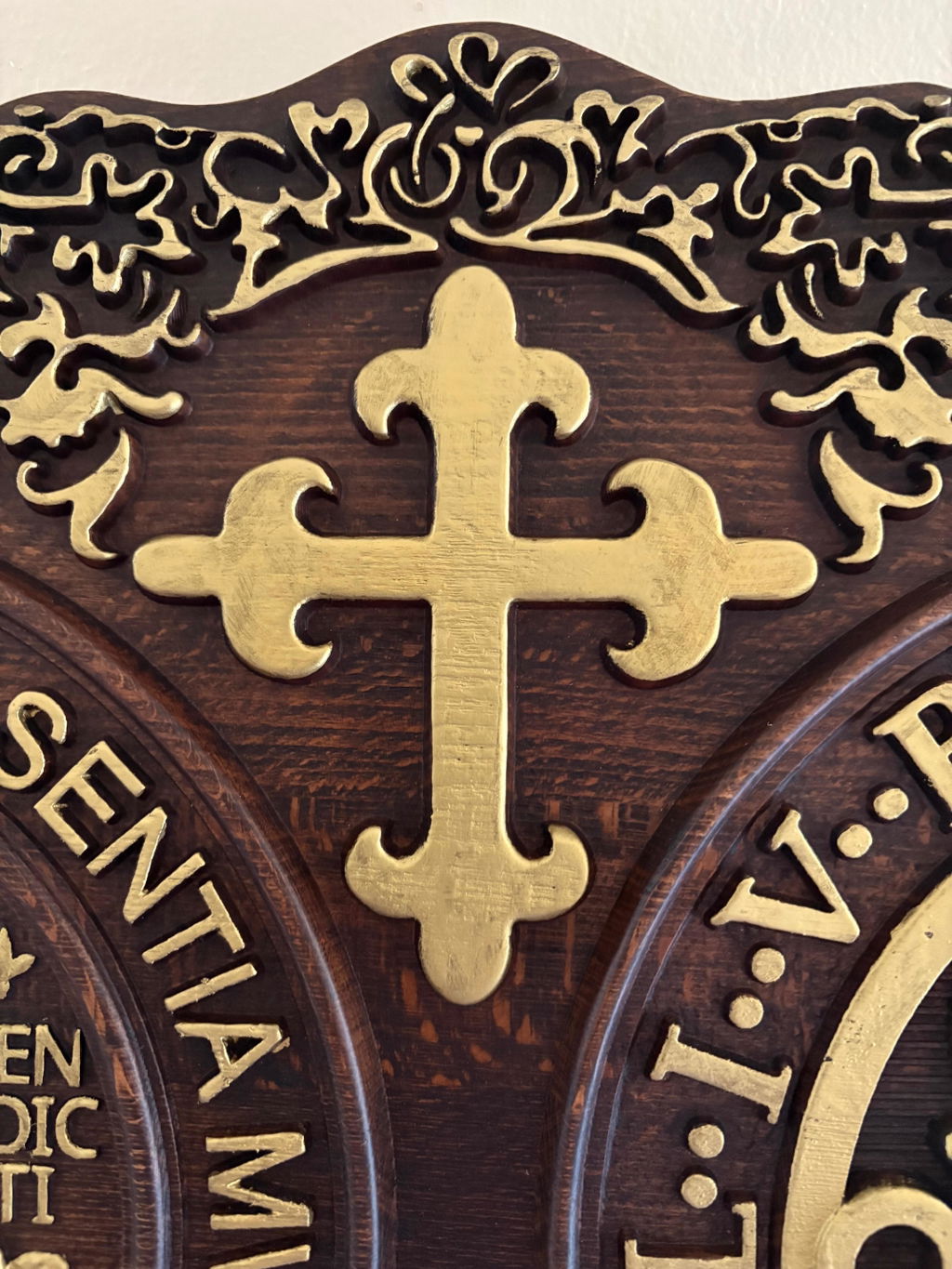
A hand-carved beechwood ornament bearing the full St. Benedict medal — for the home altar, the entryway, or the bedside.
The St. Benedict Medal is a sacramental — a sacred sign instituted by the Church to dispose the faithful toward grace. It is not a talisman or a lucky charm. Its power comes not from the object itself, but from the faith of the one who carries it and the prayers of the Church that bless it.
For many, wearing the medal is a daily act of surrender — a quiet way of saying: I place myself under the protection of the cross. I renounce what is evil. I seek peace.
It has been worn by soldiers going into battle, by mothers laboring in childbirth, by the sick and the dying, by those facing spiritual darkness they could not name. It has been placed above doorways, buried in the foundations of homes, given to children at baptism. In each case, the gesture is the same: an act of trust in a God who protects.
Faith Worn on the Wrist

A stainless steel beaded bracelet bearing the St. Benedict medal — a quiet declaration worn close to the pulse.
Beyond the neck, the medal has long found its place on the wrist — a form of devotion that keeps the symbol in constant, tactile contact with the body. The bracelet is not merely an accessory; it is a reminder. Each time the hand moves — in work, in prayer, in greeting — the medal is there. A small, steady anchor to what is holy.
The Medal in Prayer

A handcrafted maple wood crucifix bearing the Passion scene and St. Benedict symbols — the cross as the center of the home.
One of the most powerful expressions of St. Benedict devotion is the Benedictine crucifix — a cross that combines the image of Christ's Passion with the symbols of the medal. The INRI inscription, the crown of thorns, and the St. Benedict medal woven into the design together tell the full story: redemption through the cross, and protection through faith.
In many Catholic homes, the crucifix is the first thing hung on the wall of a new house — a blessing of the space and a declaration of what the family stands for.

St. Benedict exorcism prayer beads — the ancient warding prayer woven into every breath of devotion.
The exorcism prayer beads carry the same tradition in a more intimate form — worn on the wrist, held in the hand, present in the rhythm of daily life. Each bead is a breath. Each breath, a prayer.
The Medal as a Gift

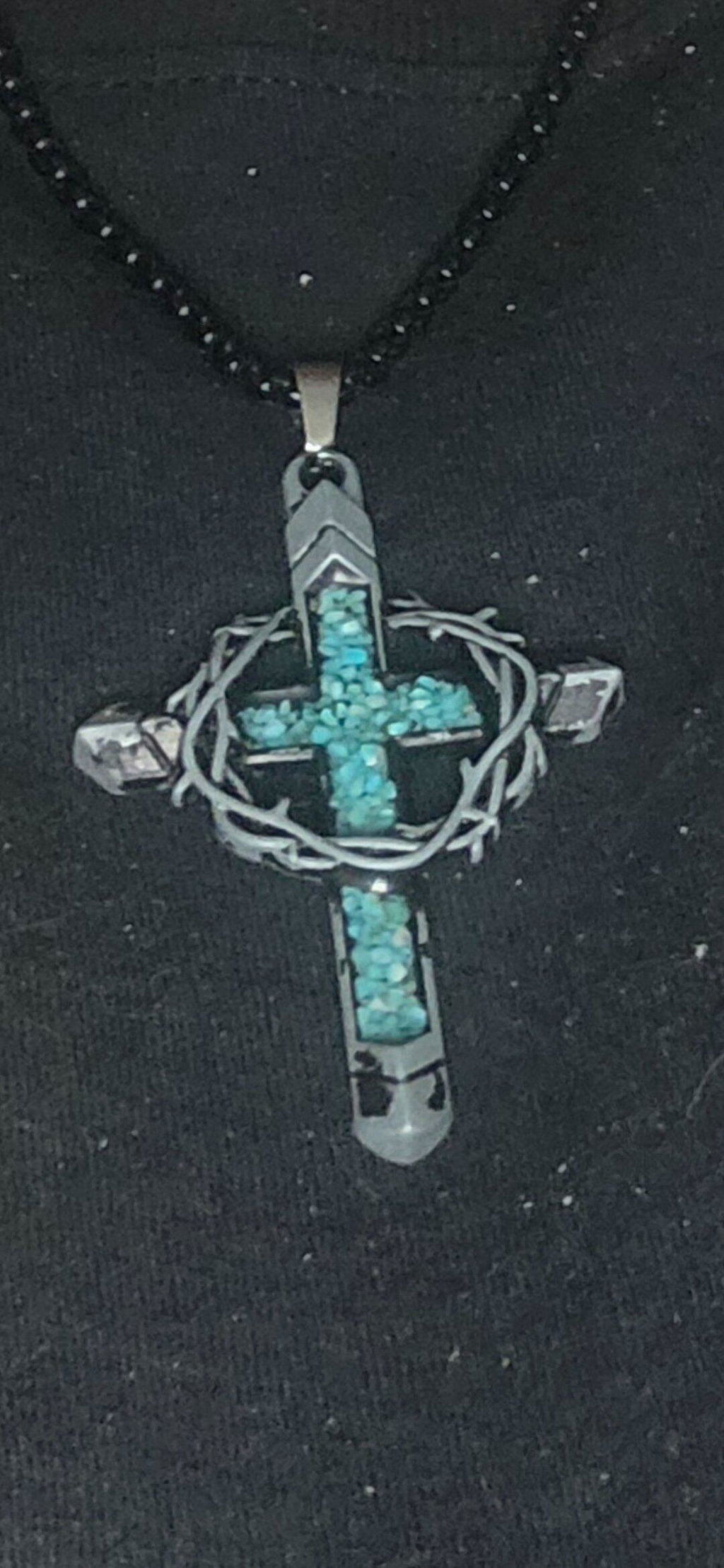
A St. Benedict cross set with cubic zirconia — faith that carries its own quiet radiance.
The St. Benedict Medal has long been given at the great thresholds of life — baptisms, confirmations, weddings, ordinations, and times of illness or grief. It is a gift that communicates something words often cannot:
I am praying for your protection.
I believe in God's power over darkness.
I want you to carry this faith with you.
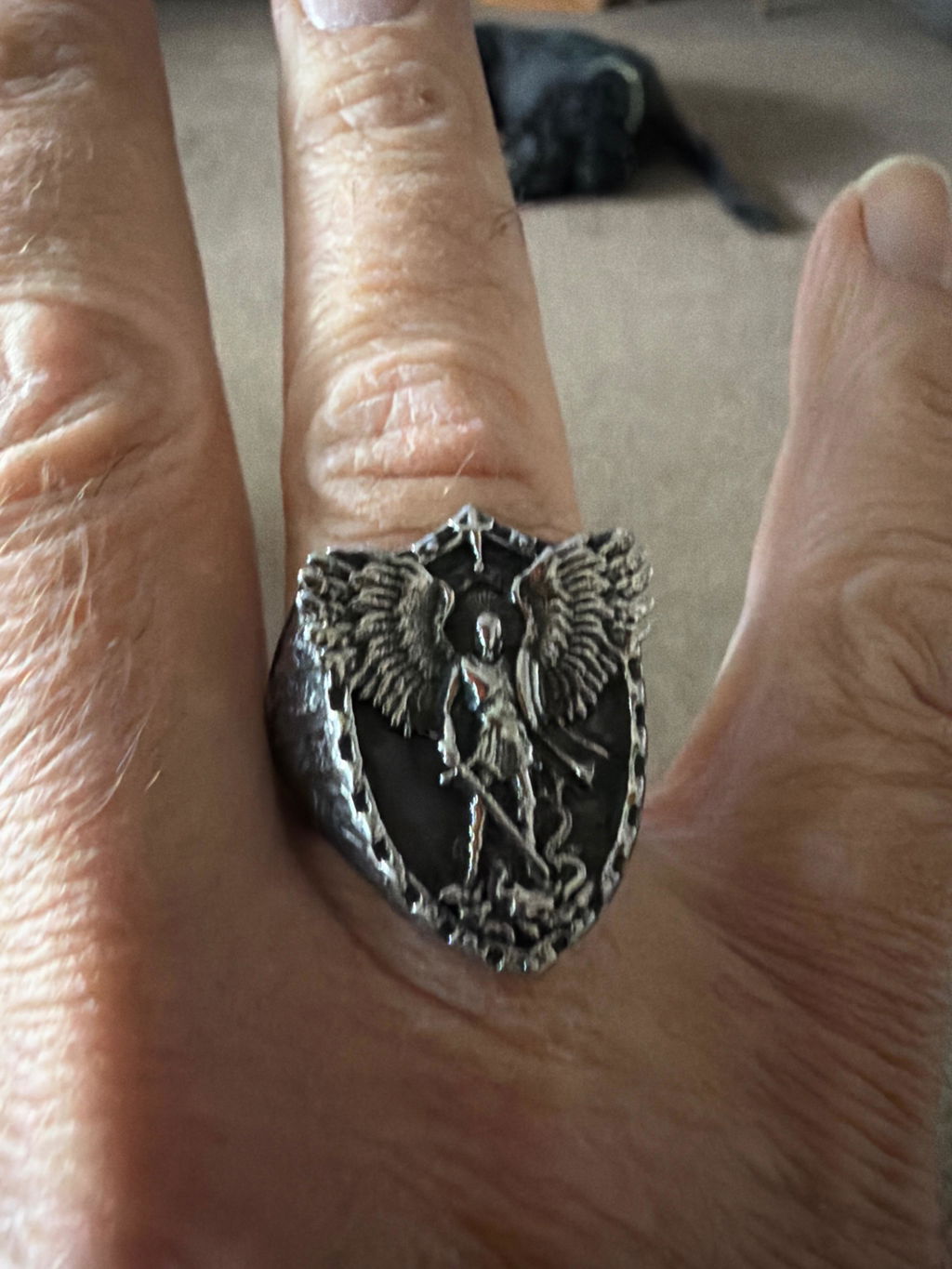
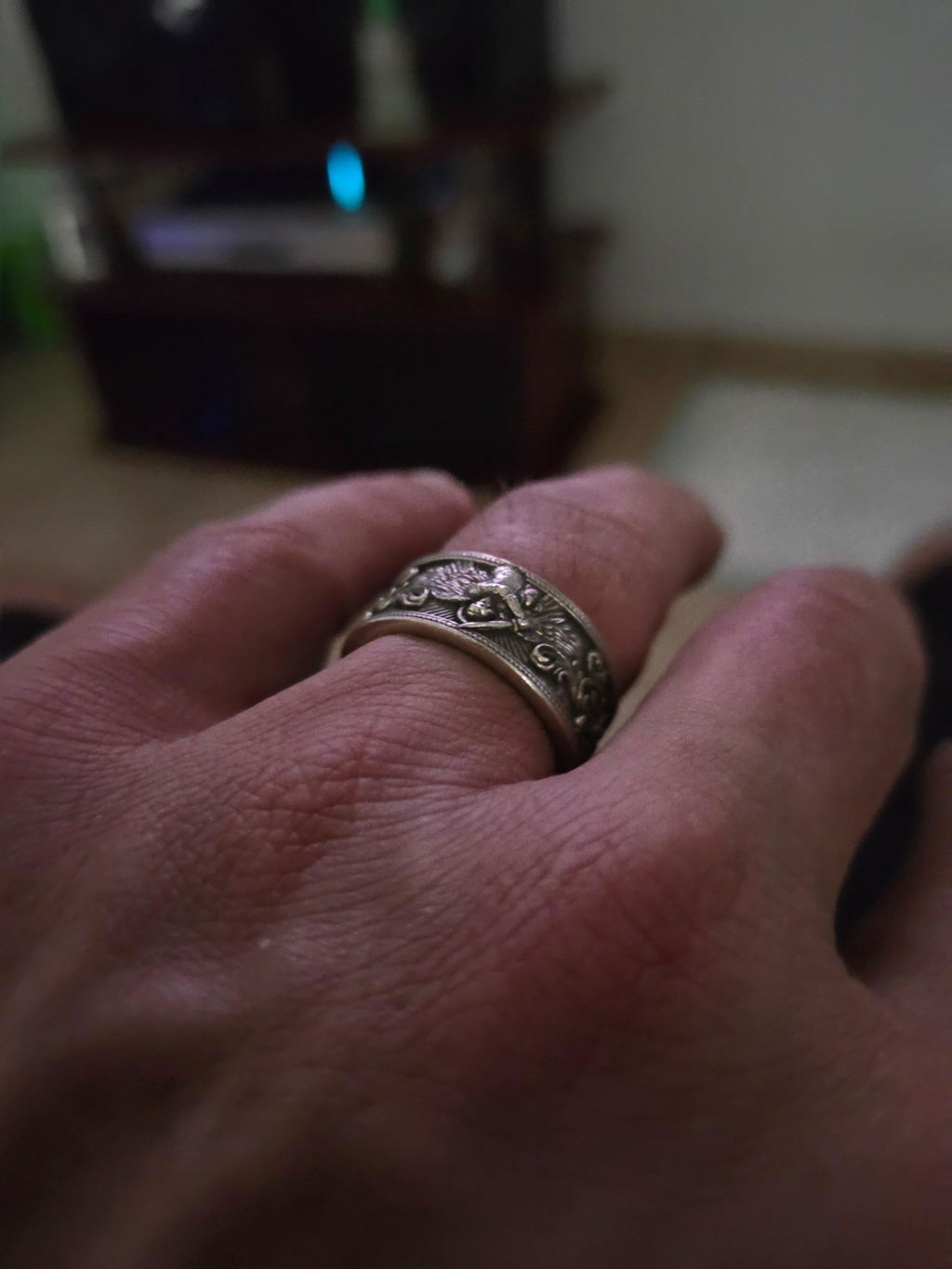
When choosing a medal as a gift, consider the person and the moment. A pendant for someone who wants to wear their faith. A ring for someone who wants the symbol always present — on the hand that works, that gives, that blesses.

S925K silver — the Crucifixion and the St. Benedict medal, united on a single ring.
Caring for the Medal
As a sacramental, the medal deserves respectful care. Clean it gently with a soft cloth, and store it carefully when not in use. If a medal is lost or worn beyond repair, the tradition is to dispose of it reverently — buried in the earth or placed in flowing water — rather than discarded.
It is also worth having the medal blessed by a priest, ideally using the official Benedictine blessing rite, which invokes the full weight of the Church's prayer over the object. A blessed medal is not more powerful in itself — but the blessing is an act of the Church, and carries with it the faith of the whole community.
A Final Reflection
The St. Benedict Medal is, at its heart, a prayer made visible. Every letter engraved on its surface is a word spoken against darkness. Every symbol is a story of faith tested and held. And the word at the top — PAX — is the promise that underlies it all.
Peace is not the absence of struggle. It is the fruit of a life oriented toward God — a life that has looked at the cross and found, in it, not defeat, but the deepest victory imaginable.
That is what the medal carries. That is what it has always carried.
May the Holy Cross be your light. Let not the dragon be your guide.