Mary and the Christ Child: Creating a Prayerful Home with Sacred Wood Carving
A home can hold reminders of faith in quiet, everyday ways. A Bible on a familiar table, a rosary beside a candle, or a sacred image near the place where a family gathers can gently redirect attention toward prayer. An image of Mary holding the infant Jesus is especially suited to this kind of presence. It does not need to dominate a room. Instead, it can invite a pause: a moment to remember the humility of the Nativity, the tenderness of motherhood, and the Christian belief that God entered ordinary human life.
The Our Lady and Child wooden plaque from BGCOPPER presents this familiar Christian subject in carved beechwood, with painted and gilded details that help define the figures and frame. Its devotional theme is clear, yet its natural material also allows it to sit comfortably among books, textiles, plants, and other elements of a lived-in home. For Christian and Catholic households, this balance between sacred meaning and domestic warmth can make religious art feel present rather than distant.
Mary and the Child Jesus: A Symbol of Nearness
Christian art has returned to the Madonna and Child for centuries because the subject expresses several truths at once. Mary’s embrace conveys care, attentiveness, and protection. The infant Jesus points toward the Incarnation—the mystery of Christ coming into the world not through visible power, but through vulnerability and dependence. Together, the two figures offer a visual meditation on love received and love freely given.
For Catholics, the image may also recall Mary’s faithful response to God and her role in the life of Christ. Honoring her in sacred art is not the same as treating the object itself as holy. Rather, the image can serve as a prompt for remembrance and prayer. Christians from different traditions may approach Marian imagery differently, but many recognize in this scene the humility of Christ’s birth and the intimate bond between mother and child.

Why Carved Wood Feels at Home in Devotional Spaces
Wood brings its own visual language to religious decor. Grain, tone, and carved depth give a piece a sense of warmth that differs from a flat print or a polished synthetic surface. Carving also makes light part of the design: highlights and shadows shift across the contours as daylight changes. That subtle movement rewards slow looking, which is one reason carved wood works naturally in spaces intended for stillness.
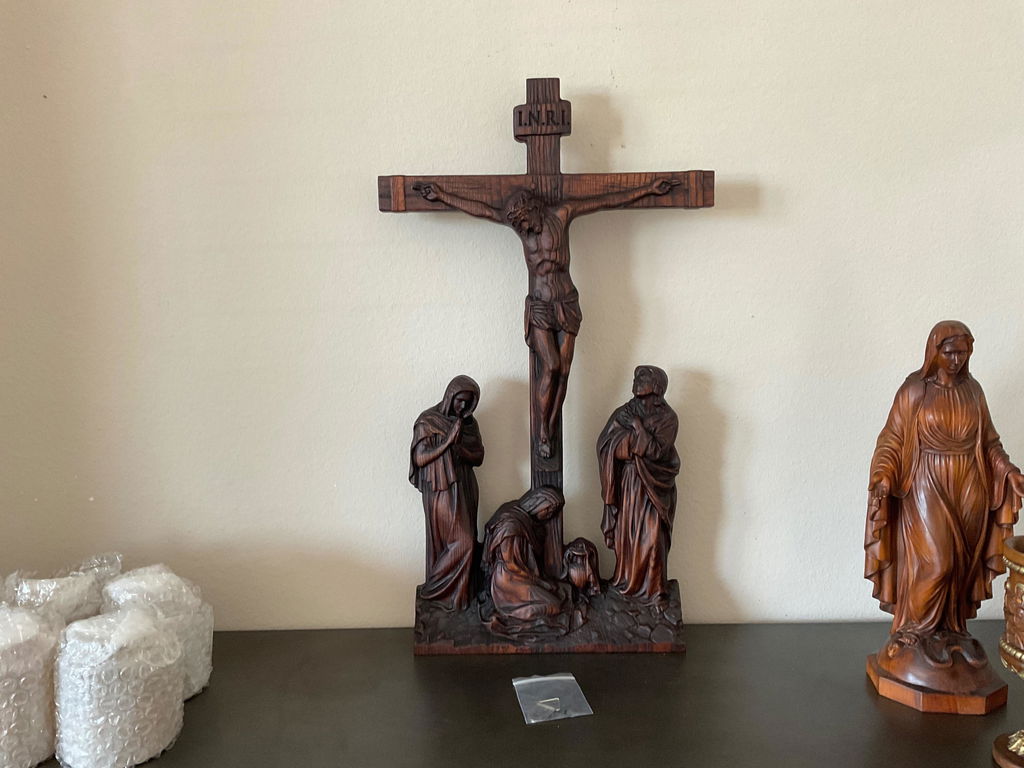
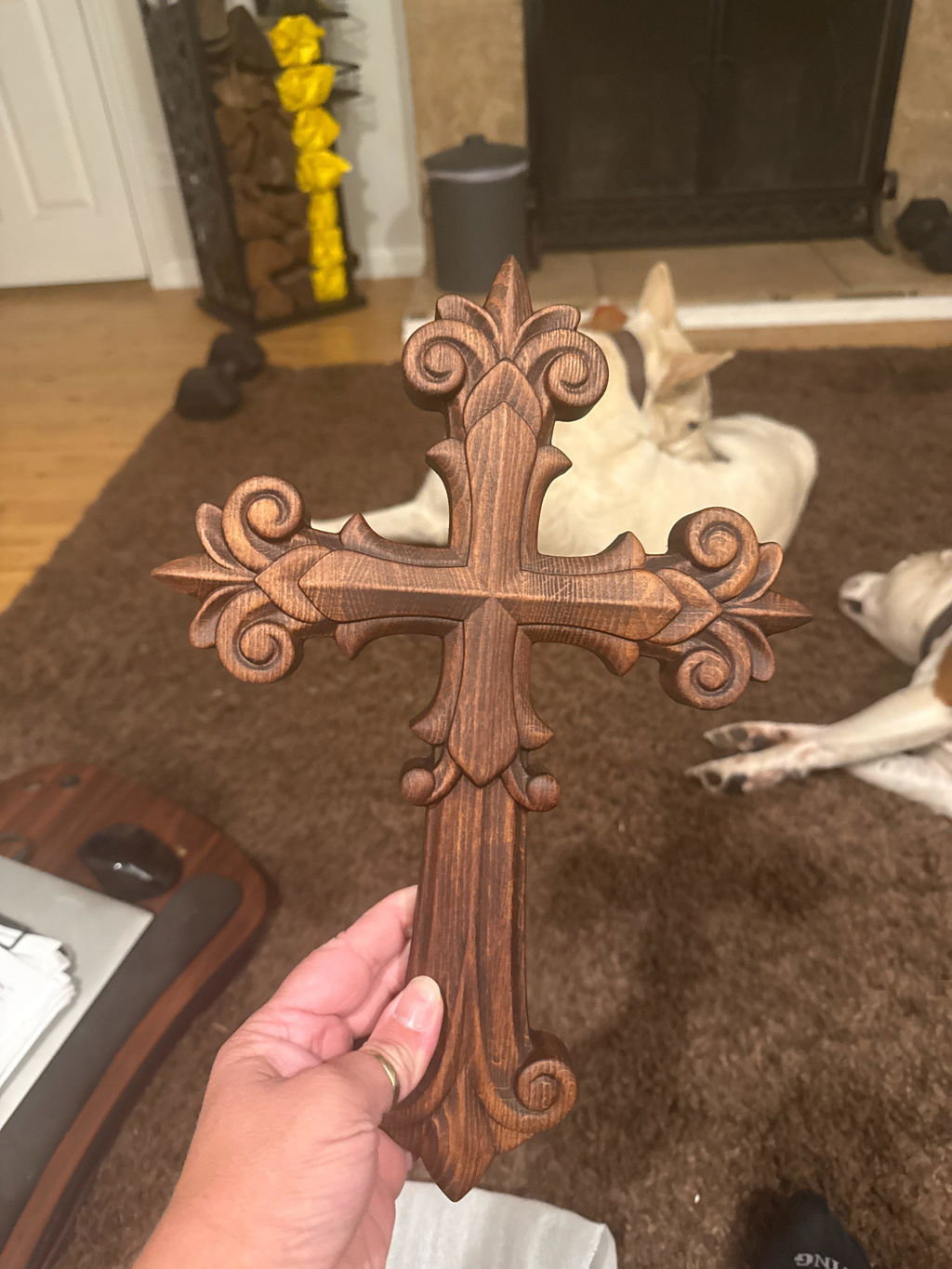
This plaque is described as hand-carved beechwood with painted and gilded accents. Those details create contrast around the figures while leaving the character of the wood visible. The result can complement both traditional interiors and simpler contemporary rooms. It may sit alongside dark furniture and antique devotional objects, but it can also add warmth to a pale wall, a clean shelf, or a modest bedside arrangement.
Building a Simple Catholic Prayer Corner
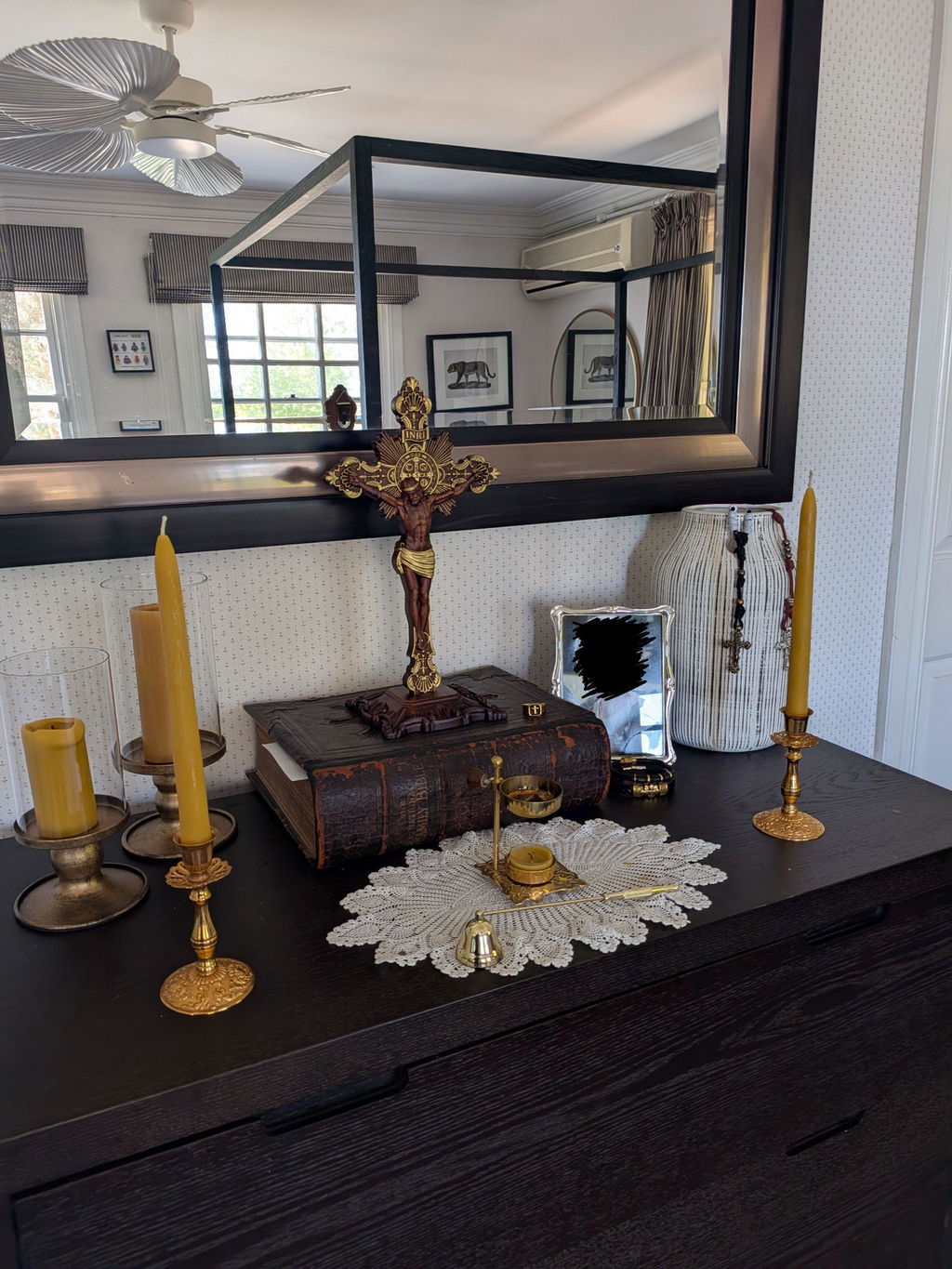
A prayer corner does not require a separate room or elaborate furnishings. A small, intentionally chosen surface is enough: the end of a bookshelf, a console in a quiet hallway, a bedroom table, or a shelf away from household clutter. Begin with one meaningful image, such as the Mary and Baby Jesus wood carving, and allow some open space around it. Visual breathing room helps the sacred subject remain the focus.
A Bible or prayer book can be placed nearby for regular reading. Some Catholic families may add a rosary, while others might include a candle that is lit only when it can be safely attended. A small cloth in a color suited to the liturgical season can provide a gentle rhythm through the year without requiring a full redesign. During Advent and Christmas, the image of mother and child naturally connects the prayer corner to the Nativity. Outside the Christmas season, it continues to speak about trust, family life, and the closeness of Christ.
Placement matters as much as decoration. Choose a height at which the carving can be seen comfortably, and avoid crowding it with unrelated objects. The product is presented for tabletop or wall display, offering flexibility for different homes. A wall placement can establish a lasting devotional point, while a tabletop arrangement can be adapted as seasons and family practices change.

Living with Sacred Art Beyond the Prayer Corner
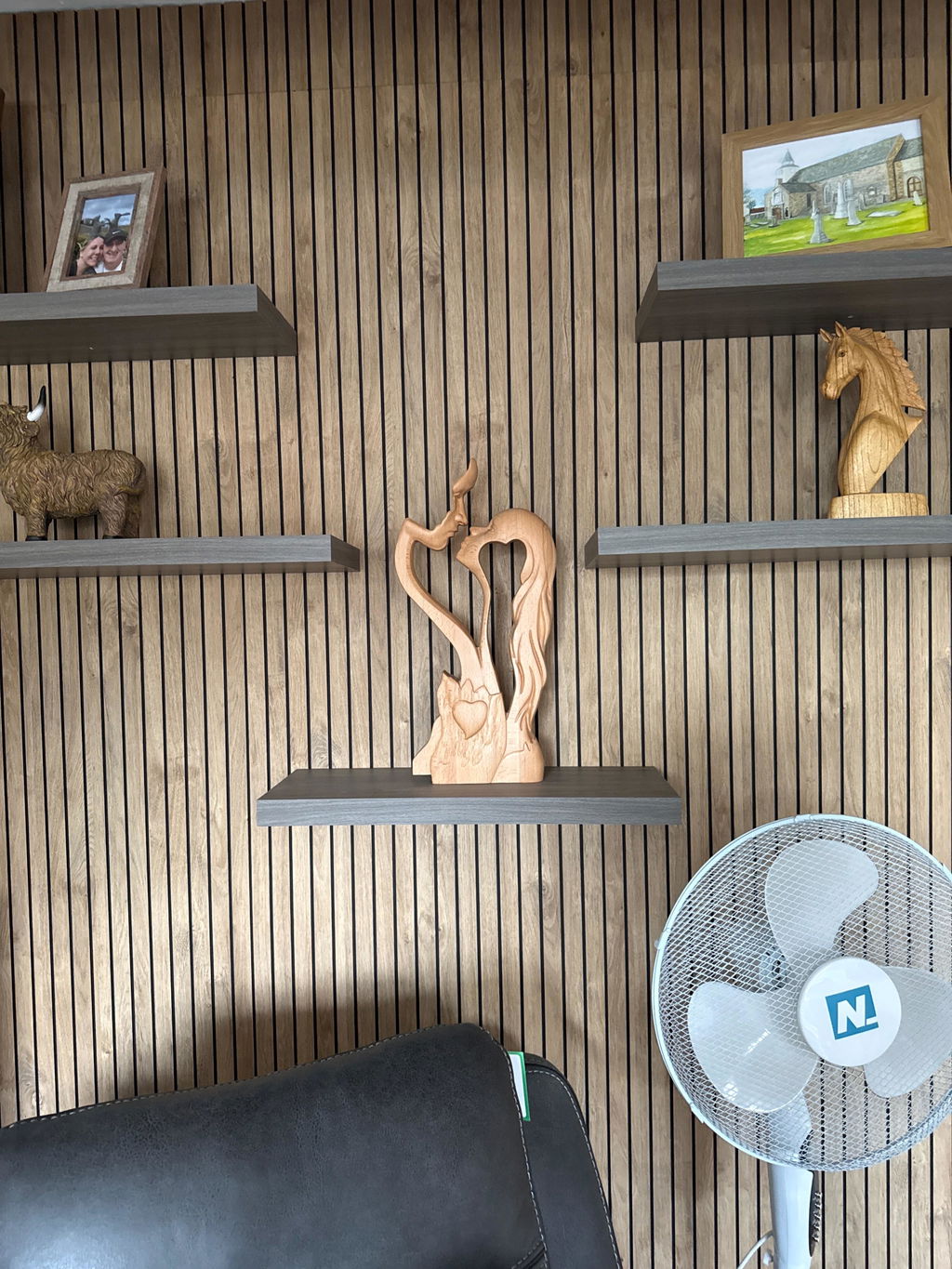
Religious wood carving can also belong in shared spaces. On a mantel, the plaque may become part of a family’s Christmas observance without being limited to seasonal use. In an entryway, it can offer a quiet sign of welcome and faith. In a bedroom, it may accompany evening prayer or provide a calming point of reflection at the beginning and end of the day.
The most effective setting is not necessarily the most formal one. Sacred art often gains meaning through repetition: passing it each morning, seeing it near family photographs, or pausing before it during a difficult week. Over time, a familiar image can become connected with the prayers, celebrations, losses, and hopes of a household. The object remains decor, but the habits around it give it personal significance.
A Thoughtful Gift for Faith and Family Milestones
An image of Our Lady and the Christ Child can be a meaningful gift when the occasion is connected to faith, family, or a new home. It may suit a baptism, Christmas gathering, house blessing, or a gift for new parents. It can also acknowledge a person who is creating a prayer space or returning to a regular devotional practice. Because the subject is enduring rather than tied to a passing trend, the recipient can decide how prominently and how often to display it.
Thoughtful presentation can make the gift more personal without turning it into a grand statement. A handwritten note might explain why the image brought the recipient to mind or include a brief prayer for peace in the home. It is best to consider the recipient’s tradition and comfort with Marian imagery. A faith-inspired gift is most meaningful when it respects the spiritual life of the person receiving it.

A Gentle Reminder in the Everyday
The lasting appeal of Mary and the Christ Child lies in the scene’s tenderness and theological depth. It brings the great story of the Nativity into the scale of a mother’s arms. Rendered in wood, that story gains a tactile, domestic quality well suited to a home: natural, grounded, and quietly expressive.
Whether placed in a dedicated Catholic prayer corner, included in Christmas decor, or given to mark a family milestone, this kind of Christian wood carving works best when it supports reflection rather than demanding attention. The BGCOPPER plaque offers one interpretation of the beloved subject—an image that can help make room for prayer, gratitude, and a renewed awareness of sacred meaning within ordinary life.