The Ascension in Christian Wood Carving: Creating a Prayerful Home with an INRI Cross
Sacred art often helps us pause long enough to notice what daily life can obscure. A cross on the wall, the grain of carved wood, or a familiar biblical symbol can turn an ordinary corner into a place for recollection. The INRI Jesus Ascension wooden cross brings several elements of the Christian story into one composition: Christ, the cross, the INRI inscription, a dove, and an angel. Together, these details invite reflection not only on the Crucifixion, but also on the hope associated with Christ’s Ascension.

A Cross That Looks Beyond Calvary
The cross is central to Christian visual tradition because it holds sorrow and hope together. In an Ascension-themed design, the gaze is gently directed beyond suffering toward Christ’s heavenly glory. This does not separate the Ascension from the Crucifixion or Resurrection. Instead, the events are understood as parts of one movement: self-giving love, victory over death, and Christ’s return to the Father.
The letters INRI are an abbreviation of the Latin phrase traditionally translated as “Jesus of Nazareth, King of the Jews.” Placed above Christ, they recall the title described in the Gospel accounts of the Crucifixion. What was intended as a public inscription has become, in Christian art, a compact reminder of Christ’s kingship. The dove above the figure is commonly associated with the Holy Spirit, while the angel near the base recalls the messengers in the account of the Ascension in Acts. These symbols make the cross especially suited to slow observation: each detail can become the beginning of prayer, Scripture reading, or conversation.
The Quiet Warmth of Carved Beechwood
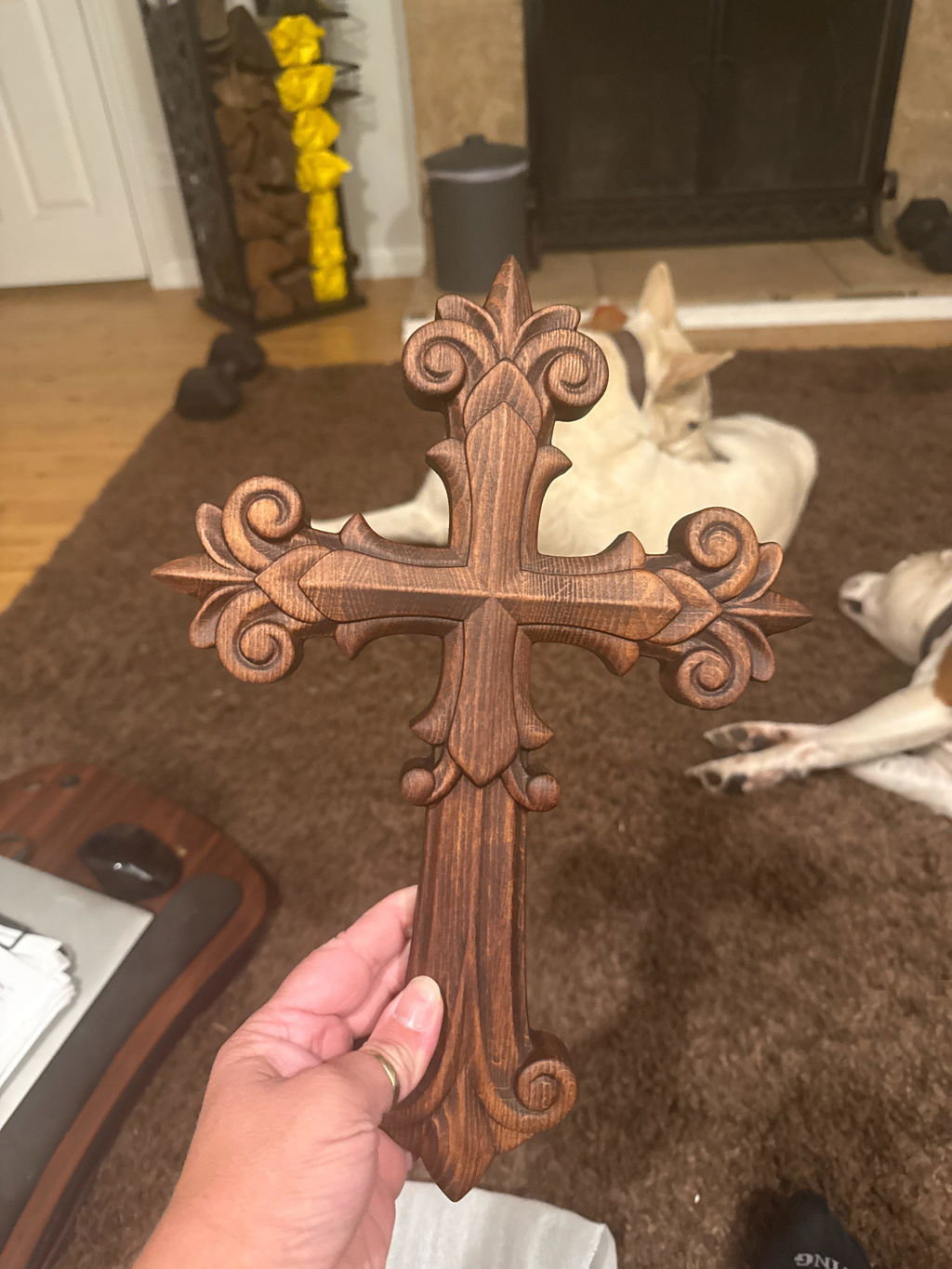
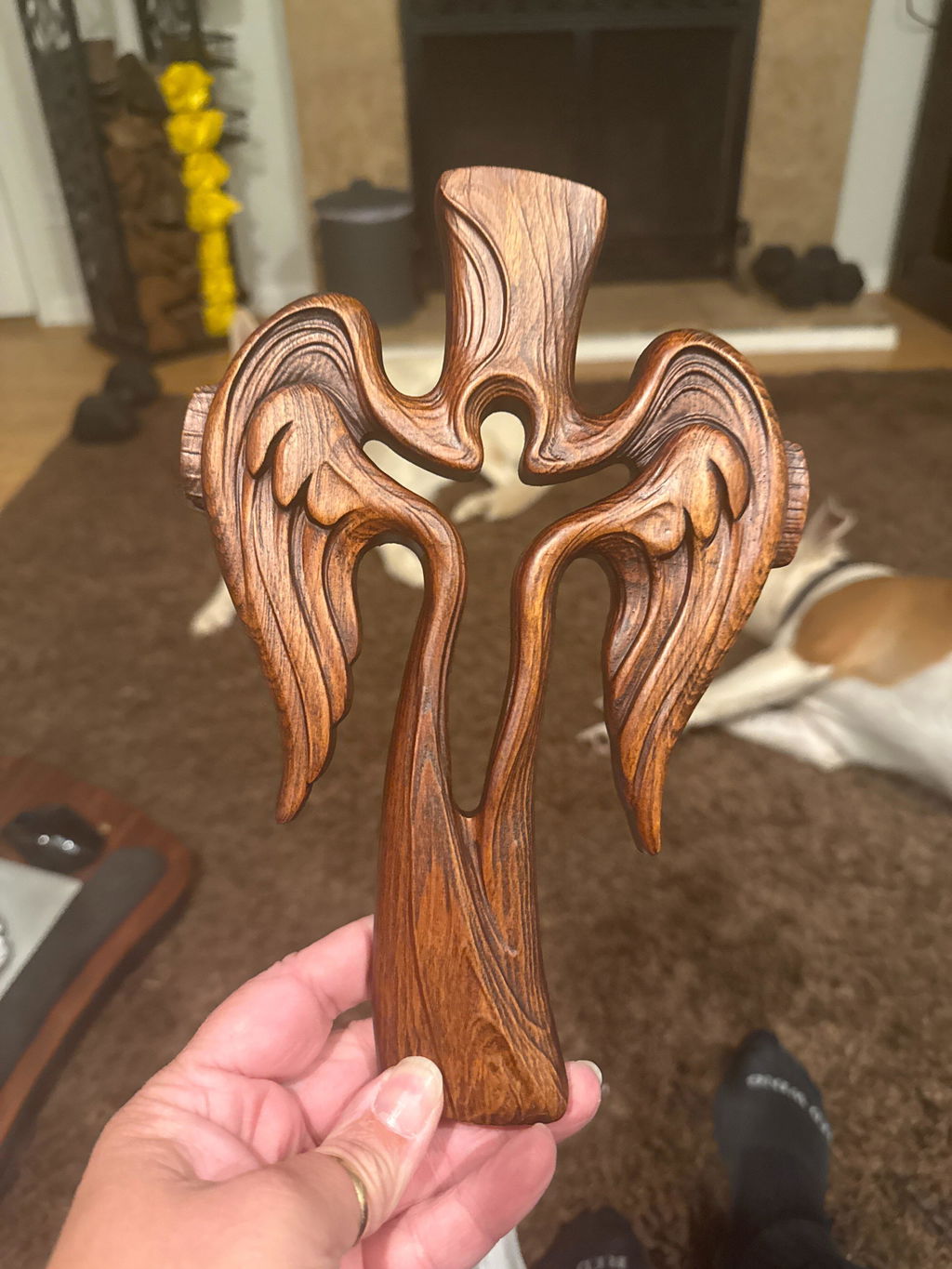
Wood carries a visual warmth that differs from polished metal, glass, or printed imagery. Its grain remains visible, so the material contributes its own subtle pattern to the religious scene. In a Christian wood carving, small changes of depth create shadows around a robe, wing, face, or inscription. As daylight shifts across the room, those details may appear softer or more defined.
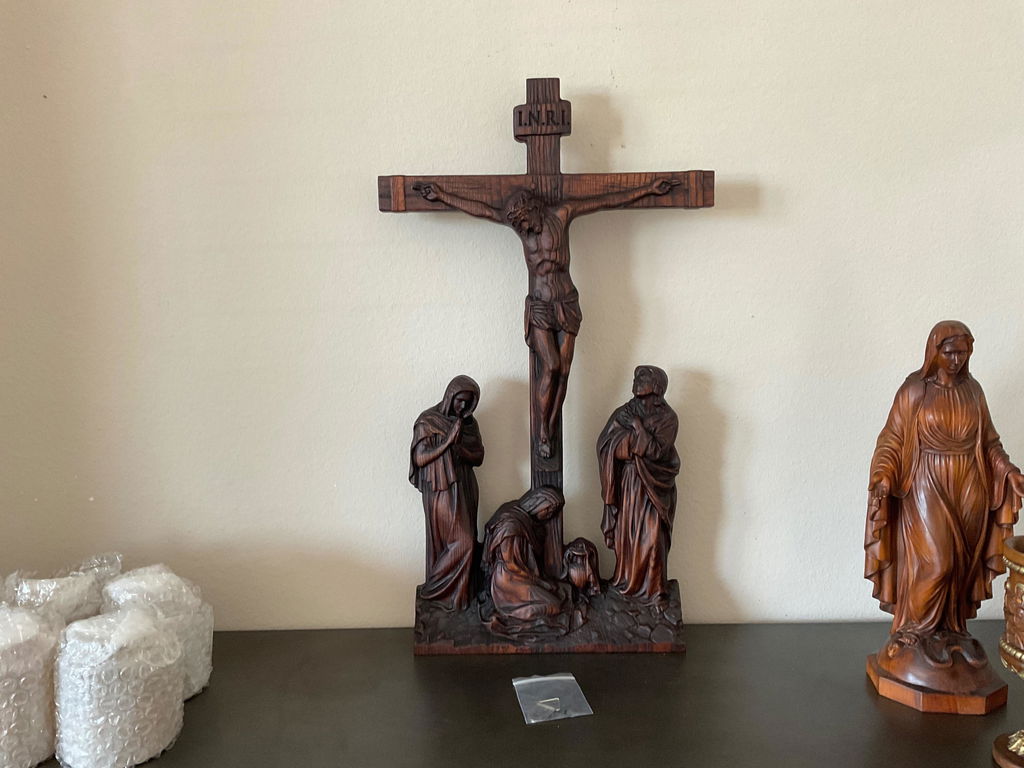
This BGCOPPER cross is described as hand-carved beechwood with a water-based painted finish. The carving process gives dimension to the central figure, dove, angel, and surrounding form rather than presenting them as a flat image. That tactile character can complement interiors built around natural materials, neutral colors, traditional furnishings, or a quieter rustic style. It also works as a point of contrast in a simple modern room, where one carefully chosen devotional object may carry more meaning than many decorative accents.

Creating a Christian Prayer Corner at Home
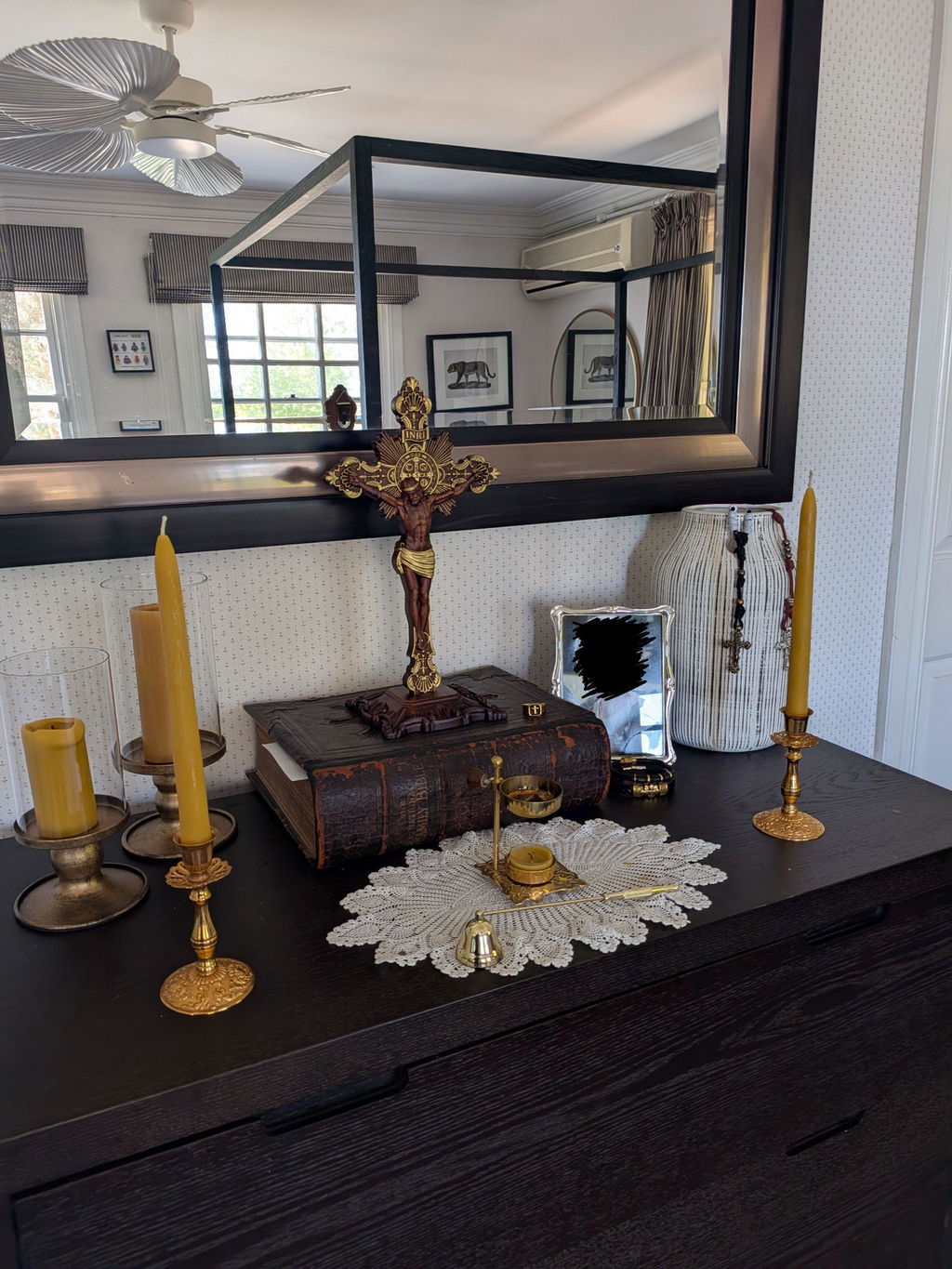
A home prayer corner does not need to be large or elaborate. A section of wall, a narrow shelf, or a small table can provide enough space. The purpose is not to reproduce a church sanctuary, but to create a consistent place where attention can settle. A wooden cross may serve as the visual center, accompanied by a Bible, prayer book, rosary, candle used safely, or a small vase of seasonal flowers.
Placement matters more than quantity. Choose a location that is accessible yet not crowded by unrelated objects. In a bedroom, it can support morning or evening prayer. In a living room, it may quietly express the faith of the household while remaining part of the home’s overall design. In a study, it can offer a reminder to pause before work or difficult decisions. Families might also place the cross where children can see its symbols and ask questions about INRI, the dove, the angel, or the Ascension.
The liturgical year offers natural ways to engage with the imagery. During Lent and Holy Week, the cross draws attention to Christ’s Passion. In the Easter season, the Ascension theme opens reflection toward resurrection hope and the Church’s expectation of Pentecost. The object itself does not need to change; Scripture passages, flowers, or the color of a nearby cloth can mark the season without overwhelming the prayer space.
A Meaningful Faith-Inspired Gift
Religious gifts are most thoughtful when they acknowledge a real moment in another person’s life. A carved cross can be considered for Easter, a house blessing, a wedding, Confirmation, reception into the Church, or the creation of a first prayer corner. It may also be appropriate for someone moving into a new home or beginning a new season of ministry. Rather than treating it as a generic ornament, a giver can explain why the Ascension imagery was chosen.
A short handwritten note can make the gift more personal. It might mention a favorite passage from Acts, a prayer for peace in the recipient’s home, or a simple hope that the cross will encourage moments of stillness. It is best to respect the recipient’s tradition and preferences, since Christian households differ in how they use sacred images. The goal is not display for its own sake, but a gesture of companionship and faith.

Living with Sacred Art
Sacred art is most valuable when it leads beyond itself. A cross can become a prompt to read, pray, forgive, give thanks, or remember someone who needs care. Over time, it may also become part of a family’s shared memory: present during feast days, new beginnings, ordinary evenings, and seasons of uncertainty.
The imagery on this Jesus Ascension wood carving encourages a broad view of the Christian story. INRI remembers the Crucifixion; the risen and ascending Christ directs attention toward hope; the dove evokes the Holy Spirit; and the angel recalls the promise found in Acts. Held together in natural wood, these signs offer a warm, restrained focus for Christian home decor and personal devotion.
Whether placed in a dedicated prayer corner or on a quiet wall, the cross need not dominate the room. Its role can be gentler: to make space for attention, to connect the home with the rhythm of faith, and to remind those who pass by that Christian hope looks through suffering toward communion with God.