A Thoughtful Place for a Native American Woman Wood Carving at Home
Objects chosen for the home often do more than fill an empty wall. A carved portrait can slow the eye, introduce the warmth of a natural material, and encourage a more attentive atmosphere. The BGCOPPER Native American woman wood carving offers this kind of visual presence through a portrait format shaped in wood. Its subject, relief, and finish make it suitable for a room where texture and quiet detail matter more than passing trends.
Because the piece portrays a Native American woman, thoughtful display begins with respect. “Native American” is a broad description, not the name of one culture, nation, or artistic tradition. Unless a maker provides a specific tribal attribution and supporting context, it is best not to assign one. The carving can be appreciated as a contemporary decorative portrait without claiming that it represents a particular ceremony, sacred figure, or Indigenous teaching.

The Quiet Character of Carved Wood
Wood has a distinct place in interiors because it feels visually grounded. Its grain, color variation, and softly changing appearance under daylight give it a character that flat printed decoration cannot reproduce in quite the same way. This product is described as solid wood with a water-based painted finish. Its product information also notes a combination of hand carving, machine carving, hand polishing, sanding, and painting. Those processes help explain why the design has both defined contours and a finished decorative surface.
Relief carving responds especially well to directional light. As daylight moves across a room, raised areas catch brightness while recessed lines hold shadow. The result is a portrait that can look subtly different in the morning and evening. Rather than surrounding it with many competing objects, leave enough open wall around the carving for its silhouette and details to remain clear.
A Reflective Accent in Christian and Catholic Homes
Christian and Catholic home decor often includes crosses, icons, Scripture, rosaries, or images of saints. This carved portrait should not automatically be treated as one of those devotional objects; the available product information does not identify the woman as a Christian saint or establish a specific religious meaning. That distinction allows the piece to be placed honestly and respectfully.
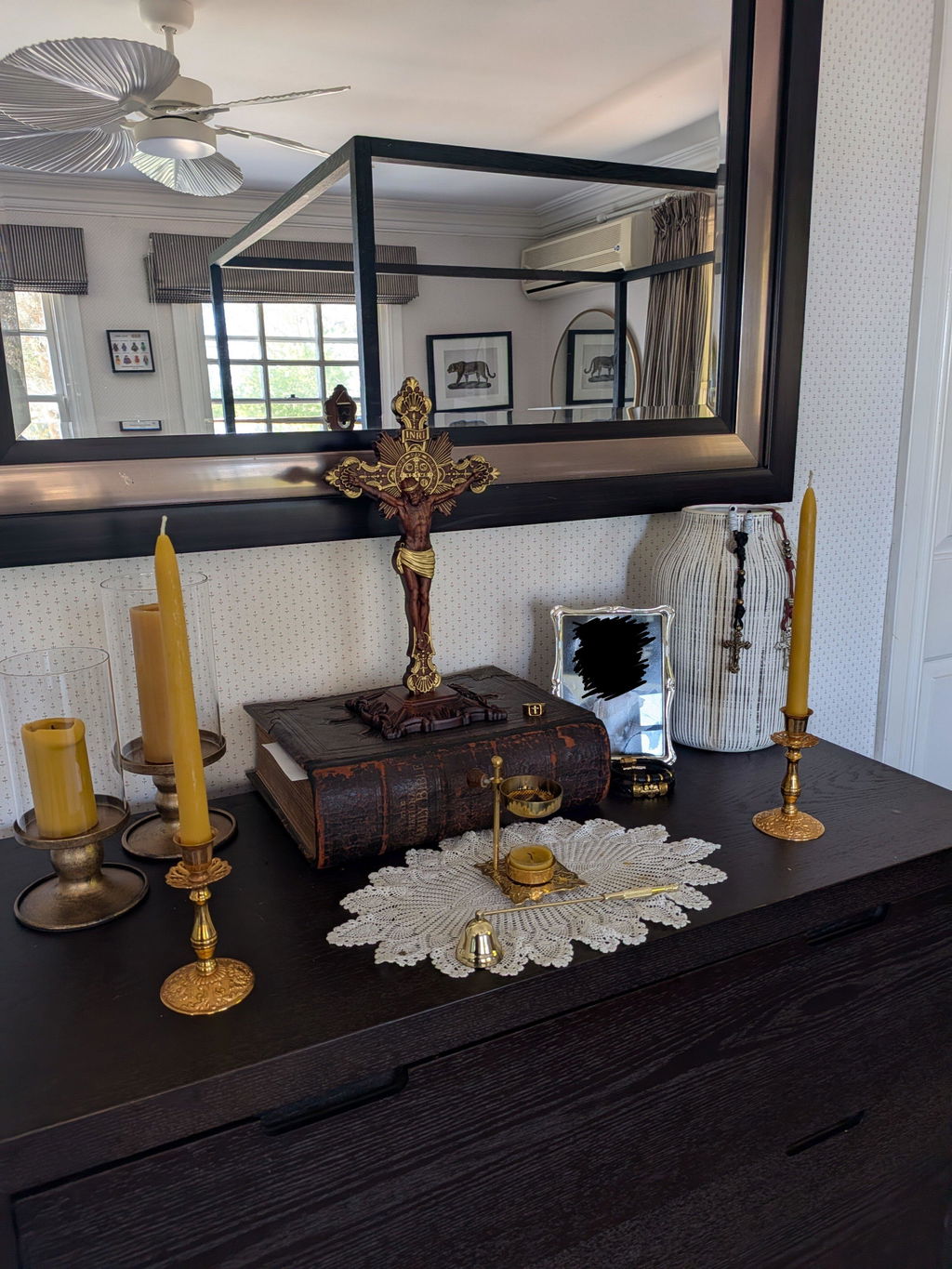
It may still belong in a home shaped by faith. Near a reading chair, entry table, library shelf, or family gathering space, a human portrait can support reflection on dignity, attention, hospitality, and the many cultures present within the wider human family. In a prayer corner, keep explicitly devotional items as the spiritual center and use the carving only as a neighboring work of art. A simple arrangement might pair a Bible, candle, cross, and natural greenery on a small table, with the portrait displayed on an adjacent wall rather than presented as a sacred image.
This approach is both aesthetically calm and spiritually clear. It avoids inventing symbolism while allowing natural wood to contribute warmth to a room used for prayer, reading, or quiet conversation. For people who prefer faith-inspired interiors without filling every surface, one carved accent and a few carefully chosen devotional objects can create a balanced setting.

Ways to Style the Portrait with Care
A neutral background—warm white, clay, muted green, or natural plaster—lets the form remain prominent. Nearby materials can echo the wood without producing a themed display: linen, woven baskets, ceramic vessels, leather-bound books, or a single branch in a plain vase all work quietly. Repeating too many generalized “Native” motifs may turn a respectful portrait into a costume-like arrangement, so restraint is the stronger choice.
Scale should also guide placement. The product page lists several size and finish variants, so check the selected option before planning the wall. A smaller version may sit comfortably within a reading nook or collected gallery wall, while a larger version can serve as the main artwork above a console. Before hanging, use paper to mark the chosen dimensions and view the outline from across the room. This simple step helps establish comfortable spacing without assuming that every option has the same proportions.
For a gallery wall, pair the portrait with pieces that have genuine personal meaning: family photographs, botanical studies, travel memories, a favorite prayer in calligraphy, or art purchased directly from named artists. Keep frames and colors related but not perfectly matched. The carved surface already provides depth, so flatter companion pieces usually create the clearest composition.
A Meaningful Gift Without Invented Claims
A wood carving can be a thoughtful gift for someone establishing a new home, refreshing a study, or creating a quieter place for reading and reflection. It may also suit a recipient who values portrait art, natural materials, or carved decor. When giving culturally themed art, however, the message attached to the gift matters. Describe the piece plainly as a decorative carved portrait, and avoid presenting it as an authentic tribal artifact or as a source of spiritual protection when the product information makes no such claim.
A short personal note can connect the gift to the recipient without placing words or beliefs onto the subject: “For a home filled with dignity and welcome,” or “For the quiet corner where you read and reflect.” This keeps the meaning rooted in your relationship. Those considering the available carving and finish options can review the product page together with the intended wall space before choosing.

Caring for a Wooden Decorative Piece
Display carved wood in a clean, dry location and handle it gently. Avoid prolonged moisture and harsh household chemicals, following the care guidance on the product page. Dust can settle in recessed details, so light, careful cleaning is preferable to aggressive rubbing. Natural finishes and screen colors may vary, making small differences part of the experience of choosing decor made from wood.
It is also wise to review the current product page for the selected dimensions, finish, included items, and hanging needs. Planning those practical details protects both the carving and the wall where it will be displayed.
A Home Shaped by Attention
The most enduring interiors are rarely built from decoration alone. They grow from attention: to materials, to the stories we know, to the claims we should not make, and to the people who share the space. A carved wooden portrait can contribute texture and quiet focus while inviting that kind of careful looking.
For a Christian or Catholic household, respectful display also means distinguishing cultural art from devotional imagery. When the distinction is clear, both can have an appropriate place. The result is not a crowded theme but a home where faith, hospitality, beauty, and cultural humility can be held together with care.