A Wooden Bird Wind Bell for a Peaceful, Faith-Inspired Home
A doorway is more than a practical boundary. It is where a household welcomes family, receives friends, and moves between the shelter of home and the wider world. Small details near an entrance can therefore carry unusual emotional weight. A wooden bird-shaped wind bell brings together a familiar creature, the warmth of natural wood, and a gentle sound that marks each arrival. Rather than dominating a room, it offers a quiet way to make an everyday threshold feel attentive and hospitable.
The BGCOPPER wooden bird-shaped wind bell is designed as both an entrance accent and a decorative object. Its bird form gives the piece an organic character, while walnut wood and brass introduce contrasting textures. It can suit a front door, an interior doorway, a wall, or another calm corner where movement can create a soft chime. In a Christian home, this kind of modest object may also support a broader atmosphere of welcome, gratitude, and peaceful daily ritual without needing to function as a formal devotional image.

The bird as a gentle image in Christian reflection
Birds appear throughout Christian Scripture and art, although not every bird ornament has one fixed religious meaning. That distinction matters. A simple carved bird does not need to be identified as a dove or assigned a theological message that its design does not explicitly claim. It can nevertheless invite personal reflection through biblical passages in which birds point toward care, hope, freedom, and the beauty of creation.
Many Christians remember Jesus’ teaching about the birds of the air as an invitation to trust God rather than live entirely under the weight of anxiety. Sparrows also appear in words about divine attention to lives that may seem small or overlooked. The dove has its own more specific place in biblical imagery, from the return of dry land after the flood to Christian representations of peace and the Holy Spirit. A generic bird-shaped decoration should not be confused with those formal symbols, but its presence can still recall these themes in a quiet, open-ended way.
Placed near a doorway, a bird may also suggest movement: leaving, returning, shelter, and renewed beginnings. These are ordinary experiences, yet they often carry spiritual significance. Crossing the threshold in the morning can become a brief moment to ask for guidance; returning in the evening can become an occasion for gratitude. The sound of a small bell does not make the practice sacred by itself. Instead, it can serve as a sensory reminder to pause and become present.
Why wood and brass feel at home together
Natural materials tend to soften spaces because their grain, color, and surface contain subtle variation. Walnut wood brings visual warmth, while brass contributes a restrained metallic contrast and helps give the bell its audible character. Together, the materials balance the familiar and the refined. This combination works especially well in interiors that favor handcrafted accents, neutral colors, vintage details, or a mixture of old and new pieces.
Wood also has a long relationship with domestic and sacred objects. Across many cultures, it has been shaped into furniture, household tools, architectural details, and devotional carvings. Its appeal is not only visual. Wood can make an object feel approachable and connected to daily life. In Christian and Catholic homes, wooden crosses, saint figures, Nativity scenes, and prayer beads often share a room with ordinary family furnishings. A decorative bird bell is not equivalent to those devotional objects, but it can participate in the same warm, natural material palette.

Creating a thoughtful entrance or prayer corner
At an entrance, restraint is useful. A doorway already contains handles, locks, lighting, and the visual movement of people coming and going. One small ornament can be more effective than several competing accents. The bird wind bell can be paired with a simple wreath, a narrow console, a ceramic bowl for keys, or a small framed blessing. Keeping the surrounding colors quiet allows the wood grain and silhouette to remain visible.
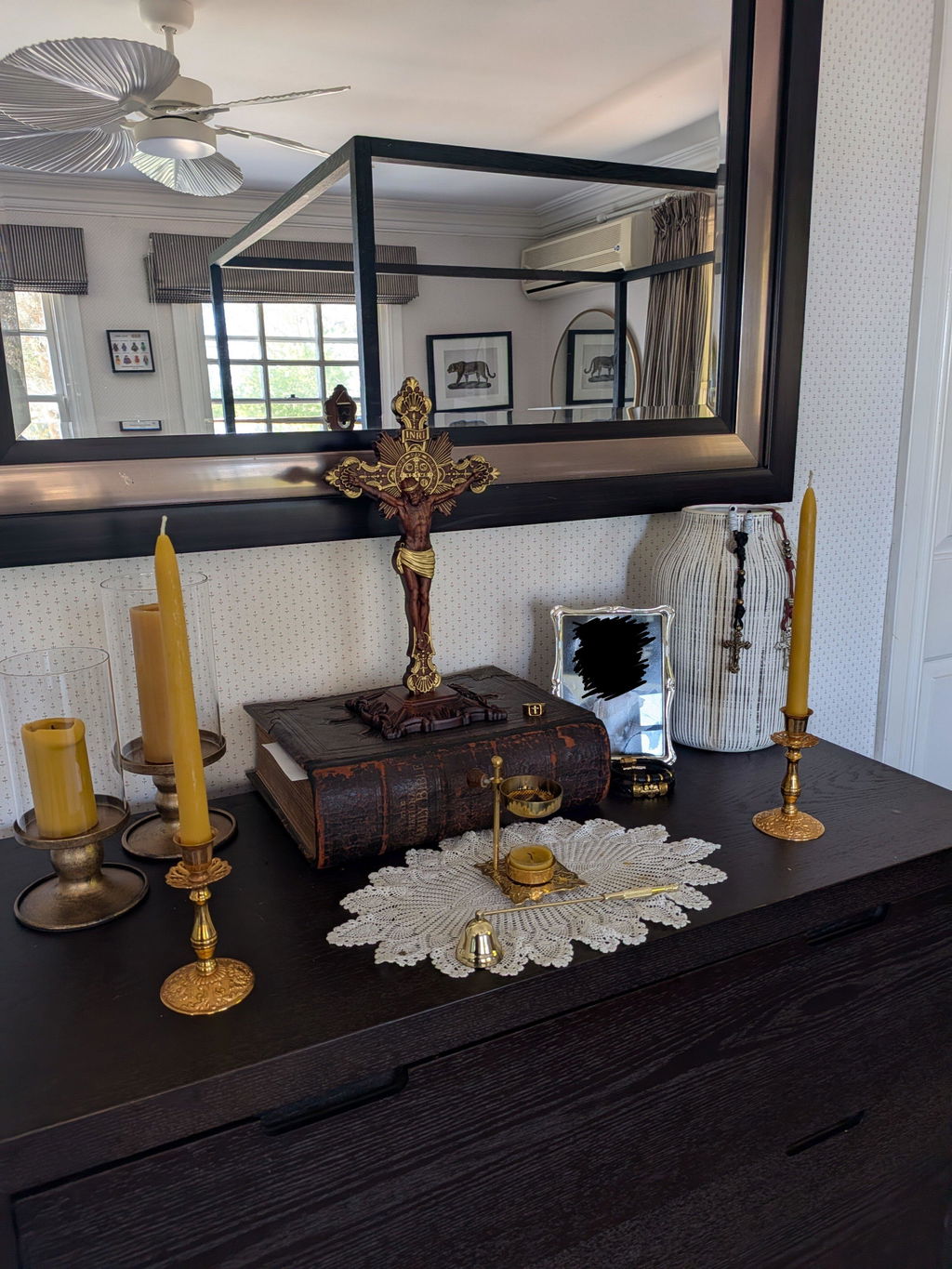
For an interior setting, consider a transition between the living room and a quieter area of the home. The piece can also be placed near a prayer corner, though it is best treated as an atmospheric accent rather than the devotional center. A crucifix, Bible, icon, or rosary may hold the primary spiritual focus, while the bird form and gentle sound contribute natural texture. A small lamp, cloth, and seasonal branch can complete the arrangement without making it crowded.
Sound deserves the same care as appearance. A bell near a frequently used door will be heard more often than one near a seldom-opened space. Some households may enjoy that regular cue; others may prefer a calmer location. Before settling on a permanent position, notice how the door moves, how the sound carries, and whether it supports the atmosphere you want. The product information describes magnet and tape attachment options, so the chosen surface and installation method should be considered with care.
Seasonal changes can refresh the setting without replacing the central piece. In Advent, evergreen branches and warm light can surround an entrance with expectation. During Easter, fresh greenery can emphasize renewal. In ordinary time, the wood and brass are neutral enough to stand alone. This makes the decoration less dependent on a single holiday and more connected to the rhythms of the whole year.

A meaningful gift for a home and its people
Housewarming gifts are often most successful when they are useful, visually adaptable, and personal without being overly intimate. A small entrance decoration can acknowledge the meaning of a new home: safety, hospitality, and the beginning of shared routines. The bird motif is gentle enough for many decorating styles, while the bell adds an element of experience rather than serving only as a static display.
It may also be suitable for a family moving into a first home, friends opening a small studio or shop, newlyweds establishing a household, or someone creating a quieter living space after a season of change. For a Christian recipient, a handwritten card can give the gift a faith-centered context. A brief blessing for peace in the home or for all who cross its threshold is often more meaningful than attaching an elaborate symbolic claim to the object itself.
Presentation can remain simple: natural paper, a fabric ribbon, and a short note about why the bird and bell brought the recipient to mind. If you are considering the piece for a particular doorway, the wooden bird wind bell product page provides additional views and installation information. Looking at the surface, available space, and frequency of use beforehand helps ensure that the gift fits naturally into the recipient’s home.
A quiet reminder at the threshold
Meaningful Christian home decor does not always need to speak loudly. Sometimes it works through materials, placement, and the habits that grow around an object. A wooden bird at the door can recall creation, care, and the grace of returning home. Its chime can become a prompt to welcome others attentively or to pause before stepping into the day.
The value of such a piece lies in this modest role. It does not replace prayer or carry a guaranteed spiritual meaning. It simply helps shape an environment in which peace, hospitality, and reflection have room to be noticed. At a busy household threshold, that gentle invitation may be enough.