The Holy Trinity in Christian Wood Carving: Creating a Quiet Place for Faith at Home
A home does not need to feel like a formal sanctuary to hold a space for prayer. Sometimes a single image, placed with intention, can help the eye settle and the mind become quiet. Sacred art has served this purpose in Christian homes for centuries: it does not replace prayer, but it can offer a visual invitation to pause, remember, and return to what matters.
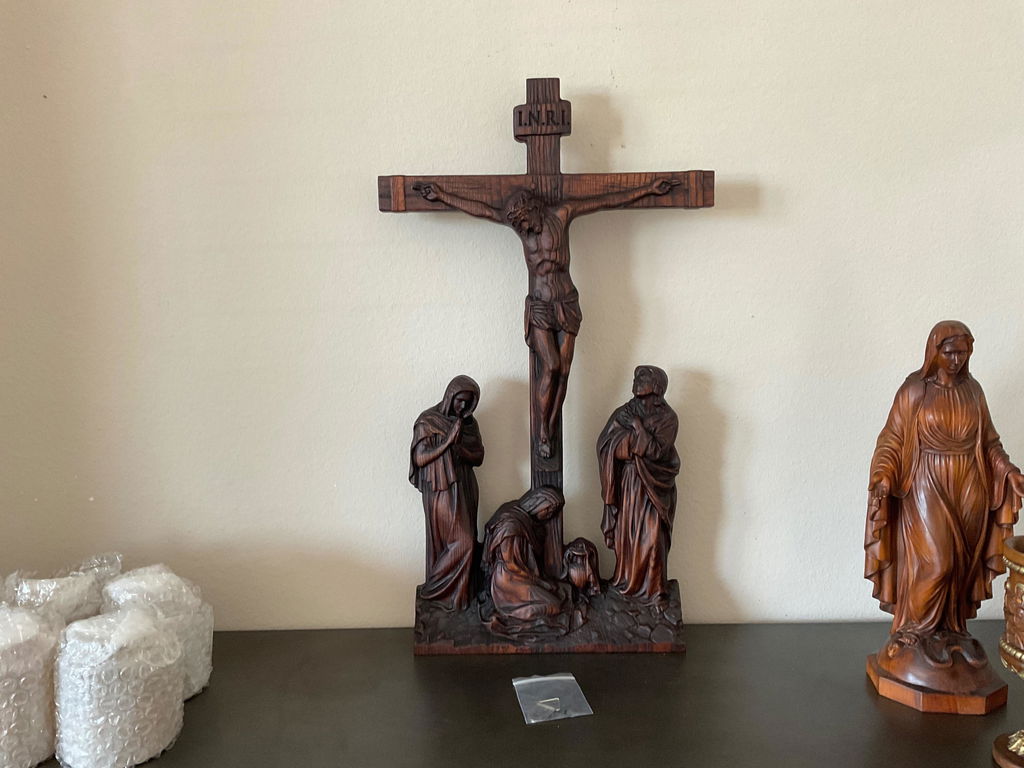
The Holy Trinity hand-carved wood wall art from BGCOPPER approaches that tradition through natural wood and a carefully composed image of the Father, Son, and Holy Spirit. Its warm surface and dimensional carving make it suitable not only as Christian home decor, but also as a reflective focal point for a prayer corner or family gathering space.
Reading the Symbolism of the Holy Trinity
The Christian teaching of the Trinity speaks of one God in three Persons: Father, Son, and Holy Spirit. Because this mystery cannot be reduced to a simple diagram, Christian artists have long used recognizable figures and symbols to help viewers contemplate it with humility rather than imagine that it can be fully explained by an image.
In this carving, Christ appears with the cross, directing attention to his self-giving love and the central place of the Passion in Christian faith. The figure of God the Father expresses divine care, authority, and the relationship between Father and Son. Above them, the dove recalls the Holy Spirit, an image rooted in the Gospel account of Jesus’ baptism. Together, these elements form a visual meditation on unity, relationship, and divine presence.
For daily reflection, the artwork can also suggest a gentle rhythm: gratitude to the Father, attention to the life and teaching of Christ, and openness to the guidance of the Holy Spirit. The carving does not prescribe a particular devotional practice. Instead, it offers familiar symbols that can accompany personal prayer, Scripture reading, or a few minutes of silence.

Why Wood Feels at Home in Sacred Decor
Wood carries a visual warmth that differs from polished metal, glass, or printed artwork. Grain, tone, and subtle variations remain visible, giving the surface a sense of life and texture. In a sacred image, those natural qualities can make the piece feel grounded and approachable—especially in a home where faith is woven into ordinary routines rather than separated from them.
This Holy Trinity piece is carved from solid beechwood, then hand-polished and finished with a water-based coating. The process emphasizes the contours of the figures, the folds of their garments, the cross, and the dove. Because carving works through depth as well as line, changing daylight may reveal details differently over the course of the day. That quiet interaction between material, shadow, and image is part of the appeal of wooden religious art.
Hand-finished work may also show small natural distinctions from one piece to another. Rather than distracting from the design, these variations can remind us that wood is an organic material and carving is a tactile craft. The result belongs comfortably beside other natural elements such as linen, stone, candles, or a simple vase of branches.
Creating a Prayer Corner Without Overcrowding It
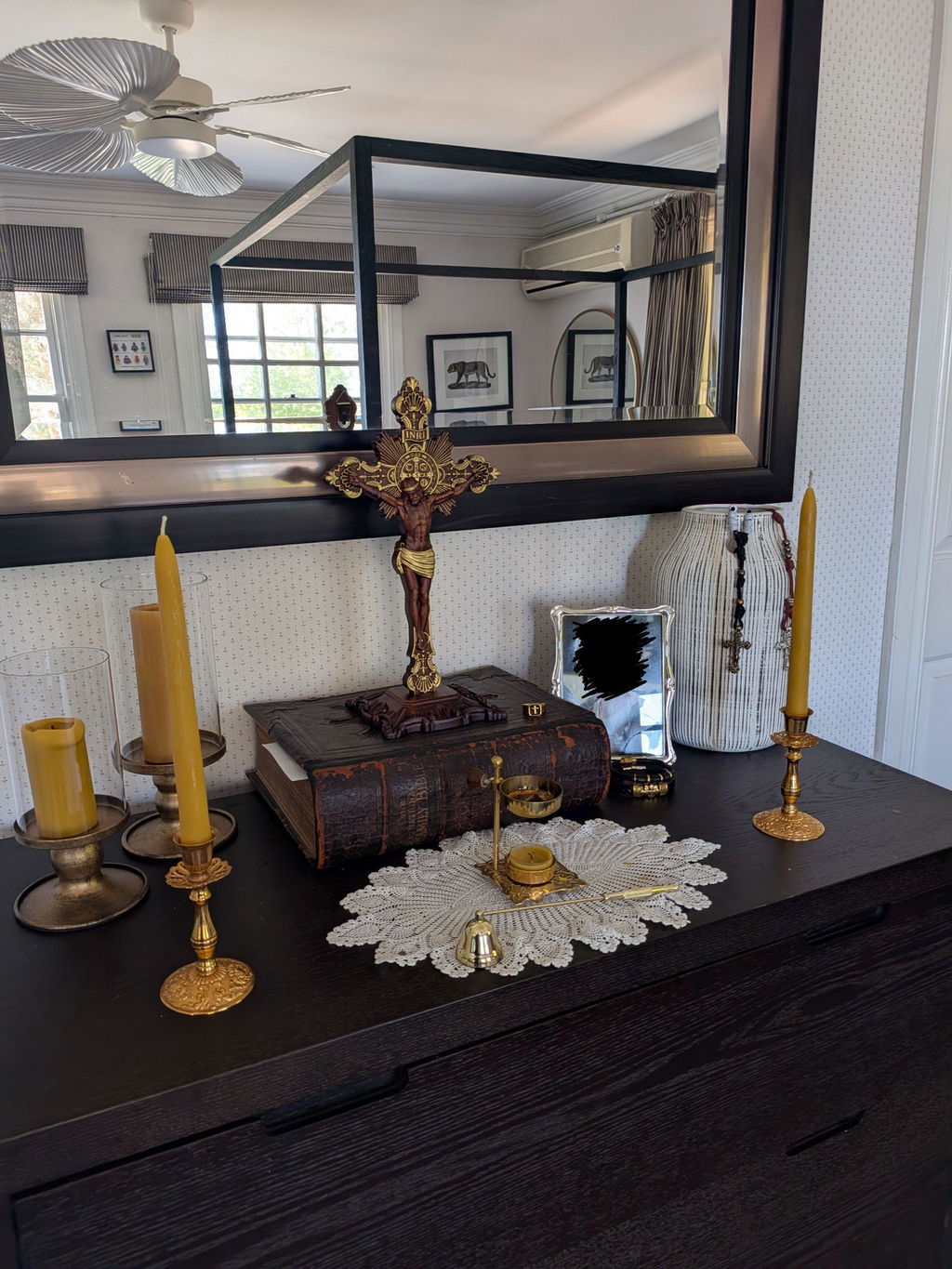
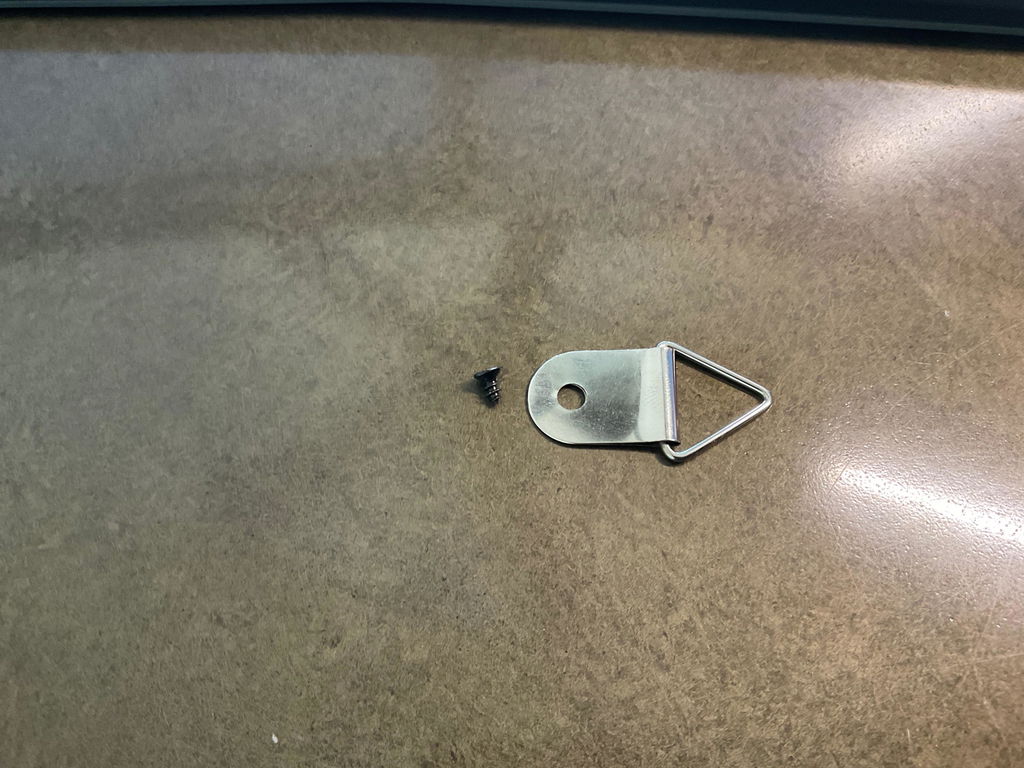
A prayer corner can be modest. Choose a place that is relatively calm and easy to return to: a section of a bedroom wall, a small table in a living room, a hallway niche, or a quiet part of a home office. Since this carving includes a built-in hanging clasp, it can serve as the visual anchor above a shelf or table.
Begin with the artwork and add only what supports attention. A Bible, prayer book, rosary, candle, or small cloth may be enough. Leave some open space around the carving so its silhouette and symbolic details remain clear. Warm, indirect light will complement the wood, while strong glare can make any detailed relief harder to see.
Placement matters more than quantity. Hanging the image near seated eye level can make it easier to contemplate during prayer. In a shared family space, a slightly higher position may allow the piece to remain visible without dominating the room. Those interested in the design can view the carved Holy Trinity wall art and its details here before deciding how its proportions might relate to their own setting.

Living Rooms, Entryways, and Shared Family Spaces
Religious wall art does not have to be confined to a private devotional area. In a living room, it can sit among family photographs and meaningful objects, expressing that faith is part of the household’s story. In an entryway, it may become a quiet reminder of peace and hospitality as people leave and return. In a dining area, it can complement a family tradition of giving thanks before meals.
For a restrained interior, pair carved wood with neutral colors and simple forms. Cream, warm white, muted green, and earthy brown allow the natural material to remain central. In a more traditional room, the carving may harmonize with framed sacred prints, wooden furniture, or textiles. The goal is not to create a themed display, but to let one meaningful object contribute depth and identity to the space.
A Faith-Inspired Gift with Lasting Meaning
A Holy Trinity image can be a thoughtful gift when the occasion calls for something reflective rather than purely decorative. It may suit a house blessing, wedding, anniversary, confirmation, ordination, or a move into a new home. It can also be given to someone creating a first prayer corner or rebuilding a devotional routine after a season of change.
The most meaningful presentation is often simple. A short handwritten note can explain why the symbolism brought the recipient to mind. For a family, the message might wish unity and peace within the home. For a friend entering ministry or a new stage of faith, it might offer encouragement for the path ahead. Such words connect the physical object to a relationship and an intention.
As with any religious gift, sensitivity matters. Sacred imagery is personal, and traditions differ in how images are displayed or used. Knowing the recipient’s practice is more important than choosing an elaborate presentation. When the imagery is welcome, a carved wooden piece can become part of a home for many years and gather meaning through the prayers and memories formed around it.

A Gentle Visual Reminder
Christian art is most helpful when it points beyond itself. The Holy Trinity is a profound mystery of communion and love, while a wooden carving is a humble, material object. Yet that object can still serve a practical purpose: marking a place for prayer, bringing sacred symbolism into daily life, and helping a household remember the faith it seeks to live.
Whether placed in a dedicated prayer corner or integrated into a familiar room, Holy Trinity wood carving offers warmth without requiring an elaborate setting. Natural grain, dimensional craftsmanship, and recognizable Christian symbols work together quietly. In that quietness lies its value—not as a dramatic statement, but as a steady invitation to pause, reflect, and pray.