The Trithemius Practice Table: Wood Carving, Symbolism, and Historical Context
Objects made for a place of reflection often carry more than one kind of meaning. Their material, symbols, historical references, and setting all shape the way we encounter them. The Trithemius Practice Table wood carving is a particularly layered example: a circular carved design associated with Johannes Trithemius and the Western esoteric tradition, presented in solid wood with a dark, time-worn visual character.
For anyone interested in Christian symbolism, historical devotional art, or unusual altar decor, this piece invites careful looking. It includes names and geometric forms drawn from a world in which Christian language, angelic imagery, Renaissance learning, and ritual practice sometimes overlapped. That history is complex. A Table of Practice is not a standard Catholic sacramental or an ordinary item of Christian devotion, so it is best understood with context rather than treated as conventional church art.

A design at the meeting point of religion and esoteric history
Johannes Trithemius is remembered as a German Benedictine abbot and scholar whose writings touched theology, history, cryptography, angelic names, and forms of learned magic. That combination can feel surprising to a modern reader, but late medieval and Renaissance intellectual life did not always divide subjects into the neat categories used today. Some historical thinkers explored the natural world, sacred texts, language, and invisible realities within a single intellectual framework.
The imagery associated with a Trithemius practice table reflects that complicated setting. Circles suggest order, boundaries, and completeness. A central triangle can recall the visual language of threeness, although its meaning here should not automatically be equated with an orthodox image of the Trinity. Cross-like forms and angelic names may look familiar to Christian viewers, yet their ritual arrangement belongs to a specialized esoteric context. Responsible interpretation leaves room for that distinction.
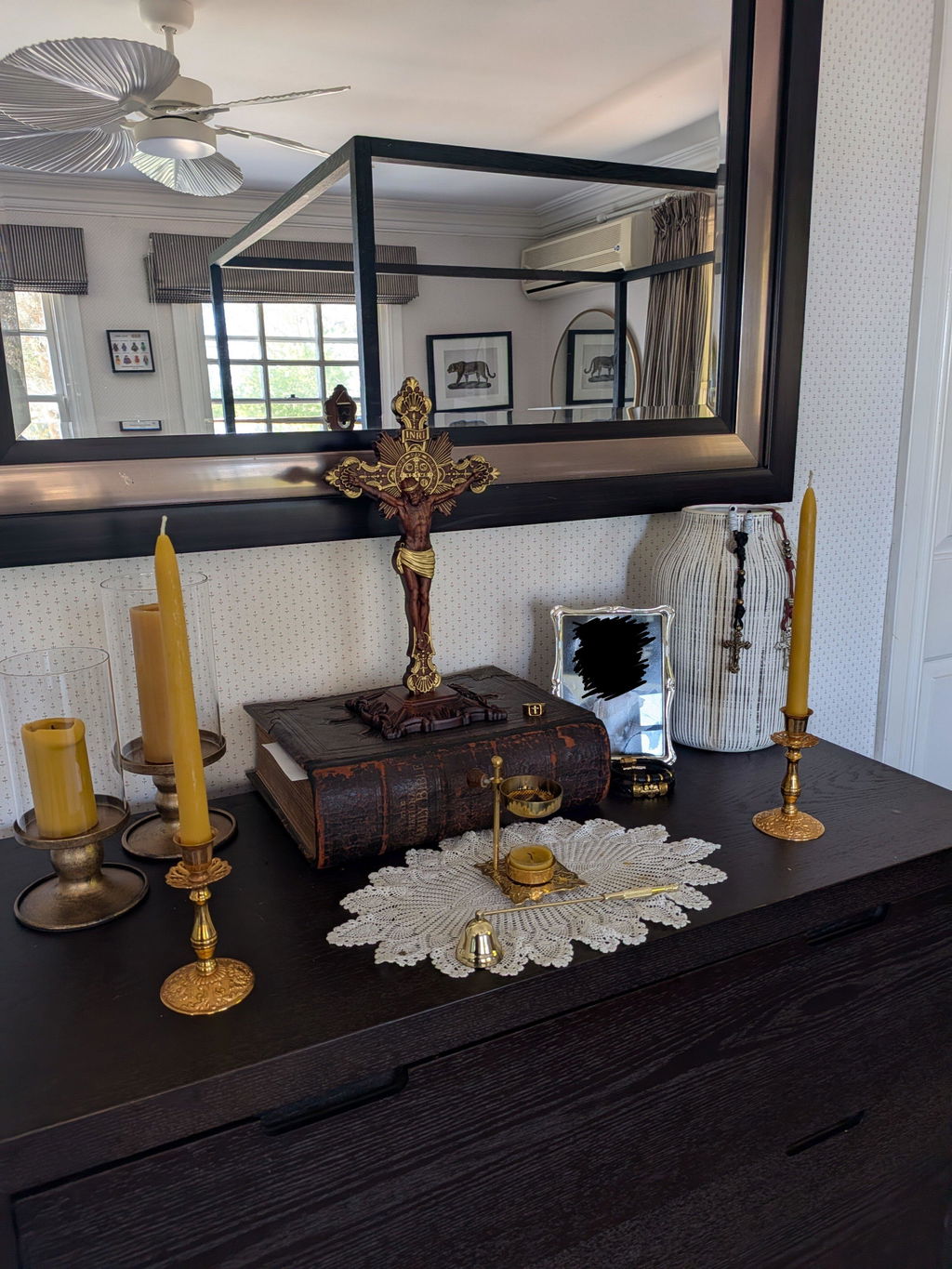
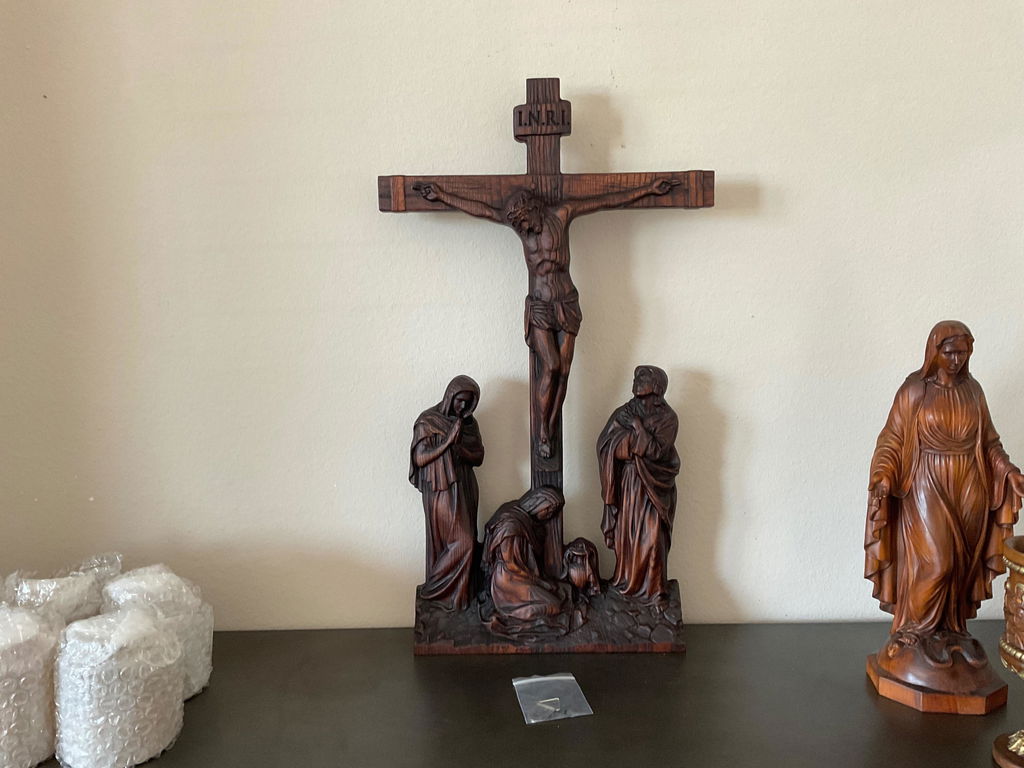
For Catholic or Christian households, discernment matters when choosing objects for a prayer corner. A crucifix, Bible, icon, rosary, or image of a saint has an established devotional role. This carved table does not occupy the same category. Some people may appreciate it as a historical conversation piece, a study object, or an example of symbolic wood carving; others may decide that its ritual associations do not suit their devotional space. Both responses begin with understanding what the design represents.
The quiet visual warmth of carved wood
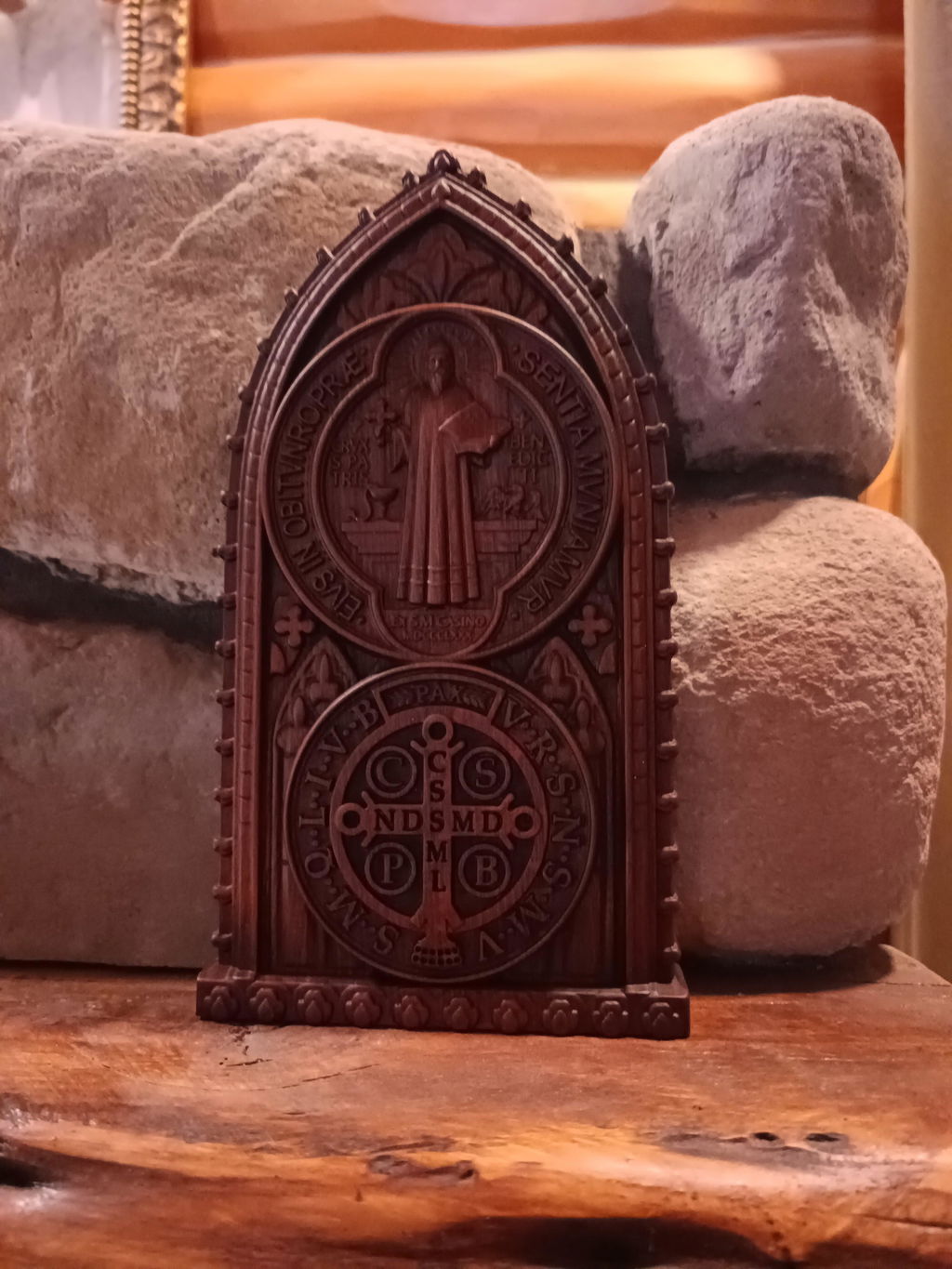
Whatever one’s approach to the symbolism, wood gives the object a distinct physical presence. Grain, tonal variation, and carved recesses soften the precision of circles and lettering. The contrast is appealing: geometry feels measured and intellectual, while the natural surface feels warm and tactile. As light moves across the face, shallow and deeper marks become more visible, allowing the pattern to emerge gradually rather than all at once.
The product description identifies the piece as solid oak with a dark oak wax finish. Those details help explain its old-world appearance without requiring artificial grandeur. Wood also connects the object to a long history of carved religious and domestic art. Churches, monasteries, family homes, and studies have all used carved wood because it can carry fine detail while still feeling grounded and familiar.

Thoughtful ways to display a symbolic carving
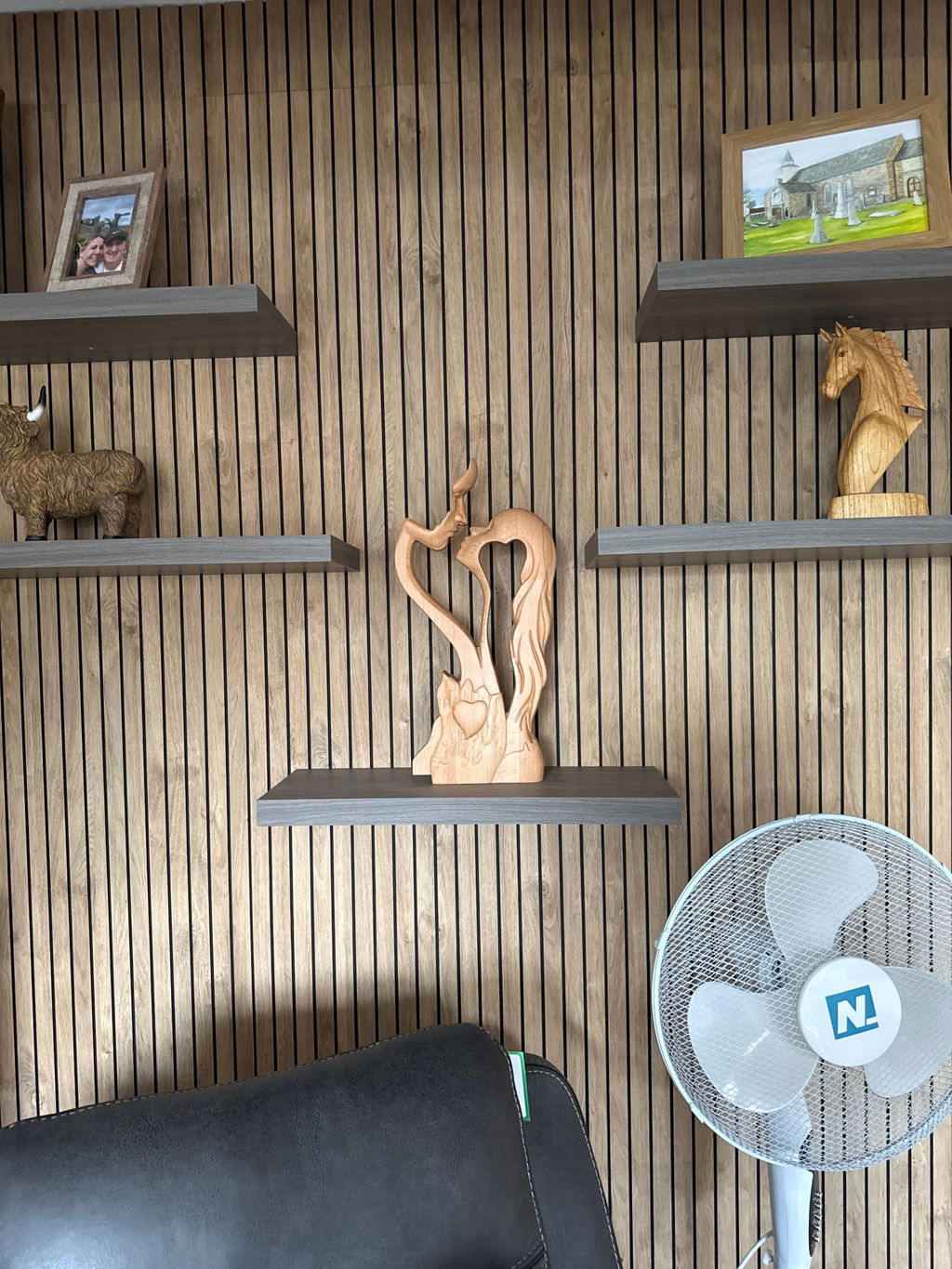
Context changes how an object is read. In a library, study, or cabinet of curiosities, the piece can accompany books on medieval history, Renaissance thought, Christian mysticism, symbolism, or the history of Western esotericism. On a shelf, it can be displayed as an example of carved graphic design. A simple stand and uncluttered background allow the circular composition to remain visible.
In a home that includes a dedicated prayer corner, consider keeping historical or esoteric study objects visually separate from the items used for prayer. This preserves the purpose of the devotional area and avoids implying that every symbol with an angelic name or cross-like form carries formal Catholic approval. If the carving is included in a broader art display, a short note about its historical source can help guests understand it more accurately.
The dark finish pairs naturally with linen, stone, aged paper, brass-toned accents, and other quiet materials. Because the design is already intricate, it does not need a crowded arrangement. Leaving open space around it makes the carving easier to study and creates a calmer setting. The BGCOPPER product page offers additional views for examining the surface, composition, and available options before deciding how it might fit into a room.
A meaningful gift for the right recipient
A symbolic object becomes a thoughtful gift when it matches the recipient’s genuine interests. This carving may suit someone who studies Johannes Trithemius, angelic imagery, religious history, occult manuscripts, or the development of ritual diagrams. It may also interest a collector of unusual wood carving or a reader whose library explores the boundary between theology and esoteric philosophy.
The accompanying message can make the gift more personal and more accurate. Rather than presenting it as a generic Christian ornament, explain why its history brought the recipient to mind. A note might mention a shared interest in manuscript traditions, sacred geometry, historical craftsmanship, or the changing ways people have represented the unseen. This approach respects both the recipient and the object’s unusual background.

Looking carefully before assigning meaning
Christian and Catholic art is rich with symbols, but visual familiarity does not always mean identical purpose. Crosses, angels, circles, and triangles can appear in church art, private devotion, philosophical diagrams, and esoteric ritual systems. Their meaning comes from their source, arrangement, and use. Looking carefully protects us from both sensationalizing an object and flattening its history into a label that is too simple.
This Trithemius-inspired carving is most interesting when approached in that measured spirit. It brings together detailed woodwork, a historic diagram, and questions about how faith, scholarship, and esoteric practice interacted in earlier centuries. Whether displayed as historical decor, collected as symbolic art, or given to a thoughtful reader, it offers an opportunity for informed conversation—and a reminder that meaningful objects deserve both attention and context.