Faith, Freedom, and the Quiet Character of Carved Wood Wall Art
Some objects in a home do more than fill an empty wall. They quietly reveal the ideas a household hopes to remember: gratitude, responsibility, courage, faith, and care for one another. A piece of carved wood wall art can carry those themes with unusual warmth because its message is joined to a natural material and the visible character of craft.
The BGCOPPER solid wood carving commemorating the Second Amendment belongs to this tradition of meaningful decor. Its design connects American heritage with faith-inspired imagery, offering a starting point for reflection rather than simply acting as a decorative accent. In a Christian home, such a piece can invite thoughtful conversation about liberty, moral responsibility, protection, and the deeper source of peace.

Holding Faith and Civic Heritage in Thoughtful Balance
Christian symbolism and American civic symbolism are not identical, and a reflective home does not need to confuse them. Faith speaks to worship, conscience, mercy, justice, and a life shaped by love of God and neighbor. Civic heritage concerns the rights and responsibilities shared within a particular nation. When these themes appear together in home decor, the most meaningful approach is often one of balance.
A Second Amendment wood carving may represent constitutional memory, family tradition, or the responsibility associated with protecting life and home. For Christian viewers, it can also raise valuable questions. How should strength be guided by wisdom? How can freedom be practiced with restraint? What does it mean to seek peace while accepting responsibility for the people entrusted to our care? The carving does not have to answer these questions. Its role can be to keep them visible.
This distinction gives the piece a calmer meaning. It need not be read as an aggressive statement. In the right setting, it can express sober gratitude for liberty while reminding the household that lasting spiritual security is not found in any possession. Christian hope ultimately rests elsewhere—in God, in prayer, and in the daily practice of courage joined to charity.
Why Wood Feels at Home with Symbols of Belief
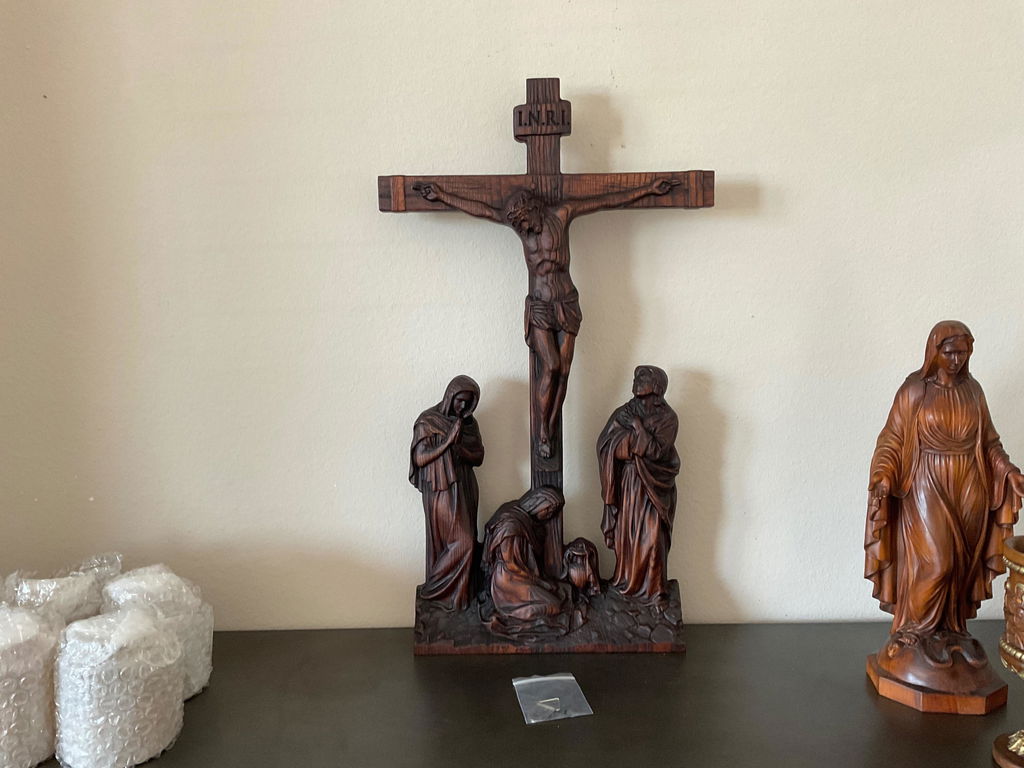
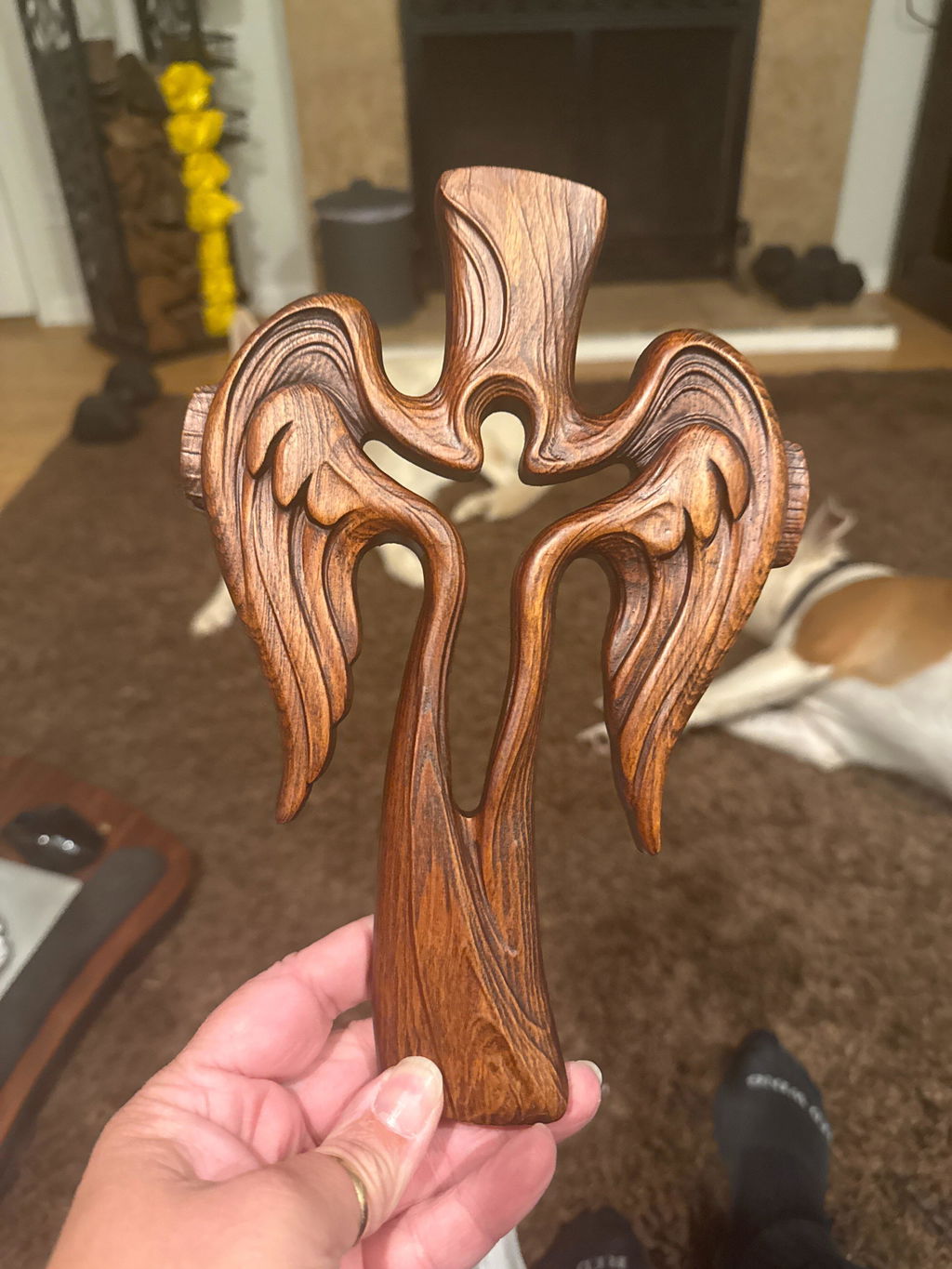
Wood has long been used for crosses, icons, plaques, devotional furnishings, and everyday household objects. Part of its appeal is visual: grain and tone make each surface feel alive. Part is tactile: carved recesses and raised details allow light and shadow to change throughout the day. Even when a carving carries a strong theme, the organic material can soften its presence.
The product description identifies this wall art as individually carved, sanded, and finished. Those stages help explain why carved wood differs from a flat printed sign. The image is not merely placed on the surface; it gains dimension through the shaping of the material. Small variations and visible grain can become part of the finished character rather than flaws to be hidden.

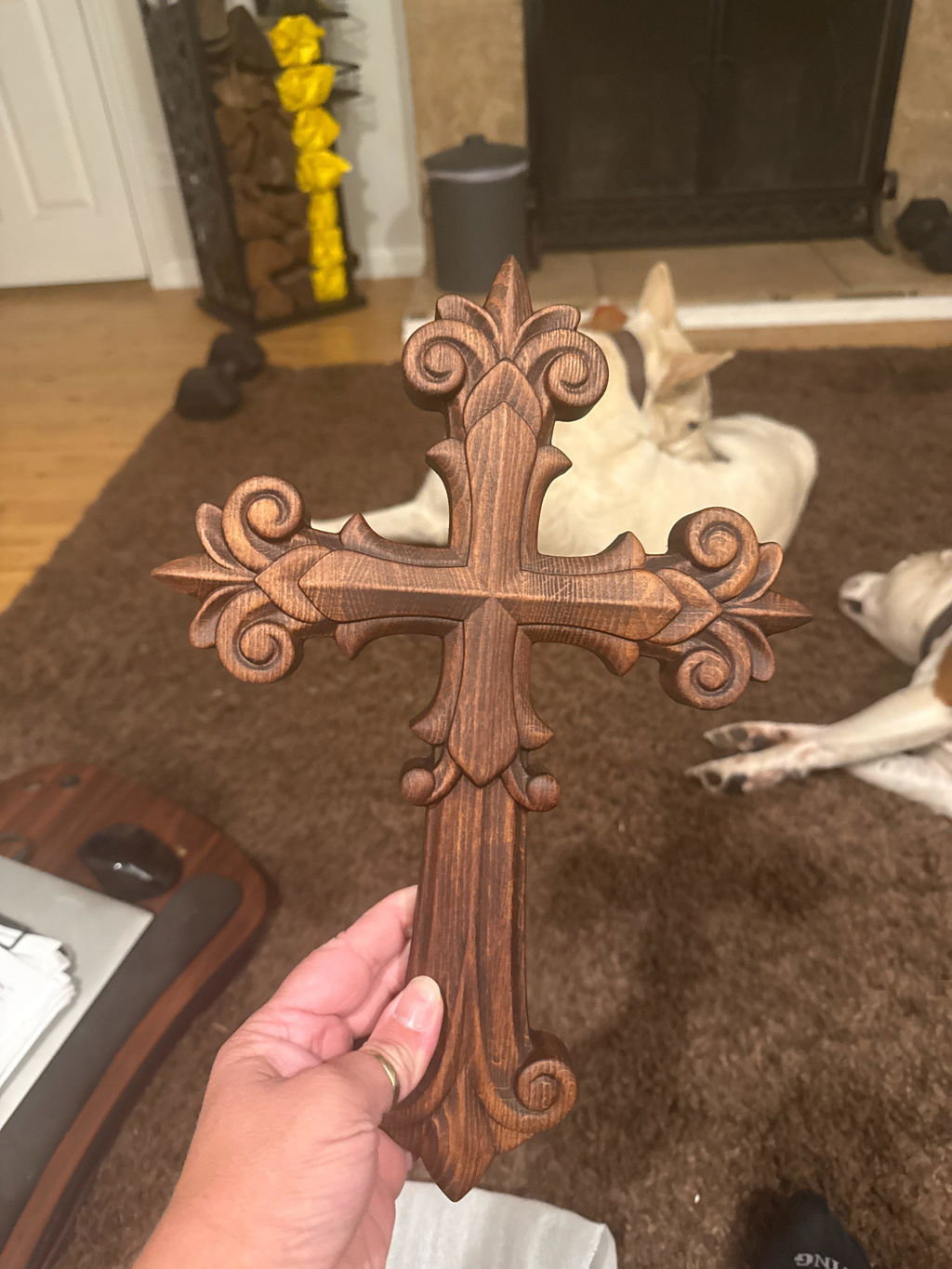
This material quality also suits interiors that favor warmth over display. Wood can sit comfortably beside linen, leather, stone, old books, family photographs, or a simple wooden cross. It works in rustic rooms, but it can also provide a welcome natural contrast in a more restrained modern space.
Creating a Reflective Corner at Home
Placement changes the way symbolic decor is experienced. A busy wall filled with unrelated objects may make even a carefully carved piece feel like background noise. A quieter arrangement gives the imagery room to be noticed and interpreted.
In a study or reading corner, the carving can accompany books on Christian life, history, ethics, or American heritage. In an entryway, it can serve as a compact statement about the values associated with the household. A family room may make it more conversational, especially when several generations understand freedom and responsibility in different ways.
It may also sit near—but not replace—the clearly devotional focus of a prayer corner. A Bible, cross, rosary, candle used safely, or image of Christ may remain central, while civic-themed decor occupies a nearby wall. This simple visual hierarchy helps distinguish Christian worship from patriotic remembrance. It allows both to be present without asking one symbol to perform the work of the other.
Natural light from the side can reveal the relief of the carving, while gentle evening lighting can emphasize its texture. Leaving some open wall space around it usually creates a more restful composition. The aim is not to build a themed display, but to create an area where an object with personal meaning can be seen without demanding constant attention.
A Gift That Invites Conversation
Meaningful gifts are often most successful when they reflect the recipient’s actual life. This kind of wood wall art may suit someone who values American history, Christian home decor, traditional craftsmanship, or the connection between liberty and duty. It can be considered for a housewarming, retirement, Father’s Day, Christmas, or another family occasion where a lasting object feels more appropriate than a temporary gesture.
Before choosing strongly symbolic decor, however, it is wise to know the recipient well. Beliefs about faith, citizenship, and the Second Amendment are personal and sometimes complex. A thoughtful gift should acknowledge that complexity rather than presume agreement. A short handwritten note can help: instead of making a political slogan, it might express gratitude for the person’s steadiness, service, wisdom, or commitment to family.

For families, the gift may become an invitation to tell stories. A parent or grandparent can explain what certain freedoms have meant in their lifetime, while younger family members can ask how rights are connected to self-control, neighborly care, and respect for human dignity. The object becomes most valuable not when it ends discussion, but when it encourages a more patient one.
Living with Symbols Gently
Faith-inspired home decor is at its best when it supports a lived set of values. No carving can create courage, wisdom, or peace on its own. It can, however, remind us to practice them. Wood is especially suited to that humble role: strong yet marked by grain, shaped through patient work, and made more expressive through light and shadow.
For those drawn to Christian wood carving and American heritage, this faith-and-freedom carved wall art offers a layered subject for the home. Its deepest contribution may be quiet rather than declarative—a daily prompt to hold conviction together with humility, freedom together with responsibility, and strength together with peace.