Mary and the Christ Child in Christian Wood Carving: A Quiet Focus for the Home
A home does not need to resemble a chapel in order to make room for prayer. Sometimes a single, thoughtfully placed image is enough to interrupt the hurry of an ordinary day and call the heart back to stillness. A wooden crucifix depicting the Virgin Mary with the Christ Child brings together several familiar elements of Christian visual tradition: the Cross, the tenderness of mother and child, and the mystery of God entering human life.
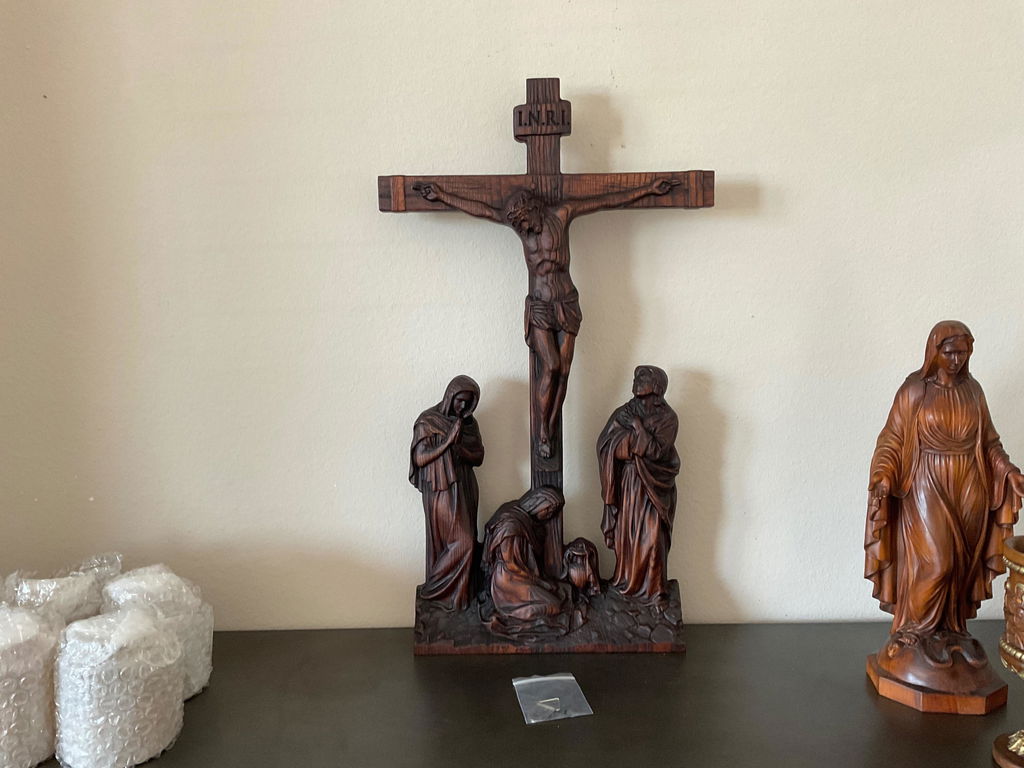
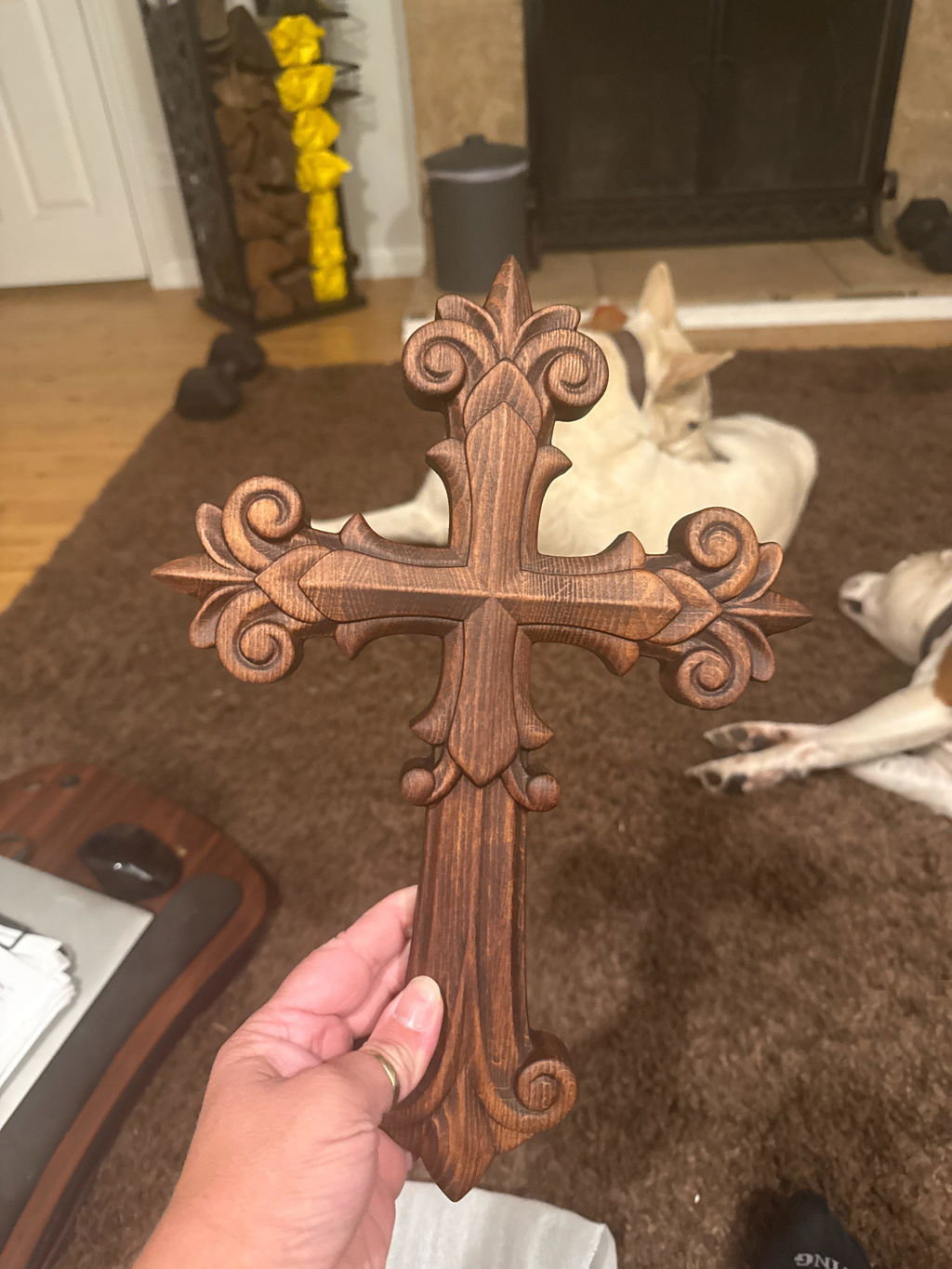
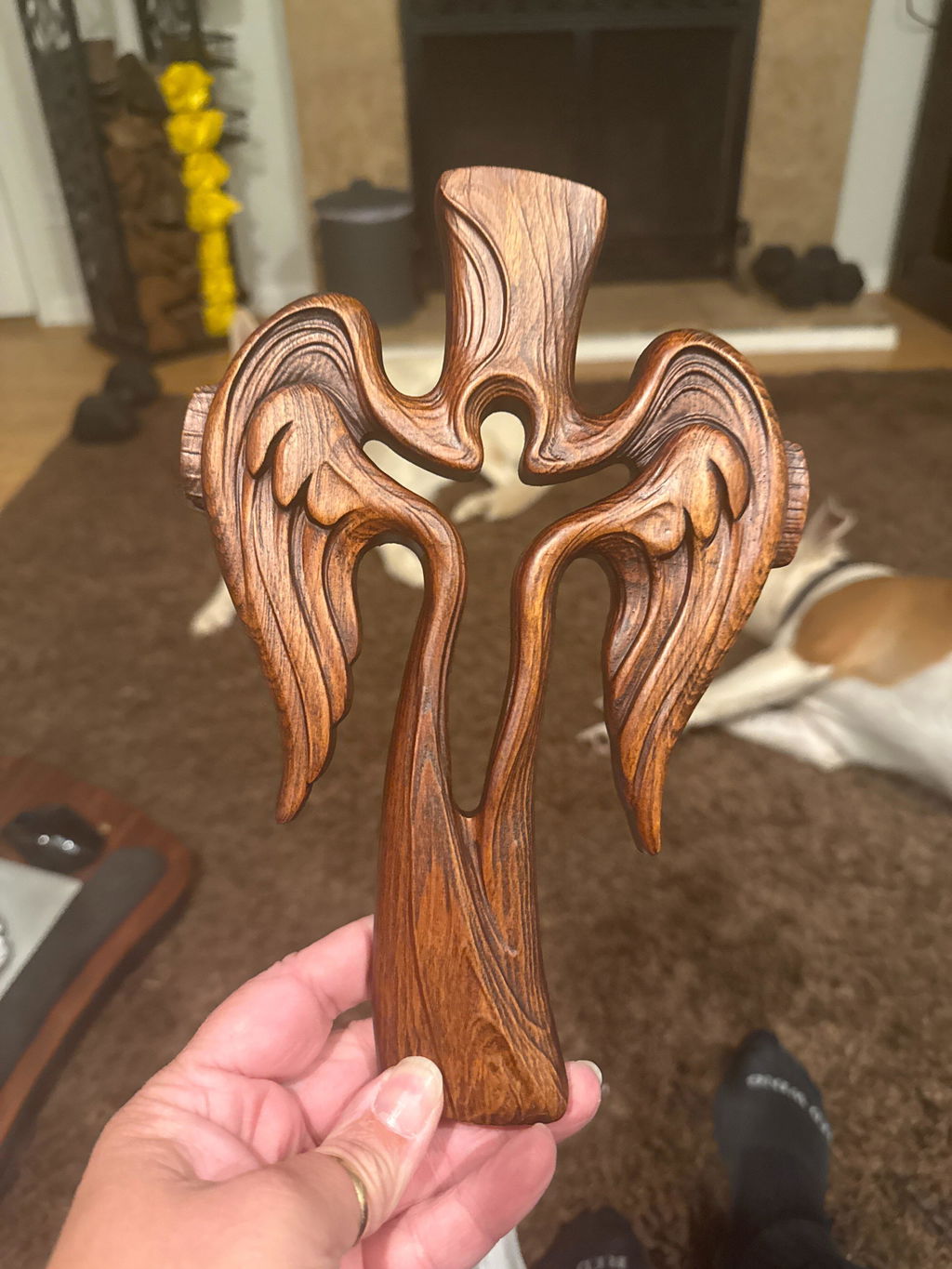
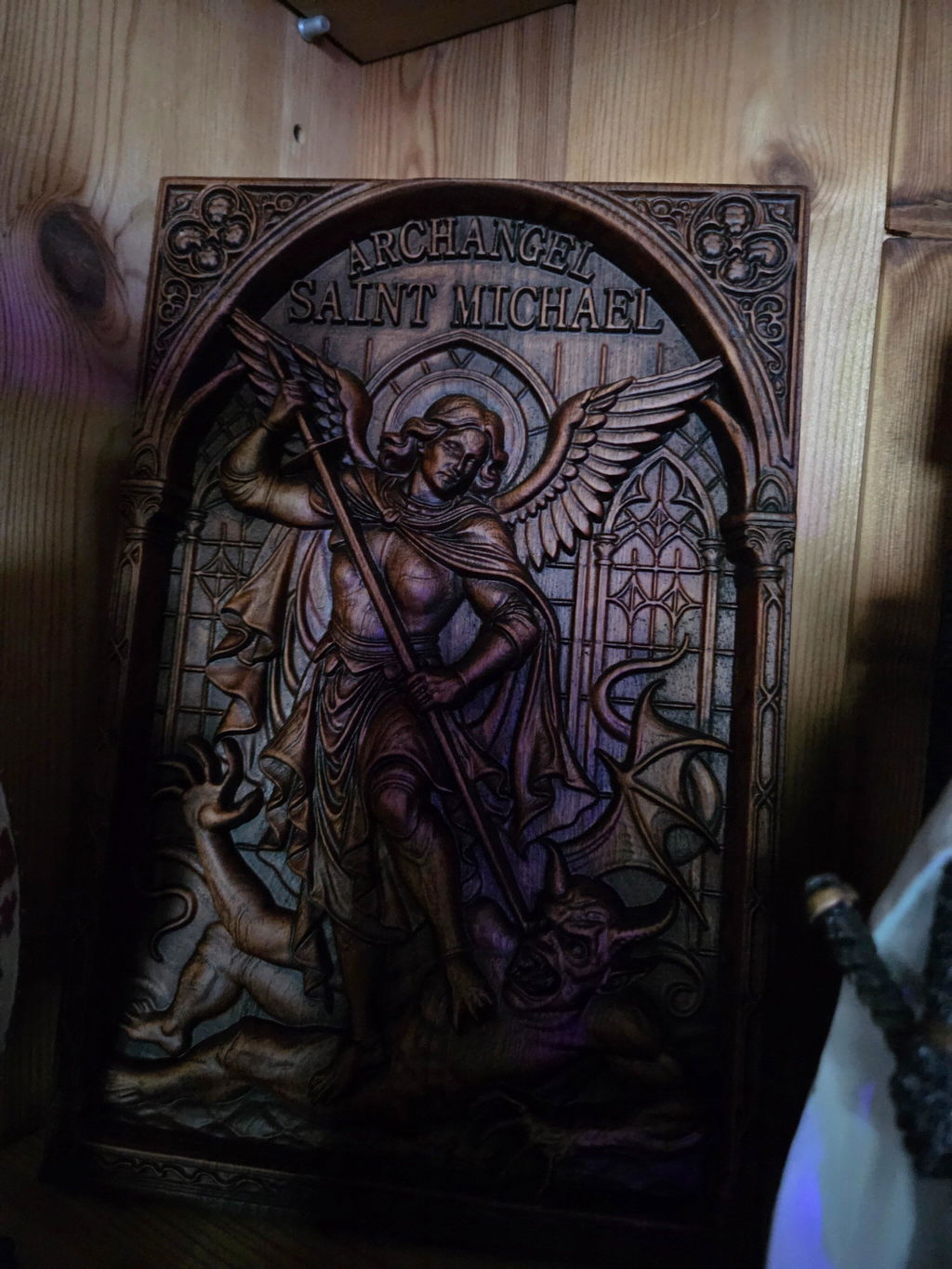
The BGCOPPER wooden crucifix of the Virgin Mary and Baby Jesus can be approached in this quiet way—not merely as wall decoration, but as an image that helps a room hold memory, reflection, and prayer. Its subject is recognizably Christian, while the carved wood gives it a warmth that feels at home among books, textiles, family photographs, and other objects gathered over time.
Two Christian images held together
The Cross and the image of Mary with Jesus often evoke different emotional tones. The crucifix points toward sacrificial love, suffering, hope, and redemption. The Madonna and Child suggests tenderness, trust, protection, and the humble beginnings of Christ’s earthly life. When these images appear within one composition, they invite the viewer to contemplate the breadth of the Gospel story rather than a single isolated moment.
For Catholic Christians in particular, Mary is honored because of her relationship to Christ and her willing response to God. Her presence in sacred art directs attention toward Jesus; it does not need to compete with him. An image of Mary holding the Child can therefore become a gentle visual meditation on the Incarnation: the belief that Christ truly entered human history, family life, and the vulnerability of infancy.
The Cross surrounding or accompanying this scene adds another layer. It can remind the viewer that Christian love is both tender and steadfast. In a family setting, that combination may feel especially meaningful. Care is expressed through affection, but also through patience, responsibility, forgiveness, and the willingness to remain present during difficult seasons.

Why carved wood feels at home in devotional spaces
Wood has a distinct presence in an interior. Its grain, color variations, and tactile appearance introduce an organic note that can soften a wall and complement both traditional and simple contemporary rooms. Unlike highly reflective decoration, carved wood tends to absorb light and reveal its details gradually. That visual quietness suits an object intended for contemplation.
Wood carving also makes the role of the maker visible. Curves, borders, recessed areas, and raised figures depend on careful shaping. Even when we do not know every step behind a particular piece, the carved surface encourages us to notice form and shadow. This slow attention can itself be valuable. Prayer is not enhanced by constant novelty; it often grows through returning to the same words, gestures, and images with renewed awareness.
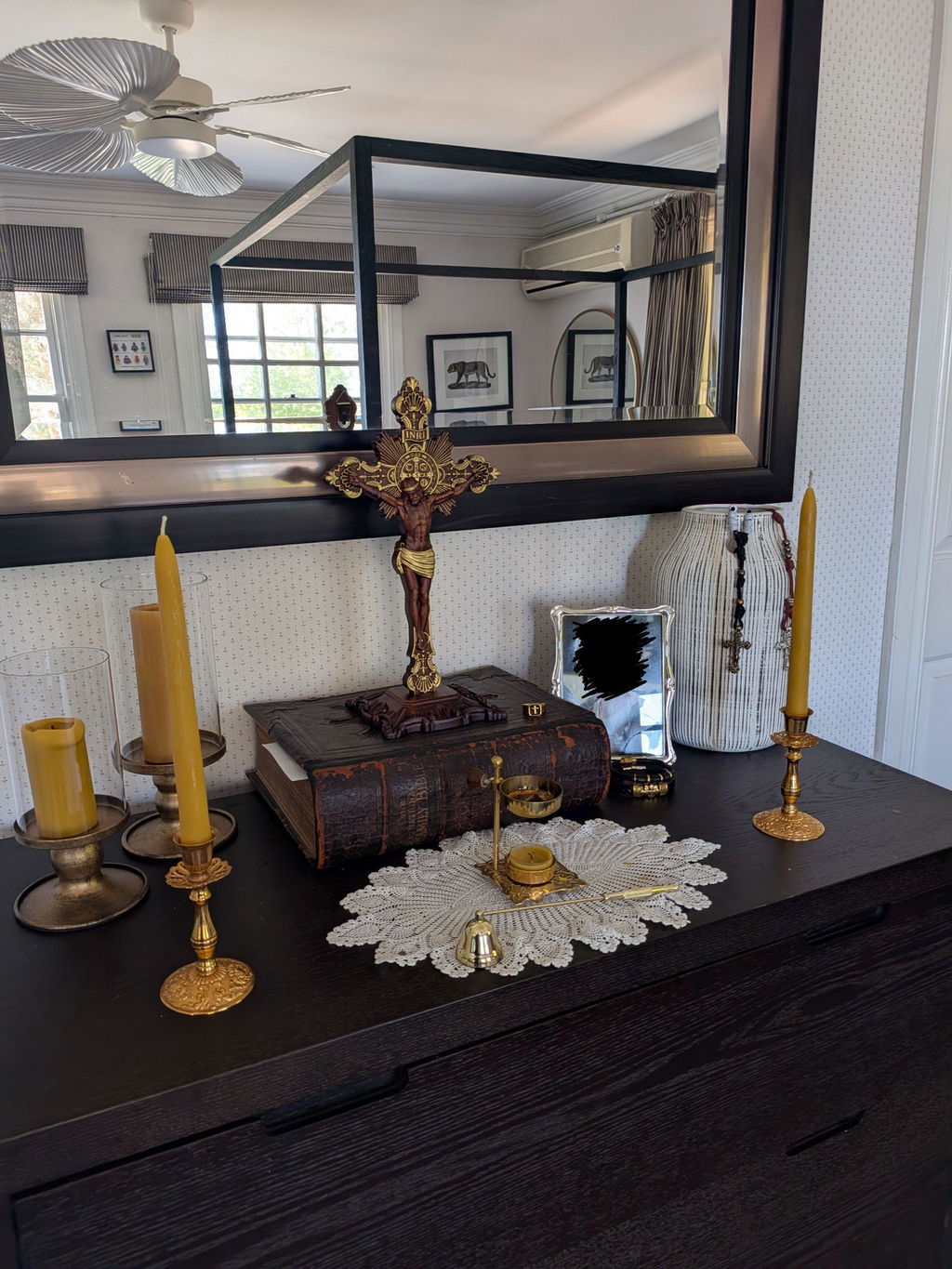
A religious wood carving can also bridge sacred symbolism and everyday domestic materials. It does not need an elaborate room around it. The natural character of wood works comfortably beside a linen-covered table, a ceramic vase, a small shelf, or a well-used Bible. The result can feel devotional without becoming theatrical.

Creating a simple family prayer corner
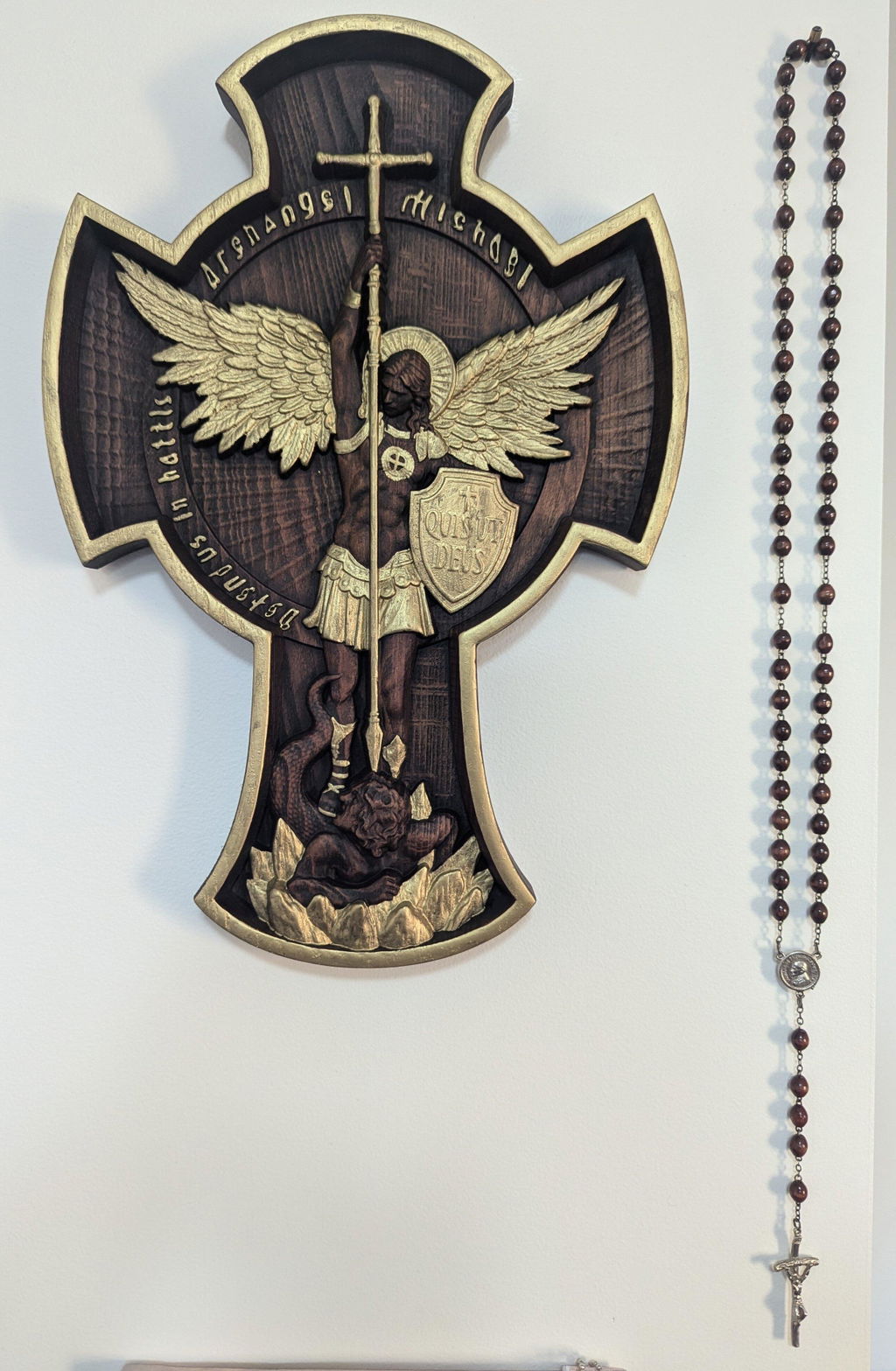
A prayer corner is less about size than intention. A quiet section of a bedroom, living room, hallway, or study can become a regular place to pause. Begin with a location that is visible but not visually crowded. The crucifix may serve as the central element, with a Bible, prayer book, rosary, or small cloth arranged nearby according to your family’s practice.
Good natural or gentle ambient light can help the carving remain legible without turning the space into a display. Leave some open area around the piece so that its outline can be seen clearly. If the room already contains many patterns and colors, a restrained arrangement will allow the image to hold attention. In a quieter room, the carving can be paired with one meaningful family object rather than a large collection.
The most important step is to use the space. A family might gather there briefly before school, remember loved ones in the evening, or sit silently after reading Scripture. Someone living alone may use it as a visual cue to begin morning prayer. During Advent or Christmas, the image of Mary and the Christ Child can support reflection on the Nativity; during Lent, the cross-shaped form may guide attention toward Christ’s self-giving love.
A faith-inspired gift with room for personal meaning
Religious gifts are most thoughtful when they acknowledge the recipient’s actual faith and circumstances. A Virgin Mary and Christ Child wooden crucifix may be appropriate for a Catholic household, a person establishing a first prayer space, or relatives who value Christian art in the home. It may also mark a baptism, wedding, house blessing, Mother’s Day, Christmas, or another family milestone.
The meaning of the gift can be carried by a simple handwritten note. Rather than explaining what the recipient should feel, the giver might share why the image called that person to mind: Mary’s attentive care, the Child’s humility, the Cross as a sign of faithful love, or the hope of creating a peaceful home. That personal context often matters more than formal presentation.
It is also wise to consider where the recipient might place the piece and whether Christian devotional imagery is part of their tradition. A meaningful faith gift should feel respectful, not presumptive. When chosen with care, it can become part of the recipient’s daily environment and accompany many seasons of family life.

Living with sacred art in an ordinary home
Sacred art does not perform prayer on our behalf, nor does a beautiful room guarantee an attentive spiritual life. What it can do is create a point of return. On distracted days, the outline of a cross may recall a familiar prayer. In a season of caregiving, Mary’s embrace may speak quietly of tenderness. During uncertainty, the Christ Child may call attention to humility and trust.
This is where Christian home decor can move beyond styling. An object becomes meaningful through the habits, memories, and relationships that gather around it. The family prayer corner witnesses rushed mornings, celebrations, grief, reconciliation, and gratitude. Over time, the carved image remains steady while the people who pass before it continue to change.
The enduring appeal of this subject lies in its balance: Mary and the Child bring intimacy, while the Cross opens the scene toward the larger Christian story. Rendered in wood, the image feels grounded and approachable. Whether placed in a dedicated prayer corner or on a calm wall within the home, it offers a modest invitation—to pause, remember, and let faith enter the texture of daily life.