The Eagle and Flag in a Christian Home: Faith, Freedom, and Carved Wood
Objects placed on a wall often become part of a household’s visual language. They can recall family history, express gratitude, or quietly establish the character of a room. An eagle set against the American flag carries especially strong associations with courage, vigilance, service, and national memory. When that scene is rendered in carved wood, its public symbolism takes on a warmer, more domestic presence.
The Eagle & Flag Wood Wall Plaque brings these familiar emblems together in a dimensional wooden composition. It can suit a living room, study, entryway, or other reflective space without needing to function as a loud statement. For Christian households, it may also invite a thoughtful question: how can patriotic decor live alongside the signs and practices of faith with balance and clarity?
Understanding the Eagle, the Flag, and Christian Symbolism
The bald eagle and the American flag are civic symbols rather than specifically Christian ones. That distinction matters. A cross, an icon, a crucifix, or an image drawn from Scripture has a direct place within Christian visual tradition; patriotic imagery speaks first about national belonging, shared history, liberty, sacrifice, and responsibility. The two kinds of symbols do not need to be confused in order to appear meaningfully within the same home.
For many Christian families, gratitude for freedom includes gratitude for the ability to worship, gather, pray, and serve neighbors openly. An eagle-and-flag plaque can therefore act as a reminder of stewardship rather than triumphalism: freedom is not only something to celebrate, but something to use with humility and care. In a Catholic or Christian home, this perspective keeps civic affection connected to virtues such as gratitude, courage, justice, and concern for the common good.
The eagle also appears as a poetic image in the Bible. Isaiah 40:31 describes those who hope in the Lord as renewing their strength and soaring on wings like eagles. The verse does not turn every eagle image into sacred art, but it helps explain why Christians may associate the bird with renewed strength, patient hope, and a wider spiritual horizon. In a home setting, those associations can add a reflective layer while preserving the plaque’s clearly American subject.

Why Carved Wood Feels at Home
Wood brings softness to imagery that might otherwise feel formal or monumental. Grain, tonal variation, and carved shadows respond to changing daylight, allowing a wall piece to look slightly different from morning to evening. The product description identifies this plaque as solid beechwood, a material whose warm surface helps the eagle’s feathers, the flag’s folds, and the layered relief read as tactile details rather than printed graphics.
Carving also rewards slower attention. From across a room, the overall outline is easy to recognize; at closer range, the eye notices recesses, raised edges, and the relationship between the eagle and the flag. This movement between broad symbol and small detail is one reason wooden decor works well in rooms intended for reading, conversation, prayer, or remembrance. It offers visual interest without relying on brightness or constant novelty.
Natural variation is part of the appeal of wooden decor. A thoughtful arrangement can echo that warmth through a simple console, a woven textile, a ceramic lamp, or a restrained palette of cream, brown, navy, and muted red. The aim is not to turn the room into a themed display, but to let one meaningful piece settle naturally among objects that already belong to family life.
Placing Patriotic Wood Art in a Faith-Centered Home
In an entryway, the plaque can introduce themes of welcome, heritage, and responsibility. In a study or home office, it may recall disciplined service and the duties that accompany leadership. Above a mantel or sideboard, it can anchor a family arrangement that includes photographs, books, or inherited keepsakes. Giving the carving a little open wall space around it allows its relief and outline to remain legible.
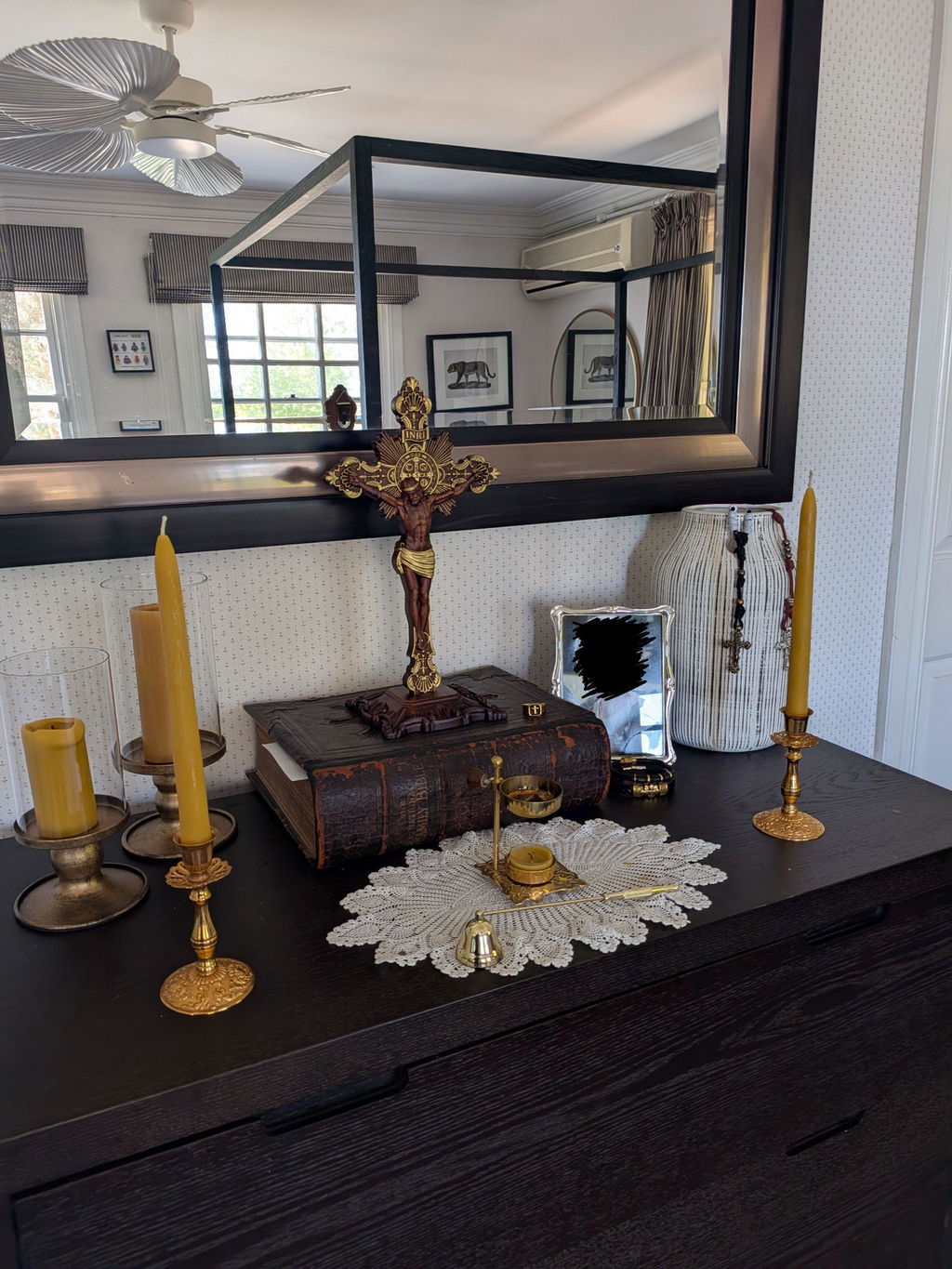
A prayer corner calls for additional discernment. The central focus of Christian prayer should remain unmistakable: Scripture, a cross or crucifix, and other devotional items appropriate to the household’s tradition. Patriotic art may be placed nearby, but it need not compete with those sacred signs. A balanced arrangement might use the eagle-and-flag carving on an adjacent wall, where it can prompt prayers for public servants, military families, veterans, civic peace, and the well-being of neighbors.
This distinction can actually make a space more meaningful. Faith is not reduced to a national identity, and love of country is not treated as a substitute for worship. Instead, the home acknowledges both spiritual devotion and earthly responsibilities. That measured approach is useful for anyone exploring faith-conscious patriotic wall decor that feels personal while remaining visually calm.

A Meaningful Gift for Service, Heritage, and Home
A carved eagle and flag can be a considerate gift when the recipient has a genuine connection to its imagery. That may include a veteran, an active-duty family, a public servant, a father or grandfather who values American history, or someone creating a new home after retirement. It can also mark a housewarming, Father’s Day, Veterans Day, Independence Day, or a family milestone without depending on overt sales language or passing trends.
The most meaningful presentation explains why the object was chosen. A short handwritten note might express gratitude for years of service, acknowledge a family story, or offer a prayer for wisdom and protection in a new season of life. Those words give context to the gift and help it become more than decoration. If the recipient is Christian, the note can gently connect courage with service, freedom with responsibility, and strength with hope.
Before giving wall art, it is wise to consider the recipient’s taste and available space. Some homes favor rustic textures; others combine traditional symbols with clean, contemporary furnishings. Because this design uses natural wood and a recognizable silhouette, it can bridge several styles, but its subject remains specific. A gift is most thoughtful when it reflects the recipient rather than merely the occasion.
Creating a Quiet, Coherent Display
Good placement begins with the room’s purpose. In a busy gallery wall, keep neighboring frames simple enough that the carving’s three-dimensional details are not lost. In a quieter setting, pair it with one or two objects rather than filling every surface. Warm, indirect light can emphasize the relief, while excessive glare may flatten it. As with any wood object, following the product’s care guidance and avoiding harsh cleaning methods helps preserve the surface.
Seasonal accents can be subtle. A small arrangement of greenery, a folded flag kept with respect, or family photographs may complement the plaque for national observances. During the rest of the year, the piece can remain part of the home’s everyday story—a reminder that gratitude and responsibility are not limited to holidays.

A Warm Expression of Memory and Responsibility
Christian home decor is most compelling when it supports reflection rather than simply filling space. Although the eagle and American flag are not uniquely Christian emblems, they can coexist thoughtfully with a faith-centered home when their meaning is approached with humility. They may recall sacrifice, encourage gratitude for liberty, and prompt prayer for the people and communities entrusted to our care.
The BGCOPPER eagle-and-flag carving offers one way to express that story through a natural material and a familiar image. Whether placed in a study, entryway, living room, or near—but not at the center of—a prayer space, it can serve as a quiet point of connection among heritage, service, craftsmanship, and hope.