Noah’s Ark in Wood: A Faith-Inspired Puzzle for Home and Family
Some objects invite us to slow down before they ask us to understand them. A wooden puzzle does this through touch, shape, and patient attention; the story of Noah’s Ark does it through an ancient account of trust, preservation, and new beginnings. When the two meet, a familiar biblical scene becomes something a family can see, handle, discuss, and display.
The Noah’s Ark wood brain teaser puzzle from BGCOPPER presents Noah and pairs of animals as fitted wooden pieces. It works both as an engaging challenge and as faith-inspired wooden decor. Rather than treating the Ark only as a distant image, the puzzle gives the story a quiet physical presence in everyday home life.
The enduring meaning of Noah’s Ark
The story of Noah appears in Genesis and has long held an important place in Christian imagination. Its visual language is immediately recognizable: an ark, gathered animals, rising waters, and the hope of life beyond the storm. For many believers, the account encourages reflection on faithful obedience when the future is uncertain. It also turns attention toward God’s care, the value of living creatures, and the possibility of renewal.
No single decorative object can contain all the meaning of a biblical narrative, and a puzzle is not a substitute for Scripture or prayer. It can, however, become a gentle prompt. As each animal finds a place within the ark, adults and children may talk about why the creatures were gathered, what Noah was asked to do, or what patience and trust look like in ordinary life. The process naturally leaves room for questions rather than demanding a formal lesson.

Why wood suits this biblical scene
Wood has an understated warmth that feels especially appropriate for the Ark. Natural grain and shifting tones keep the scene from looking overly polished or mechanical. They also make each fitted silhouette easy to appreciate as an individual form. According to the product description, the puzzle is precision cut and may combine several woods, with the particular mix varying from one puzzle to another. That variation is part of the material’s character rather than a distraction from it.
Wooden carving and puzzle making both depend on the relationship between positive and negative space. Here, Noah, the animals, and the vessel are not merely printed on a flat surface. Their outlines determine how the whole composition comes together. The result encourages close looking: the curve of an animal’s back, the shape of the ark, and the small gaps that guide each piece toward its proper place.
This tactile quality can support a slower kind of attention. Screens tend to move us rapidly from one image to another, while a wooden object remains still and asks the hands and eyes to cooperate. Completing the puzzle may become a calm family activity, a short break during a busy day, or a thoughtful way to revisit a story children already know.

A place in a Christian family home
Because the completed design is visually self-contained, it can rest on a shelf, side table, or bookcase when it is not being solved. In a family room, it offers an alternative to decor that is purely ornamental. In a child’s room or learning area, it can sit near an illustrated Bible or books about animals and creation. Its natural color palette can also blend with rustic, traditional, or simple contemporary interiors.
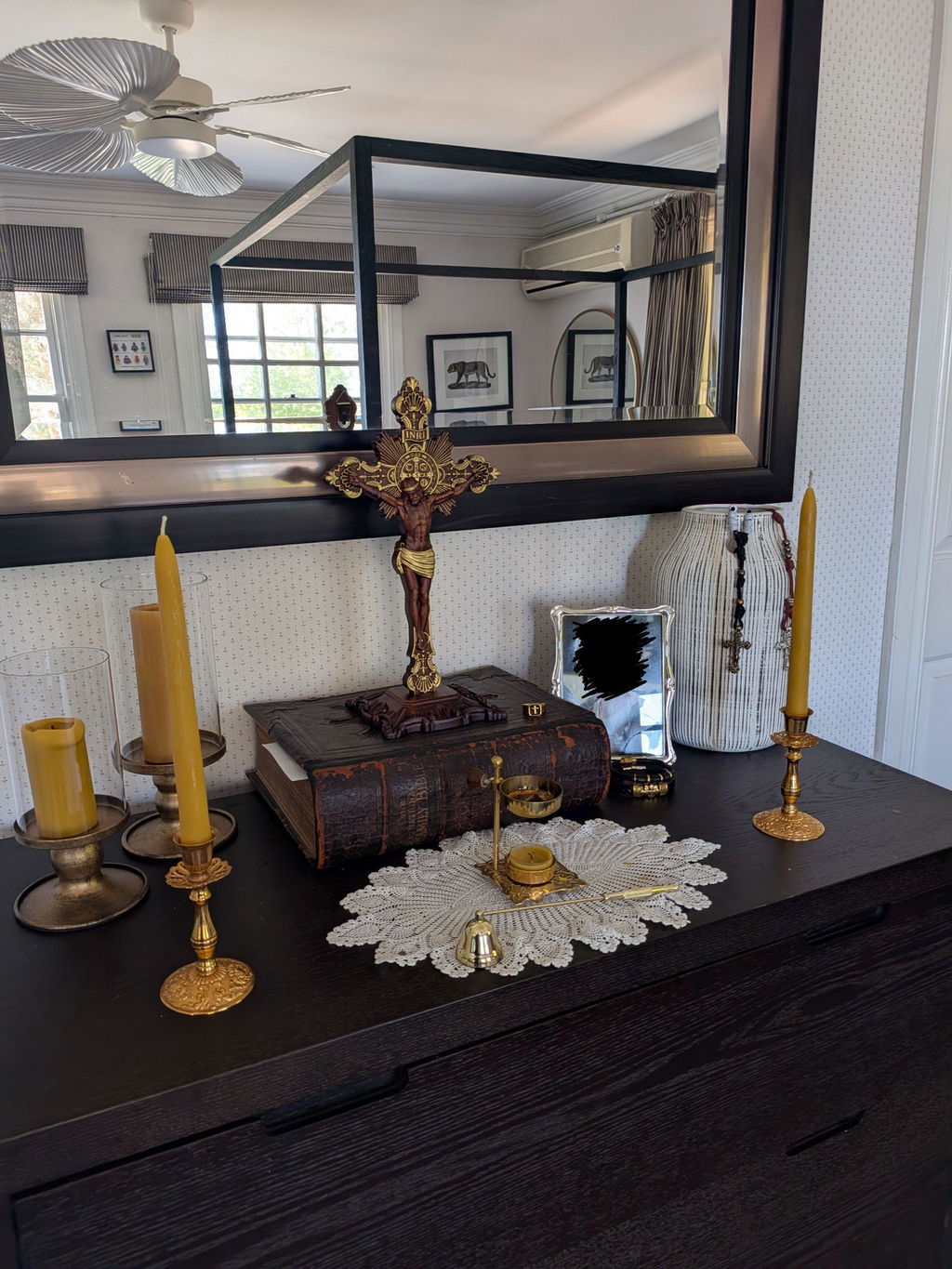
A prayer corner is another possible setting, especially in a home where biblical art helps establish a reflective atmosphere. The puzzle need not become the focal point of prayer. Instead, it can sit nearby as a reminder of steadfastness, care, and hope after difficulty. Christian and Catholic households often build such small spaces gradually, using a Bible, crucifix, candle, sacred image, or meaningful family object. A Noah’s Ark scene adds an Old Testament story to that visual conversation without overwhelming the space.
Families might also use the puzzle alongside storytelling. One person can read a suitable passage or retell the account while another arranges the pieces. With younger family members, conversation can focus on naming the animals, noticing pairs, and considering responsibility for living things. With older children or adults, questions about trust, uncertainty, covenant, and renewal can open naturally. The object provides a starting point, while the depth comes from the people gathered around it.
A meaningful gift without a loud message
Faith-inspired gifts are often most welcome when they respect the recipient’s life and leave room for personal use. This wooden Noah’s Ark puzzle may suit a family that values biblical stories, natural materials, or screen-free activities. It could be considered for a baptism or christening household, a child’s birthday, a family holiday, or a housewarming for a Christian home. It may also appeal to an adult collector of distinctive wooden puzzles.
The gift’s meaning does not have to be explained with grand language. A short handwritten note might mention patience, safe keeping, new beginnings, or the joy of learning together. That restraint allows the recipient to decide whether the piece becomes a frequently used puzzle, a display object, a conversation starter, or some combination of all three.

Keeping faith and craft in everyday view
Religious decor can be expressive without being elaborate. Sometimes a modest object carries meaning precisely because it participates in daily routines. Pieces are taken out, turned in the hand, fitted together, and returned to the shelf. Over time, the familiar scene may become connected with shared afternoons, family conversations, and the steady practice of paying attention.
Noah’s Ark remains a story people encounter at many ages, each time noticing something different. Rendered as a wooden brain teaser, it offers both a challenge and an invitation: gather the scattered forms, consider how each belongs, and see the larger picture emerge. In that simple rhythm, craft and faith meet in a way that is warm, approachable, and at home in ordinary life.