Carved Brotherhood: A Christian Reflection on Courage, Service, and Home
Some pieces of wall art simply fill an empty space. Others hold a story that asks us to pause. An image of one soldier carrying another belongs to the second kind. It speaks through posture rather than words: one person bears another’s weight, and no one is abandoned when the road becomes difficult. In a Christian home, that visual language can open a thoughtful conversation about courage, service, friendship, and the responsibility to remain beside those who suffer.
The BGCOPPER soldiers brotherhood wood carving brings this scene into relief, giving it depth and a tactile presence. Its military imagery is specific, yet the human message is widely understood. Families with a connection to military service may see remembrance and honor in it. Others may recognize a broader reminder of loyalty: love is made visible when one person chooses to carry another.

Brotherhood through a Christian lens
Christian teaching consistently joins faith with care for the neighbor. The Gospel does not describe love only as an inward feeling; it points toward patience, presence, mercy, and self-giving action. A scene in which a soldier supports a wounded companion can therefore prompt reflection on a familiar spiritual question: Whose burden am I being asked to help carry?
The product presentation references John 15:13, a verse often associated with sacrificial love: “Greater love has no one than this: to lay down one’s life for one’s friends.” Christians understand the fullest meaning of self-giving love through Christ. A work of decorative art is not a substitute for Scripture, prayer, or sacred imagery, but it can act as a visual prompt. It may remind a viewer to pray for service members, veterans, families living with loss, and anyone carrying burdens that remain unseen.
There is also an important gentleness in the act depicted. Strength is not shown as dominance. It is shown as protection and support. That distinction gives the carving relevance beyond a military setting. Parents carry children through seasons of uncertainty; friends remain present through illness; parish communities bring meals, companionship, and practical help. Brotherhood, in this sense, is not limited by uniform or circumstance. It is the daily practice of refusing indifference.
Why carved wood suits a story of endurance
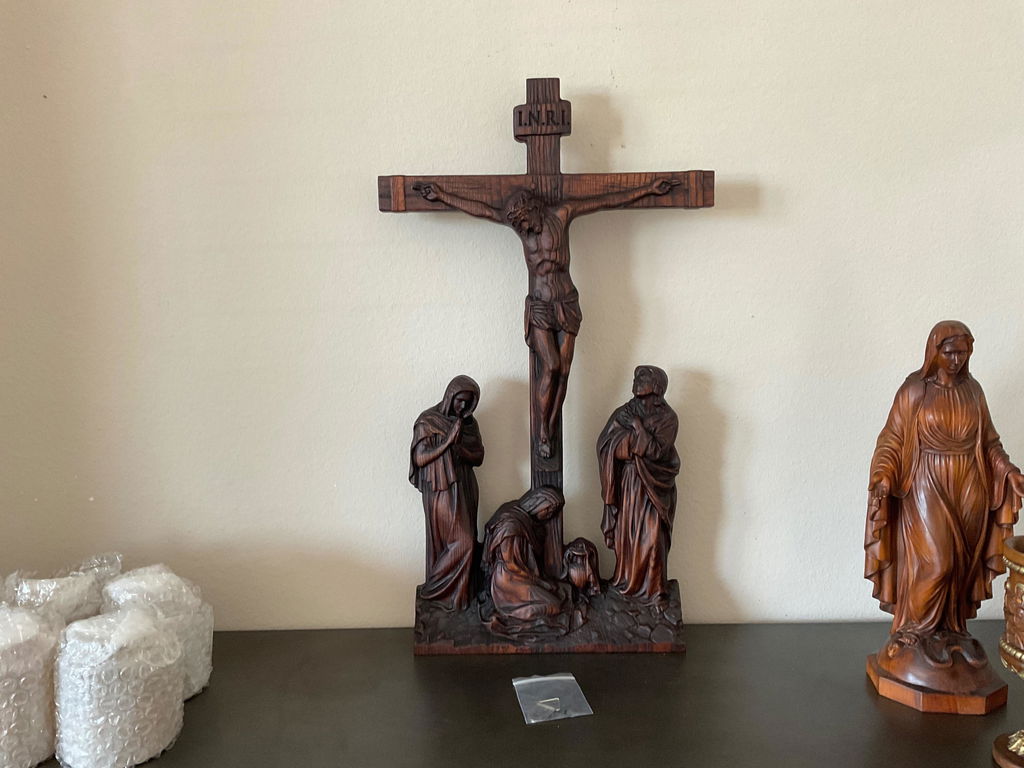
Wood has a natural warmth that works especially well with reflective subjects. Grain, tone, and carved contours respond differently as daylight changes, so a relief can appear quiet in soft morning light and more defined in the evening. Unlike a flat printed image, carved wall art invites the eye to notice shadow, depth, and the relationship between the figures.
The product description identifies the piece as hand-carved beechwood with a polished matte appearance. Those qualities support the emotional character of the scene without requiring elaborate decoration around it. The natural-looking surface keeps attention on the gesture of one person carrying another. Small variations and visible texture are part of what makes wood carving feel grounded and human.

A place in a prayer corner or remembrance space
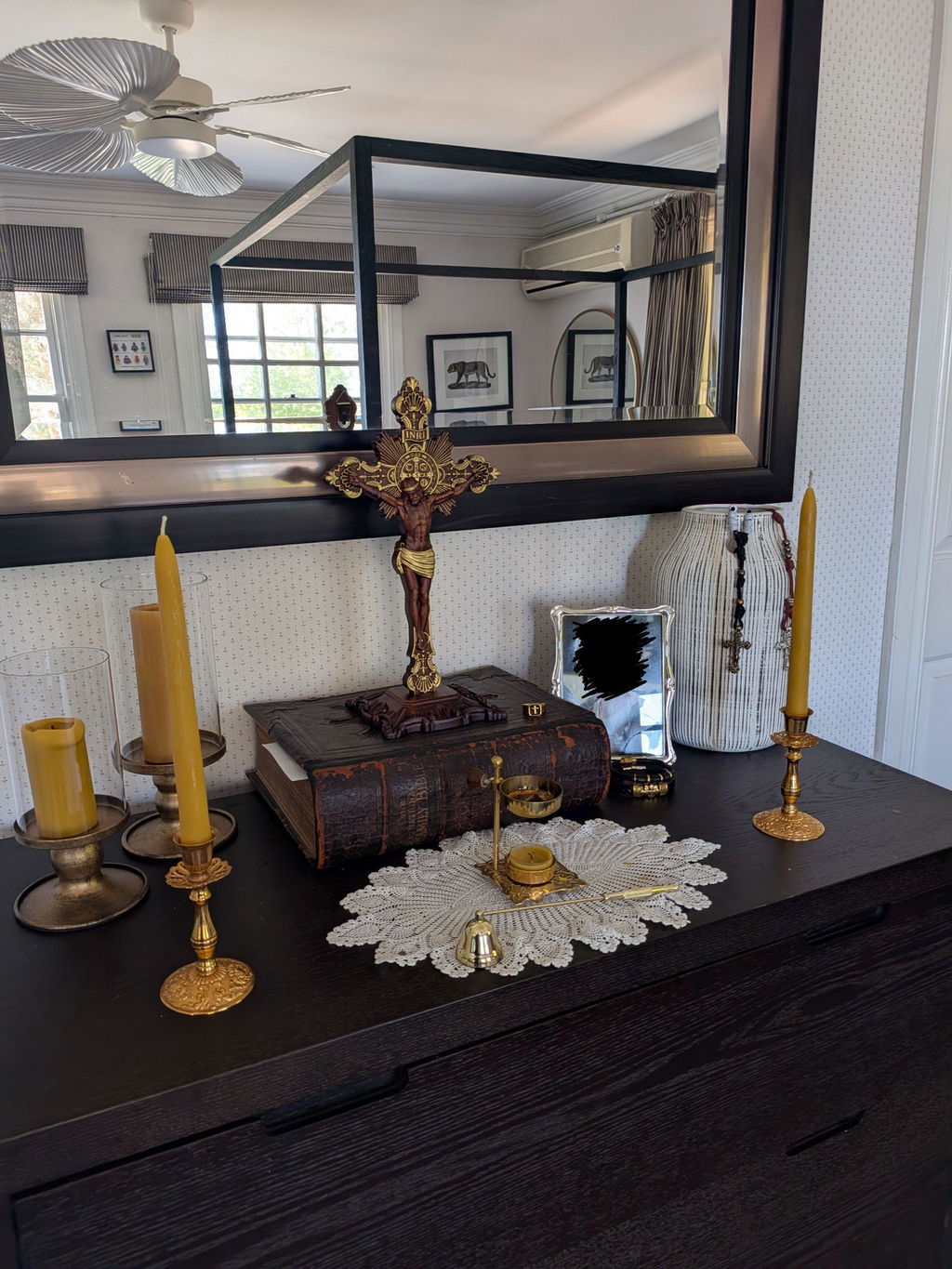
A home prayer corner does not need to be large or visually crowded. A small table, a Bible, a cross, and a place to sit may be enough. This carving can be placed near such a space when its themes are personally meaningful, especially in a household that regularly prays for someone in active service or remembers a veteran. It should complement, rather than compete with, the central devotional elements of the area.
For a calm arrangement, allow some open wall around the carving. Natural wood, linen, muted ceramics, and warm neutral colors can create a restrained setting. A small lamp positioned nearby may reveal the carved relief more softly than strong overhead lighting. In a study, hallway, or family room, the piece can also stand on its own as narrative wall decor—an invitation to remember the values a household hopes to practice.
Families may choose to place a photograph, service keepsake, or handwritten prayer nearby. The aim is not to turn the room into a display of objects, but to give memory an intentional place. When children ask about the scene, adults can speak honestly about service and sacrifice while emphasizing compassion, peacemaking, and care for those who return from difficult experiences.
A meaningful gift for service, friendship, and remembrance
Faith-inspired gifts are most lasting when they acknowledge a real story. This carving may be appropriate for a veteran, an active-duty service member, a military family, or a close friend whose loyalty has been tested over time. It can also mark retirement, homecoming, a promotion, or a period of remembrance. The meaning comes less from the occasion’s formality than from the connection between the image and the recipient’s life.
A short personal note can make such a gift more thoughtful. Rather than explaining every symbol, mention one memory or quality: “Your steadiness helped our family through a hard year,” or “May this remind you that your service and your friendships are remembered.” If the gift is given in grief, simple words are usually best. Avoid assuming what another person feels; offer the piece as a sign of presence and respect.
Before choosing it for someone else, consider whether military imagery is welcome in that person’s home. For some, it is deeply affirming; for others, difficult memories may make it unsuitable. Thoughtful Christian gifting begins with attention to the recipient, not merely the symbolism of the object.
Living the message beyond the wall
The deepest value of symbolic decor lies in what it helps us remember after we turn away from it. A carving about brotherhood can encourage practical questions: Who needs a phone call? Who is carrying grief alone? Is there a veteran in the community who would value patient companionship? Can a family support a local ministry serving military households or people recovering from trauma?
Viewed this way, the carved soldiers wall artwork is not simply about bravery in an exceptional moment. It can point toward ordinary fidelity—the repeated choice to stay, listen, pray, and help. Wood gives that message a warm and enduring form, while the image leaves room for personal memory.
A Christian home is shaped not only by the objects it displays, but by the habits of welcome and mercy practiced within it. When chosen with care, this carving can quietly support those habits: honoring service, holding remembrance, and returning the heart to a simple truth—that strength is most meaningful when it carries love.