The Holy Family at Home: A Nativity Wood Carving for Prayer and Reflection
A Nativity image does not need to appear only at Christmas. In many Christian homes, the Holy Family remains a quiet companion throughout the year: a reminder of tenderness, trust, responsibility, and the sacred character of ordinary family life. A carved wooden image can make that reflection especially approachable. Its natural surface belongs comfortably beside books, candles, woven textiles, and the familiar objects of daily living rather than feeling separate from them.
The BGCOPPER Holy Family Nativity wood carving presents Mary, Joseph, and the Christ Child in a Byzantine-inspired composition. Designed as a wooden wall plaque, it brings together devotional imagery and the warmth of carved wood. The result can serve as Catholic home decor, a focus for a prayer corner, or a thoughtful visual pause in a room where family and guests gather.
The Holy Family as an Image of Faithful Presence
Nativity art often draws attention to what is small and easily overlooked. The scene centers not on grandeur, but on a child received with care. Mary’s closeness, Joseph’s protective presence, and the infant Jesus together form an image of love expressed through attention. For Christian viewers, that arrangement can invite reflection on the Incarnation: divine love entering human life through a family, a home, and the vulnerability of infancy.
The Holy Family also offers a gentle lens through which to consider one’s own household. No family is without strain or uncertainty, and sacred art does not erase those realities. Instead, it can create room to remember patience, mutual care, and the value of remaining present to one another. In Catholic devotional life, an image is not merely visual decoration; it may help gather a wandering mind and direct attention toward prayer. Its meaning grows through the habits that form around it.

Why Carved Wood Feels at Home in Devotional Spaces
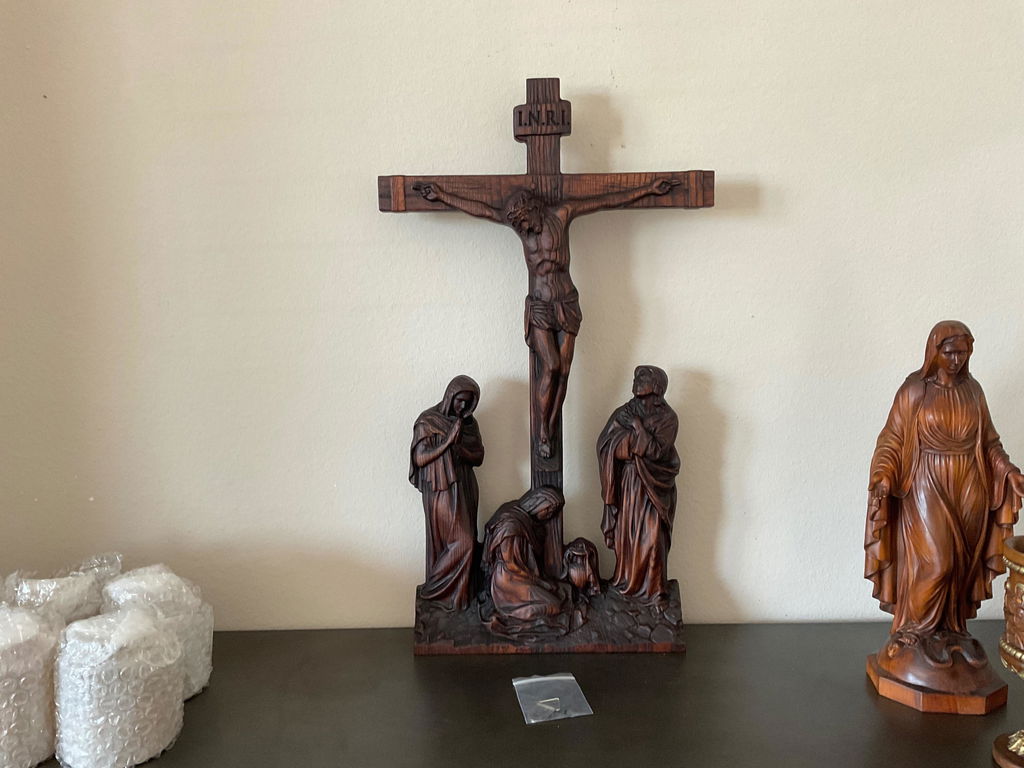
Wood carries a visual warmth that polished, highly reflective materials often do not. Grain, tone, and carved depth respond softly to changing daylight. Because it comes from a natural material, a wood carving can feel grounded and familiar, making it well suited to spaces intended for quiet reflection. This plaque is described on its product page as a hand-carved, solid-wood piece, and its relief gives the figures a physical presence while allowing it to function as wall decor.
Carving also asks the viewer to notice shape differently. Lines become folds of clothing, halos frame the figures, and shadows settle into recessed details. From across a room, the whole composition reads as a unified sacred image. At closer range, the craft becomes more visible. That balance between image and object is one reason Christian wood carving works naturally in traditional, rustic, transitional, and simply furnished interiors.

Creating a Simple Family Prayer Corner
A prayer corner does not need to be elaborate. A calm section of wall, a small table or shelf, and one meaningful image can be enough. Place the carving where it is easy to see but not surrounded by visual clutter. A Bible, prayer book, rosary, or candle may be added according to the household’s practice. If a candle is used, keep flame and heat safely away from the wooden plaque and other objects.
Lighting matters as much as the number of objects. Gentle daylight can reveal the carving’s depth, while a nearby lamp can keep the setting peaceful in the evening. Avoid harsh glare and consider leaving a little empty space around the image. That margin gives the eye somewhere to rest. The prayer corner can then support brief, sustainable rhythms: a morning intention, a family prayer before bed, or a moment of gratitude at the end of the day.
The same piece can work outside a dedicated devotional area. In an entryway, it may quietly establish the values a home hopes to embody. Near a dining area, it can recall shared meals and family bonds. In a living room, it becomes faith-inspired wooden decor that can open natural conversations without dominating the room. Those considering placement can view the Holy Family wooden wall plaque and its design details here.
A Nativity Image for Every Season
During Advent and Christmas, the Nativity has an obvious place in Christian homes. It prepares the heart for the celebration of Christ’s birth and offers children a visual way to enter the story. Yet keeping a Holy Family image visible after seasonal decorations are stored away can deepen its meaning. It shifts from holiday symbol to a continuing reminder that faith is lived in kitchens, conversations, work, caregiving, forgiveness, and rest.
Seasonal changes can still be acknowledged with restraint. A small evergreen branch in winter, simple flowers in spring, or a neutral linen beneath nearby devotional objects can refresh the setting without turning it into a display. The carving remains the steady center while the surroundings reflect the life of the household.

A Meaningful Faith-Inspired Gift
Religious gifts are most thoughtful when they recognize the recipient’s actual devotional life and home. A Holy Family image may be appropriate for a Christian wedding, anniversary, housewarming, baptism celebration, First Communion, or Christmas gathering. It can also be offered without a major occasion to someone establishing a prayer space or seeking a comforting, visible connection to faith.
Presentation can remain simple. Include a handwritten note explaining why the Holy Family brought the recipient to mind, rather than making broad promises about what the object will do. If the gift marks a marriage or new home, the note might express a hope for patience, hospitality, and faithful companionship. For grandparents or godparents, it may acknowledge the quiet ways they pass faith through generations. Personal words give the object context and allow it to become part of a remembered relationship.
A Quiet Center for the Christian Home
Sacred decor is most enduring when it supports attention rather than demanding it. The Holy Family Nativity offers a scene to return to: Mary’s care, Joseph’s constancy, and Christ welcomed into the closeness of family life. Rendered as a solid-wood carving with a Byzantine-inspired character, the image joins Christian symbolism with a material known for warmth and natural variation.
Whether placed in a Catholic prayer corner, an entryway, or a shared family room, such a piece can invite a slower gaze. It does not need to fill the space or explain everything. Its role may simply be to recall, day after day, that love is practiced through presence—and that ordinary home life can make room for prayer.