The Holy Family at Home: Meaning in a Hand-Carved Wooden Cross
A home often tells its story through the objects kept close: photographs, books, inherited pieces, and symbols that express what a family values. In a Christian home, sacred art can become part of that quiet visual language. A depiction of Joseph, Mary, and the infant Jesus within a carved cross does more than fill an empty wall. It can gently connect the life of the household with themes of love, protection, trust, and prayer.
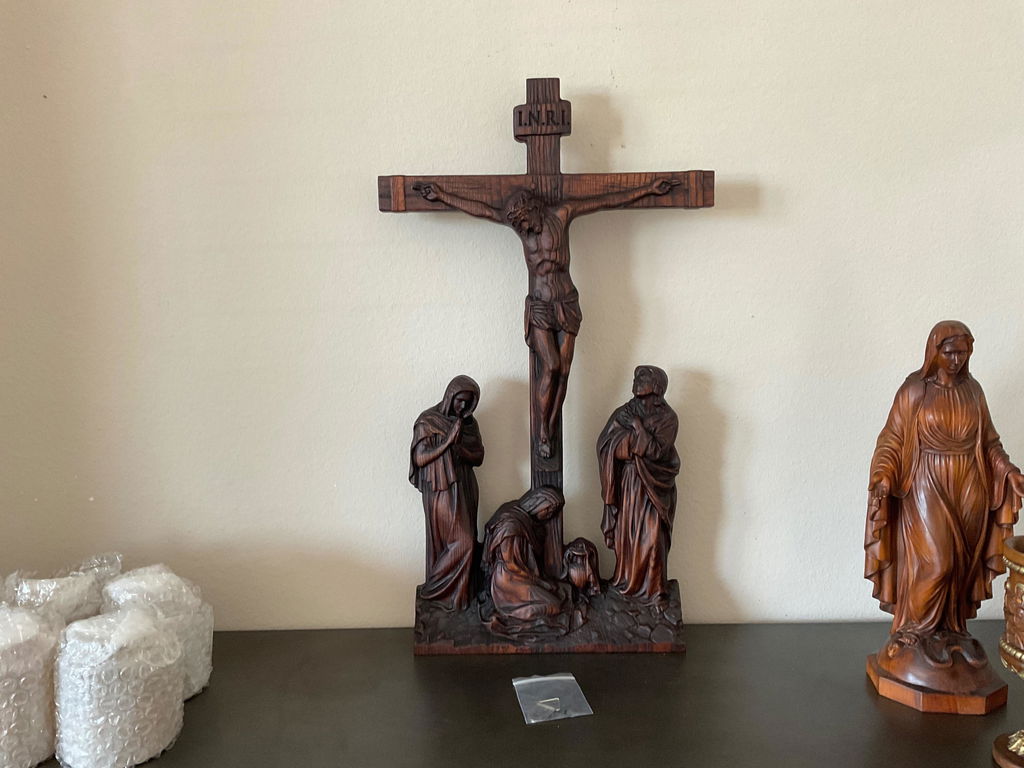
The BGCOPPER Holy Family wood icon brings these familiar figures together in a single composition. Its form joins the tenderness of the Nativity story with the cross, creating a piece that can be contemplated throughout the year rather than only during the Christmas season. The result is Christian wood carving that feels devotional without overwhelming the room around it.

The Holy Family as a Symbol for Everyday Life
Joseph, Mary, and Jesus are often represented together as an image of faithful family life. Their story contains both tenderness and difficulty: welcome, uncertainty, care, movement, and steadfast commitment. For many Christian and Catholic households, an image of the Holy Family offers a simple invitation to remember patience with one another, responsibility toward those in our care, and trust during seasons when the way forward is not completely clear.
Placed within the shape of a cross, the family scene also connects the beginning of Jesus’ earthly life with the larger Christian story. The two images should not be reduced to decoration alone. Together they invite reflection on a love expressed through presence and self-giving. Viewers may notice different details at different moments—the closeness of the figures, the protective posture of Joseph and Mary, or the cross that frames them all.
This symbolism can be especially meaningful in a busy household. Sacred art does not require a formal setting to have a role. A brief glance while passing through a hallway or sitting quietly at the end of the day can be enough to recall a prayer, a loved one, or an intention that deserves attention.
Why Wood Brings Warmth to Sacred Art
Wood has a natural relationship with the home. Its visible grain and warm tone sit comfortably beside books, woven textiles, stoneware, and both traditional and contemporary furniture. Unlike a glossy decorative surface, carved wood often encourages slower looking. Light gathers in the recessed areas, while raised forms make the image legible through shadow as well as color.
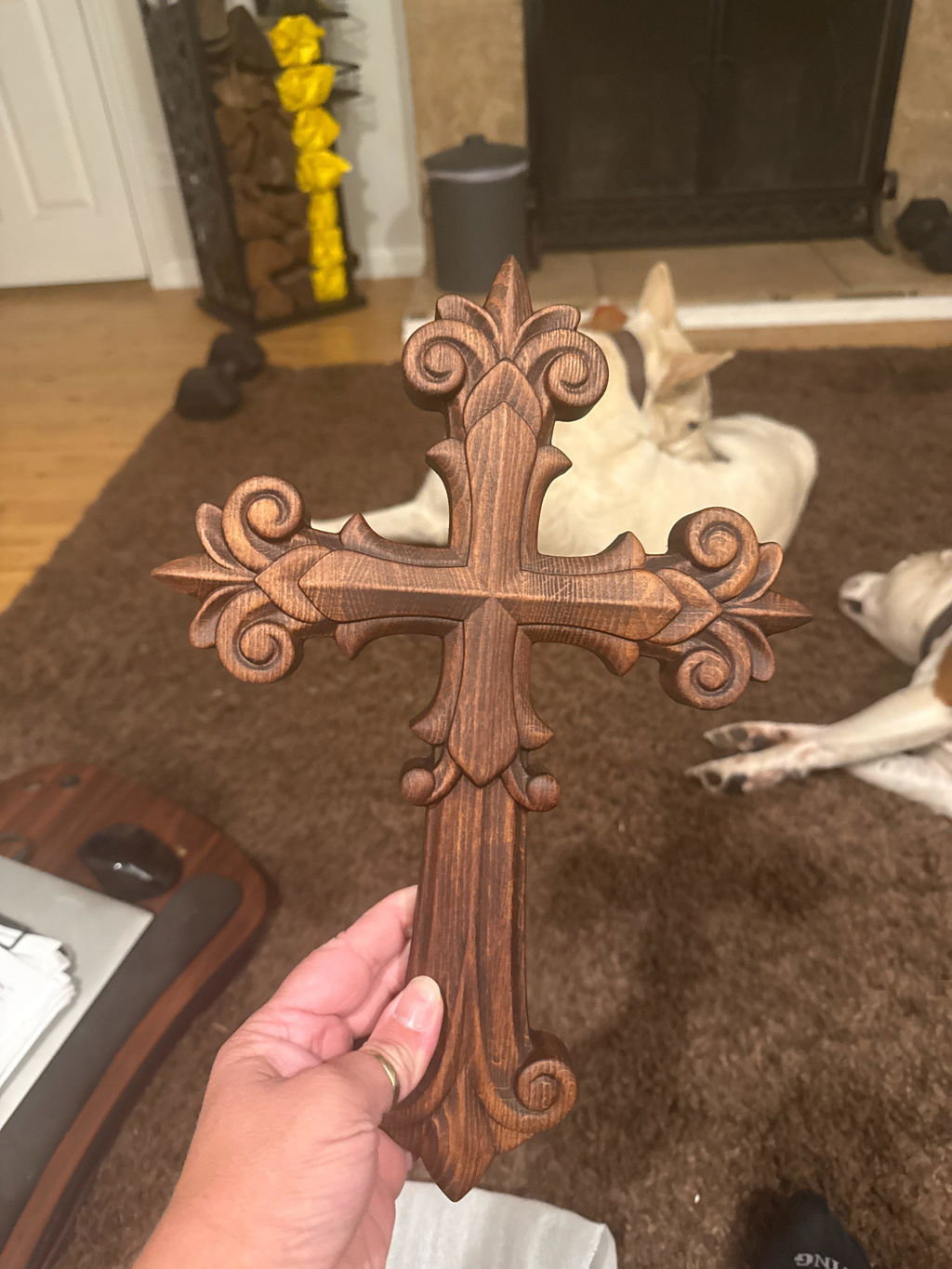
This Holy Family piece is described as hand-carved from solid beech wood, manually polished, and finished with water-based paint. Those details matter because carving is a process of shaping a solid material into an image through gradual, deliberate work. The medium can therefore echo the article’s subject: ordinary material is treated with care until it carries meaning.
Natural grain may also give a wood carving a visual character that feels personal. Rather than competing with the room, it can add a grounded, tactile note. This is one reason wooden Christian decor works well beyond explicitly traditional interiors. Against a pale wall it can provide gentle contrast; among warmer woods it can become part of a layered, restful arrangement.

Creating a Prayer Corner Without Overcomplicating It
A home prayer corner does not need to be large or elaborate. A small wall area, shelf, bedside table, or quiet part of a family room may be enough. The aim is not to reproduce a church interior, but to reserve a visible place that helps the mind settle and turn toward prayer.
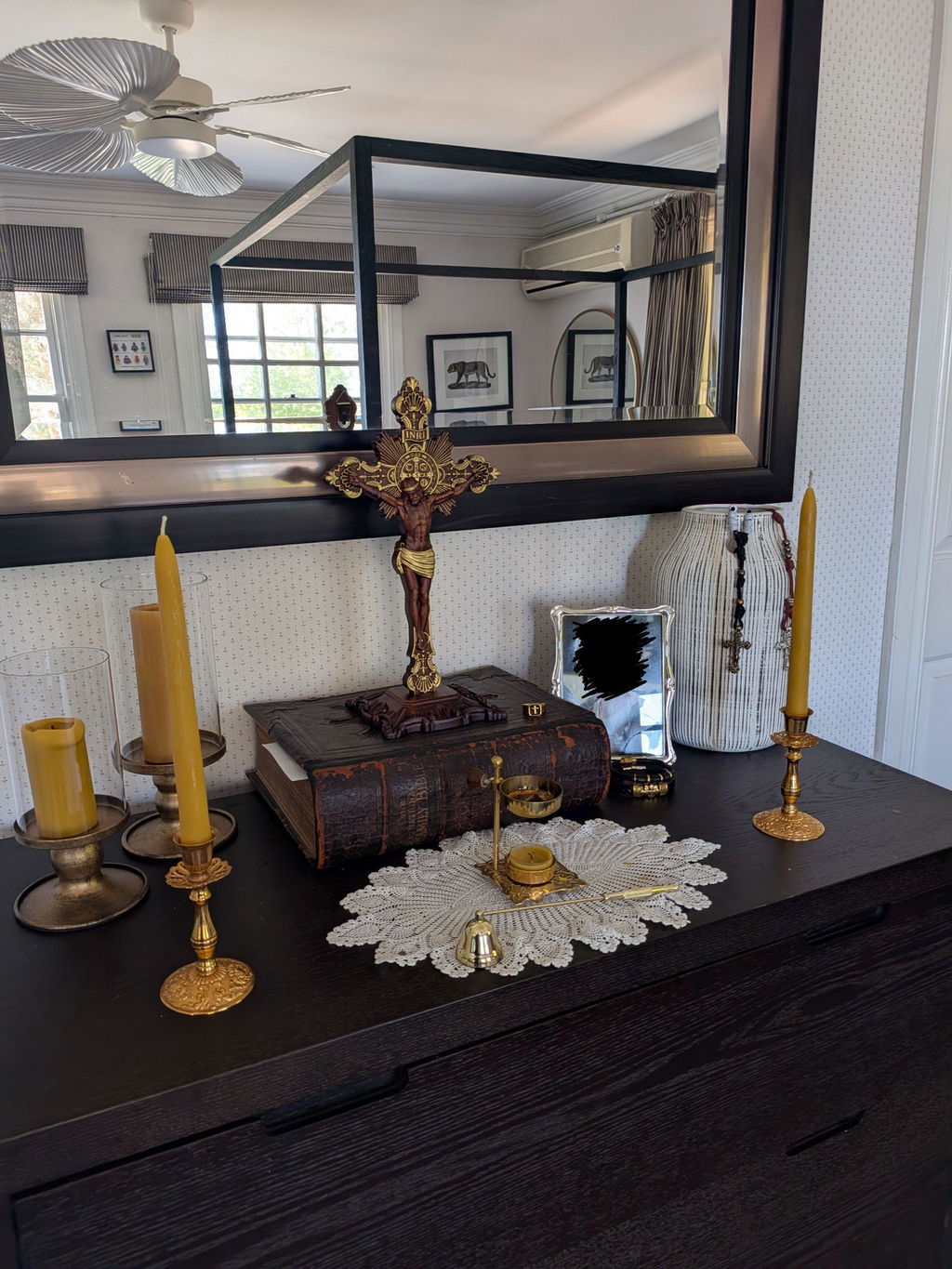
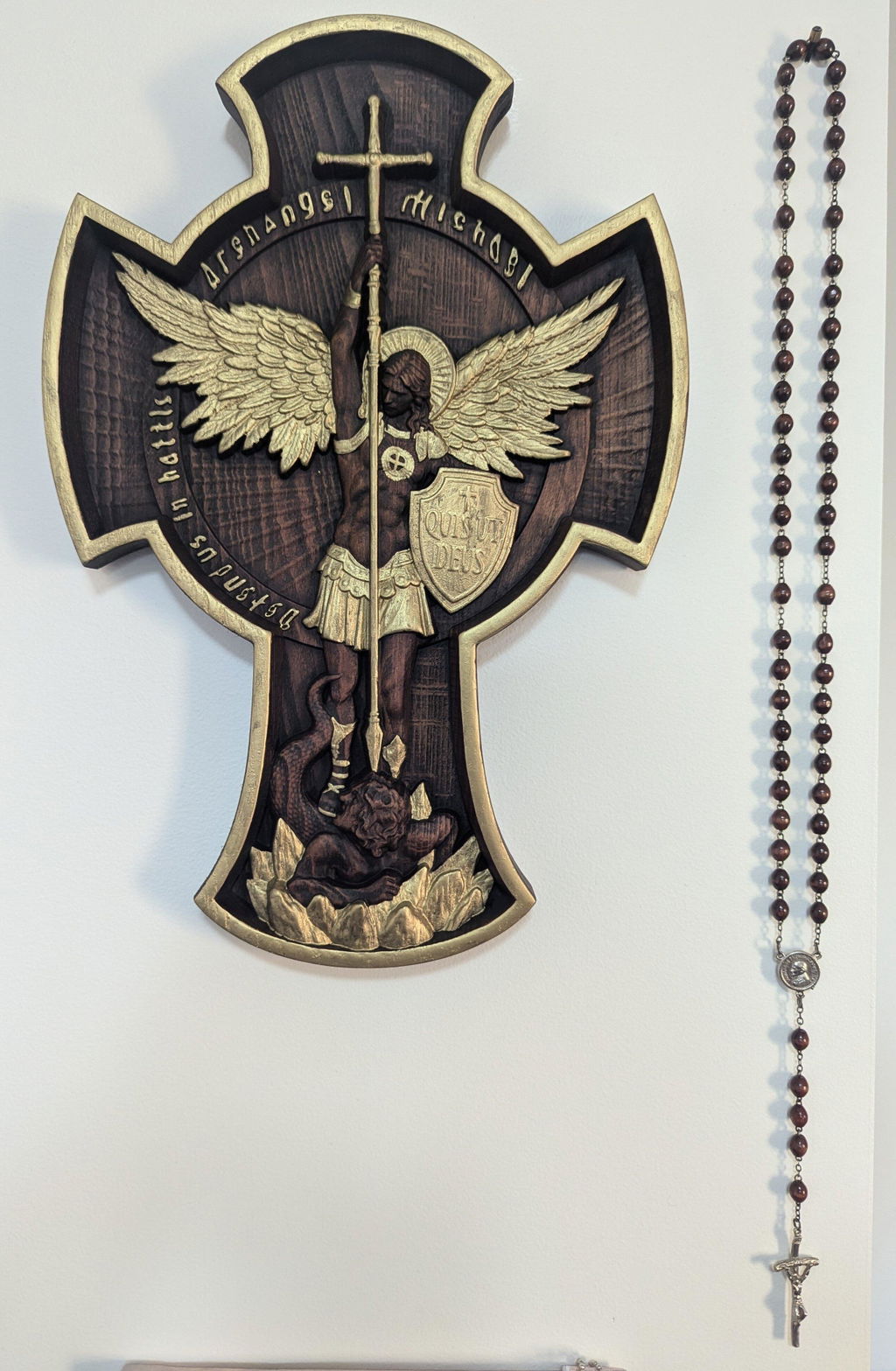
A Holy Family cross can serve as the central element. Around it, consider leaving some open space so that the carved silhouette remains clear. A Bible or prayer book placed nearby can make the corner useful as well as beautiful. Some families may add a candle used safely during prayer, a rosary, or a small container for written intentions. Others may prefer only the carving and a chair. Simplicity often supports attention better than an arrangement crowded with objects.
The surrounding colors can remain quiet: warm white, clay, muted green, linen, or natural wood all pair comfortably with carved devotional art. Positioning matters too. Choose a height and location where the image can be seen naturally, rather than hidden behind other decor. In a shared room, the piece may encourage brief family prayer; in a private area, it can support silent reflection.
A Thoughtful Place in the Wider Home
Not every display needs to be a dedicated prayer space. The Holy Family carved wooden cross can also fit into an entryway, where it quietly expresses the household’s faith, or near family photographs, where its symbolism enters into conversation with lived family history. In a bedroom, it may offer a peaceful point of reflection at the beginning or end of the day.
During Advent and Christmas, the scene naturally complements a Nativity display. Yet keeping it visible after seasonal decorations are put away gives the Holy Family a year-round presence. The cross-shaped composition allows it to accompany Lent, Easter, anniversaries, and ordinary days alike. This continuity is part of what makes sacred home decor different from purely seasonal ornament.

Giving a Faith-Inspired Gift with Meaning
Religious gifts are often chosen for moments of transition: a wedding, housewarming, baptism, First Communion, anniversary, or the arrival of a child. A Holy Family image is particularly suited to occasions centered on home and relationship. It recognizes that faith is practiced not only in public worship but also through the daily work of listening, forgiving, serving, and caring for one another.
When giving sacred art, it helps to consider the recipient’s tradition, living space, and personal style. A note explaining why the image brought them to mind can make the gift more meaningful. For newlyweds, it might carry a wish for patience and unity. For a family entering a new home, it could express hope that their rooms become places of welcome and peace. For parents or grandparents, it may honor years of quiet care.
The best faith-inspired gifts do not impose a message. They offer a symbol that the recipient can encounter in their own way and over time. A carved image changes subtly with daylight and with its surroundings, while its central story remains familiar.
A Quiet Reminder Made for Daily Seeing
Christian home decor is most enduring when beauty and meaning support each other. In this Holy Family carving, the natural character of wood softens the strong geometry of the cross, while Joseph, Mary, and Jesus draw attention toward closeness and care. It can be appreciated as craftsmanship, used as a focus for prayer, or simply kept as a daily reminder of values a household hopes to practice.
There is no single correct way to display such a piece. Whether it rests within a modest prayer corner, accompanies family photographs, or marks a peaceful wall on its own, its purpose can remain gentle: to make space for remembrance, gratitude, and faith amid ordinary life.