The Tree of Life in Christian Home Decor: A Symbol of Rooted Faith
Some forms of Christian art speak quietly. They do not need a large room or an elaborate setting to encourage reflection; a familiar symbol, thoughtfully placed, can change the character of an everyday corner. The Tree of Life is one such symbol. Rooted in biblical imagery and shaped here as carved wooden decor, it brings together themes of creation, spiritual growth, hope, and the enduring care of God. The BGCOPPER Tree of Life wood wall art offers a natural way to introduce this imagery into a home without making the space feel formal or crowded.
The Tree of Life in Christian symbolism
The Tree of Life appears near the beginning and the end of the Bible. In Genesis, it stands in the Garden of Eden, within the goodness and abundance of creation. In Revelation, it appears beside the river of the water of life, its leaves associated with healing and the restoration of creation. Between these passages lies the broad Christian story of separation, redemption, and renewed communion with God.
For many Christians, this makes the Tree of Life more than a general emblem of nature. Its roots can suggest spiritual grounding; its trunk, steadfastness; and its spreading branches, life that reaches outward. The changing seasons of a tree also offer a gentle image of faith: growth is not always visible, yet patient roots continue to hold. Catholic and other Christian traditions may interpret such imagery with different emphases, but the central associations with life, creation, and hope make it fitting for personal reflection.

Why carved wood feels at home with sacred art
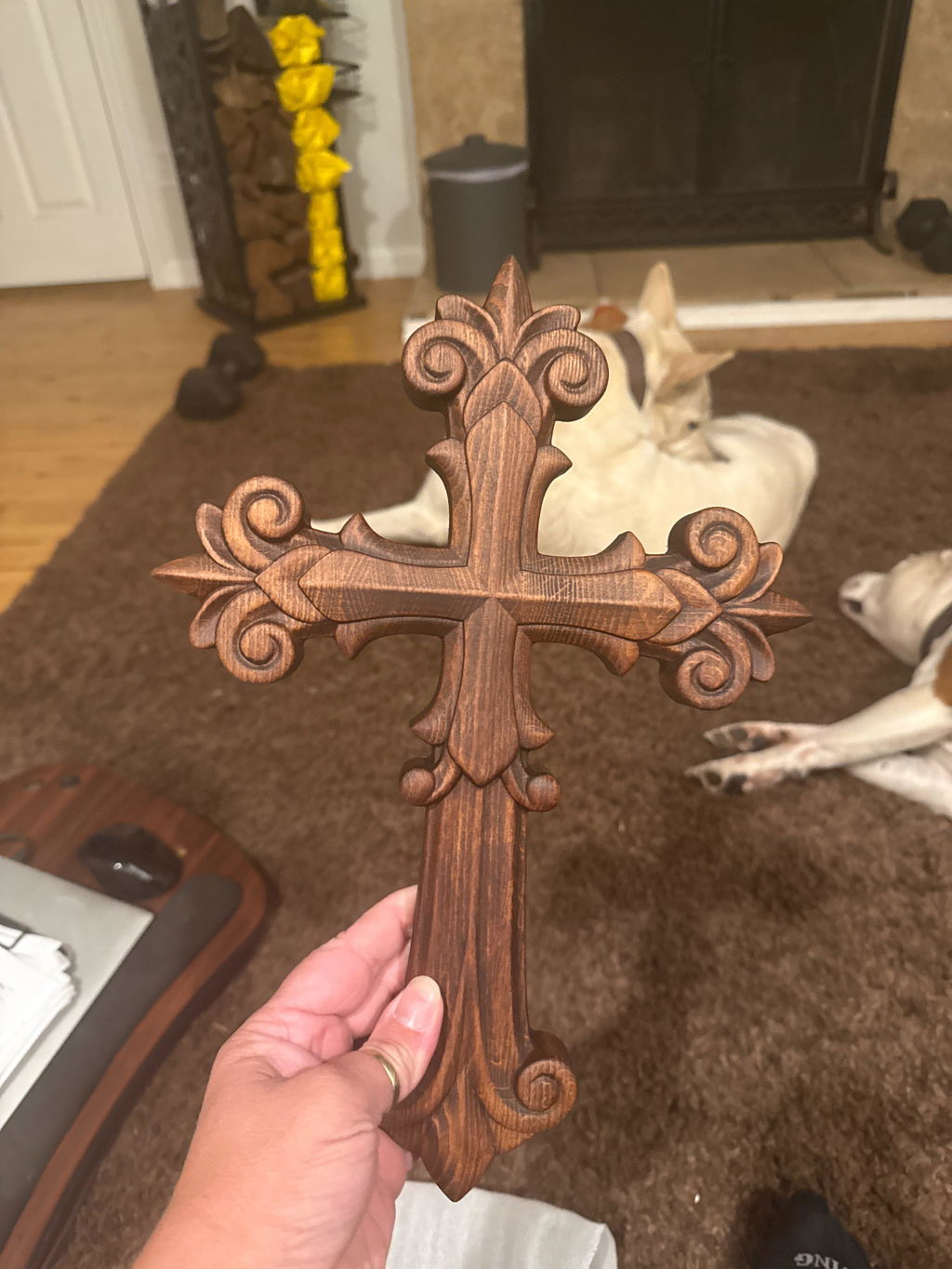
Wood has an understated presence. Its grain, color variations, and tactile surface keep decorative objects connected to the natural world. In religious decor, that warmth can soften a room and make a devotional setting feel lived-in rather than staged. Carving adds another layer: light settles into the recessed areas while the branches and leaves gain depth through shadow. The design can look subtly different as daylight changes across the wall.
The product description identifies this piece as hand-carved from European beechwood. Those details suit the Tree of Life especially well because the material is not merely a background for the image; wood becomes part of the image's meaning. The visible grain reminds us that natural materials carry variation. Rather than demanding perfect uniformity, a carved wooden piece can invite attention to texture, patient workmanship, and the beauty of small distinctions.

Creating a peaceful prayer corner
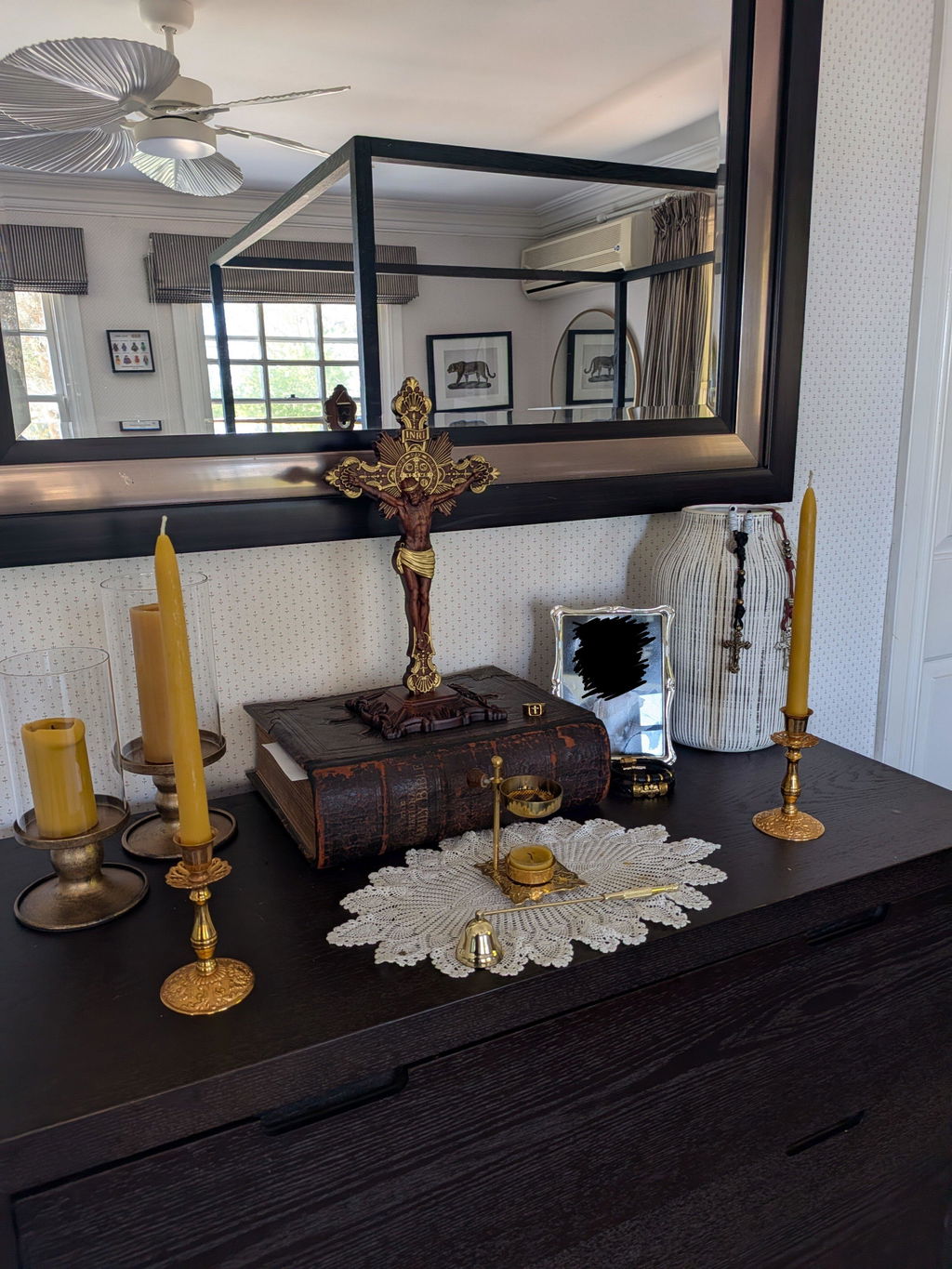
A home prayer corner does not have to be large. A small shelf, a chair near a quiet wall, or part of a bedroom dresser may be enough. The goal is not to reproduce a church interior, but to reserve a visible place for prayer, reading, and stillness. A Tree of Life carving can serve as the visual center, with a Bible, prayer book, rosary, candle, or small cross arranged nearby according to the household's tradition.
Give the carving some open space so its outline remains clear. Warm, indirect light will emphasize the wood without making the corner visually busy. Earth tones, linen, stoneware, and simple greenery can complement the natural material, while a restrained arrangement keeps attention on the purpose of the space. If candles are included, place them at a safe distance from the carving and other objects.
The same piece can also work outside a dedicated devotional area. In an entryway, it can quietly express the values of the household. In a living room, it may become a point of reflection without dominating the decor. On a study wall, it can accompany reading and journaling. The product is offered with a stand as well, allowing the design to be considered for a shelf or tabletop when wall placement is not preferred.
A symbol for family life and spiritual growth
Trees naturally lend themselves to family associations: roots recall those who came before us, the trunk suggests a shared life, and branches evoke generations growing in distinct directions. Within a Christian home, the Tree of Life may become a prompt for conversations about the faith a family receives, practices, and passes on. It can mark a place where parents read Scripture with children or where family members remember loved ones in prayer.
It may also speak meaningfully during seasons of transition. A new home, marriage, baptism, confirmation, Christmas gathering, or return to regular prayer can all be occasions for establishing a small sacred space. The image does not need to provide a complete theological lesson. Its value may simply be that it recalls life as a gift and growth as a process sustained over time.

A thoughtful faith-inspired gift
Religious gifts often feel most personal when they connect belief with daily life. A wooden Tree of Life can be appropriate for someone creating a prayer corner, settling into a new home, or looking for Christian decor that is warm and visually simple. It may also suit Christmas, a house blessing, an anniversary, Mother's Day, or a moment of encouragement. Because the symbol is broad and contemplative, it can accompany many stages of life without relying on a short-lived decorative trend.
When giving sacred art, a brief handwritten note can add more meaning than elaborate wrapping. You might mention a prayer for steady roots, renewed hope, or peace in the recipient's home. It is wise to consider the person's own tradition and taste, especially when choosing religious imagery. The most thoughtful gift is one that respects how the recipient practices faith and arranges their living space.
Living with meaningful decor
Faith-inspired home decor is not valuable because it makes a room appear especially religious. Its deeper purpose is remembrance. Familiar objects can interrupt hurry, call attention back to gratitude, or invite a moment of prayer. Over time, the meaning of an object may grow through the ordinary life that unfolds around it—morning reading, family conversations, difficult seasons, celebrations, and quiet evenings.
The Tree of Life carved wood decor brings together a scriptural image, the visual movement of branches, and the grounded warmth of beechwood. Whether placed on a wall, displayed on its stand, or included in a prayer corner, it is best approached as a gentle companion to reflection. Its message is not loud: life is rooted, growth takes time, and hope can remain present in the home.