The Good Shepherd in Christian Wood Carving: A Quiet Presence for the Home
Some religious images speak most clearly through stillness. The Good Shepherd is one of them: Christ carrying a lamb, watching over the flock, and guiding those in his care. In a home, this familiar Christian symbol can offer a quiet point of reflection without overwhelming the room. Rendered as a wooden relief, it also carries the warmth of a natural material and the visible depth of hand-shaped detail.
The BGCOPPER Good Shepherd wooden wall relief presents this pastoral image in solid European beechwood. Its carved composition, natural grain, and hand-polished finish make it suitable for a prayer corner, family room, hallway, or other place where faith is part of daily life. More than a decorative motif, the scene invites a thoughtful look at care, guidance, and belonging.
The enduring meaning of the Good Shepherd
The shepherd appears throughout Scripture as an image of attentive leadership. For Christians, the Good Shepherd is closely associated with Christ, whose care is personal rather than distant. The lamb held near him suggests tenderness toward the vulnerable, while the staff recalls direction and protection. Together, these details create an image of strength expressed through patience and mercy.
Psalm 23 gives this symbolism much of its emotional resonance. Its language of green pastures, quiet waters, restored spirit, and guidance through dark valleys has accompanied generations of prayer. A Good Shepherd carving does not replace Scripture or devotion; instead, it can serve as a visual prompt to pause and remember those themes. In seasons of uncertainty, the image may encourage reflection on what it means to be guided. In peaceful seasons, it can express gratitude for ordinary care.

Why wood feels at home with sacred imagery
Wood has an understated character that suits devotional art. Grain, tone, and small natural variations keep the surface from appearing mechanical. Light moves across a carved relief differently over the course of the day, revealing contours in the clothing, face, lamb, and staff. That changing relationship between light and shadow gives the object a calm visual life while preserving a restrained appearance.
This particular relief is described as entirely hand-carved in solid European beechwood, then hand-polished and finished with water-based paint. Those details matter because carving is not only about the final outline. Depth, transitions, and softened edges help the scene read as a unified composition. The evidence of handwork also connects the object to a long tradition of Christian wood carving, in which familiar sacred subjects are interpreted through patient, material craft.

Creating a simple prayer corner
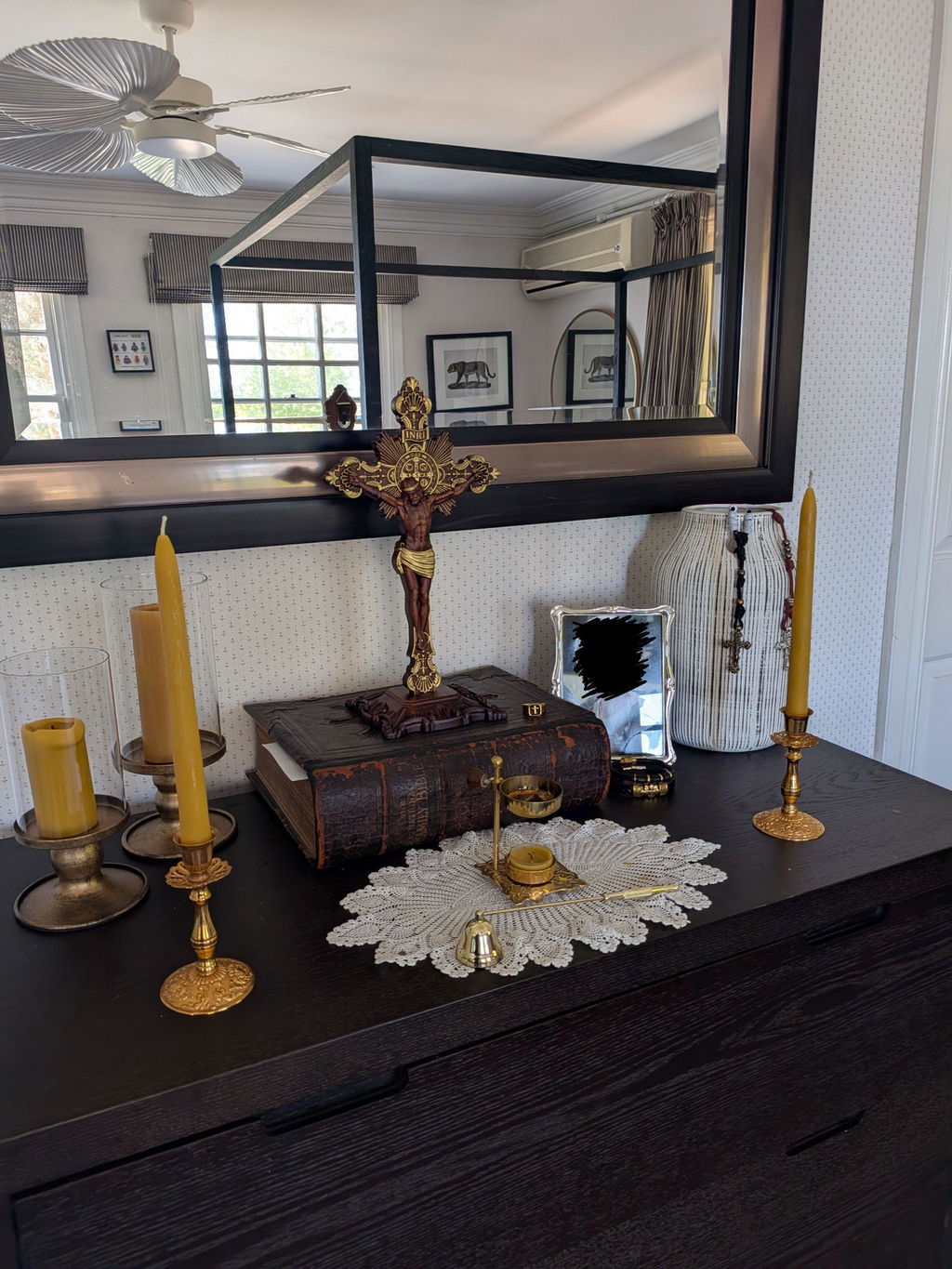
A prayer corner does not need to be elaborate. A small shelf, side table, or quiet section of wall can become a place to read, pray, and gather one’s attention. Begin with a Bible or prayer book, then add only the objects that support reflection. A rosary, candle used safely, small cloth, or meaningful family keepsake may be enough. A wall relief can provide a gentle visual center while leaving the surface below uncluttered.
Placement affects the mood. Hanging the carving near eye level allows the details to be seen comfortably. Soft natural light from the side can emphasize the relief, while a neutral wall helps the wood remain the focus. In a bedroom, the image can mark a private devotional space. In a living or dining room, it can become part of shared family life. An entryway may give the Shepherd theme an added sense of welcome and safe return.
The same approach works in a church office, classroom, small chapel, or ministry room. The goal is not to fill every empty wall but to choose a location where the imagery has a natural relationship to what happens there. BGCOPPER’s Good Shepherd relief is offered in several sizes, so the scale can be considered in relation to a personal shelf area or a larger shared setting.
A meaningful gift for life’s transitions
Faith-inspired gifts often carry their greatest meaning when they acknowledge a particular season. The Good Shepherd can be appropriate for a baptism or confirmation because its imagery centers on belonging and guidance. For a housewarming, it can offer a blessing-like reminder of care within the home. It may also suit a pastoral milestone, a family occasion, or a gift for someone beginning a new chapter.
During difficult periods, the symbol can communicate support without requiring a long explanation. The lamb held close can be especially poignant for someone who is tired, grieving, or facing uncertainty. A giver might include a handwritten note about why the image was chosen, perhaps mentioning Psalm 23 or a personal prayer. That context turns religious home decor into a more intimate gesture.

Living with faith-centered art
Christian home decor is most meaningful when it supports lived faith rather than functioning only as ornament. A familiar image can become part of a household rhythm: noticed during morning prayer, passed on the way out the door, or seen when the family gathers. Over time, its meaning may deepen through association with particular prayers, people, and moments.
Care for a wooden relief can remain simple. Keep it in a stable indoor location, treat the carved surface gently, and use a soft, dry cloth when dusting. Because natural wood has its own grain and tonal character, small variations should be understood as part of the material rather than flaws. A measured display also allows the carving to breathe visually, especially when paired with simple furnishings and warm, quiet colors.
A quiet reminder of being known
The lasting appeal of the Good Shepherd lies in the closeness of the image. It portrays care not as an abstract idea but as a relationship: the shepherd knows, seeks, carries, and leads. In carved wood, that message gains a grounded, human warmth. Whether placed in a Catholic prayer corner, a Christian family room, or given to someone entering a new season, the relief can invite contemplation without demanding attention.
Choosing sacred art for the home is ultimately personal. The most fitting piece is one whose symbolism supports prayer and whose presence feels natural in the space. For those drawn to Psalm 23 and the pastoral image of Christ, the Good Shepherd offers a restrained and enduring focus—one that quietly recalls guidance, compassion, and the comfort of not walking alone.