Memento Mori in Wood: A Reflective Approach to Skull Wall Art
A skull in a home can seem startling at first. Yet within Christian art and devotional culture, the image has often carried a quieter purpose: to remind us that life is finite, time is precious, and our choices matter. This idea is commonly expressed by the Latin phrase memento mori—“remember that you must die.” Rather than celebrating darkness, the tradition can invite humility, gratitude, repentance, and a more attentive way of living.
The BGCOPPER ornate skull carved wood wall art places that reflective symbol inside flowing, baroque-inspired ornament. The contrast is compelling. A sober emblem sits among curves, foliage-like details, and architectural forms, creating a piece that feels equally suited to a study, a contemplative corner, or an eclectic gallery wall. It does not dictate one response; instead, it leaves room for personal reflection.

The Christian Meaning Behind Memento Mori
Christian reflection on mortality is not simply about the end of life. It can be a way of asking how life should be lived now. The skull, an hourglass, a fading flower, or an extinguished candle has appeared in religious and moral art as a reminder that status and possessions are temporary. In that setting, mortality points beyond itself toward conscience, hope, and the enduring value of love and faith.
For Catholic viewers, memento mori imagery may also recall the long practice of meditating on the “last things” and praying for the grace to live with purpose. Such imagery should not be mistaken for a universal requirement or a substitute for sacred objects. It is better understood as a visual prompt. A person passing it in a hallway or sitting beside it in a study might pause to consider a simple question: what deserves my attention today?
The ornate frame around this skull adds another layer. Baroque visual language is known for movement, contrast, and emotional presence. Here, decorative abundance surrounds an image of human limits. Beauty and brevity occupy the same object, offering a restrained meditation on the richness of life and the fact that it cannot be held forever.
Why Carved Wood Changes the Mood
Material matters. A skull rendered in glossy plastic or polished metal can feel theatrical, clinical, or severe. Wood brings a different character. Grain, tonal variation, and carved depth soften the motif and connect it to the natural world. The material was once part of a living tree; shaped by hand, it becomes a lasting household object. That transition quietly reinforces the themes of time and transformation already present in memento mori.
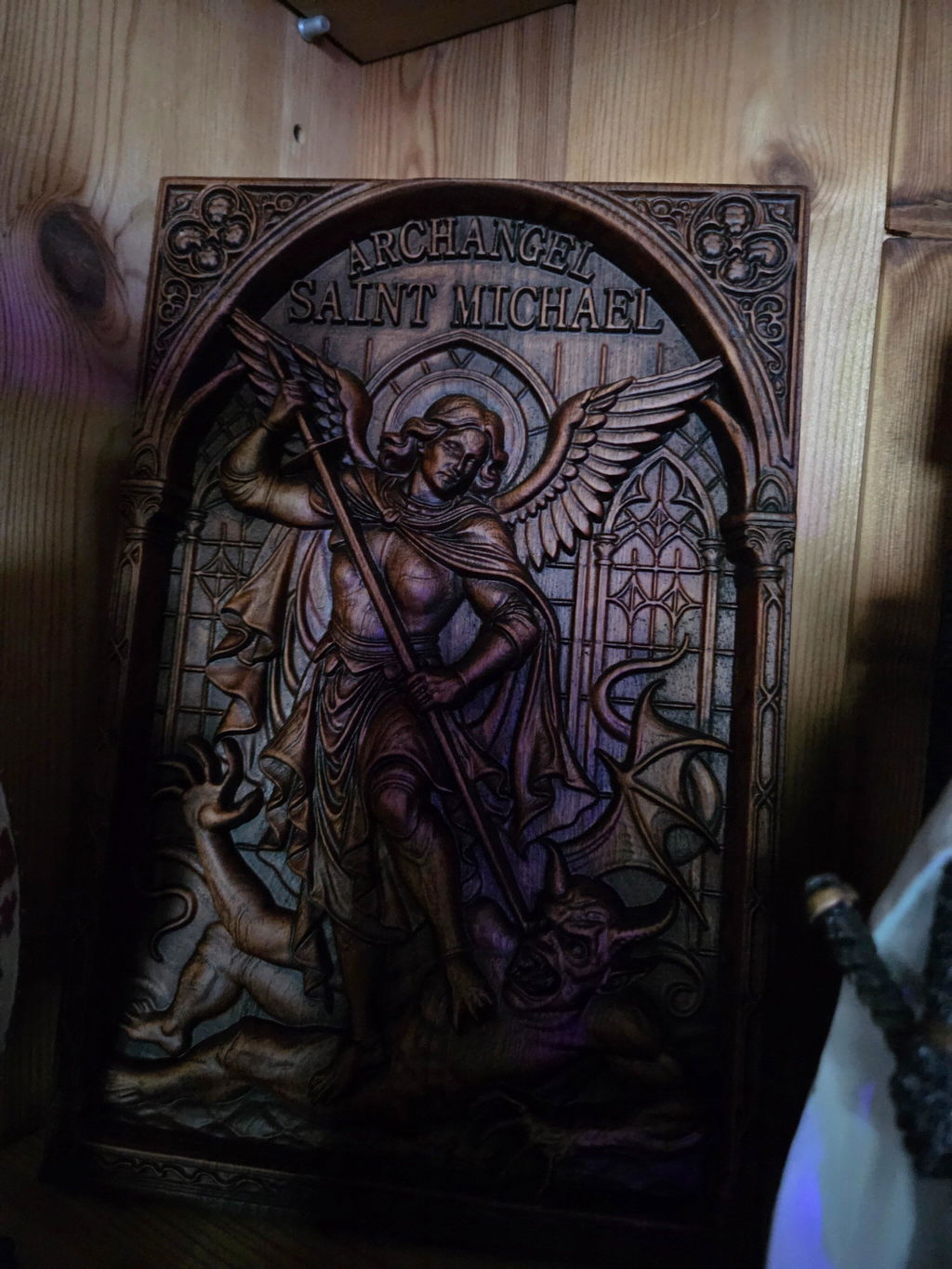
According to the product description, this piece is hand-carved from oak and ash and finished with oil to bring out the grain. Those details give the ornament physical depth: shadows settle around the skull, scrolls, and floral forms, while raised areas respond to changing daylight. Small variations are part of the appeal of carved wood, helping the wall art feel less like a printed symbol and more like an object with texture and presence.

Creating a Reflective Corner at Home
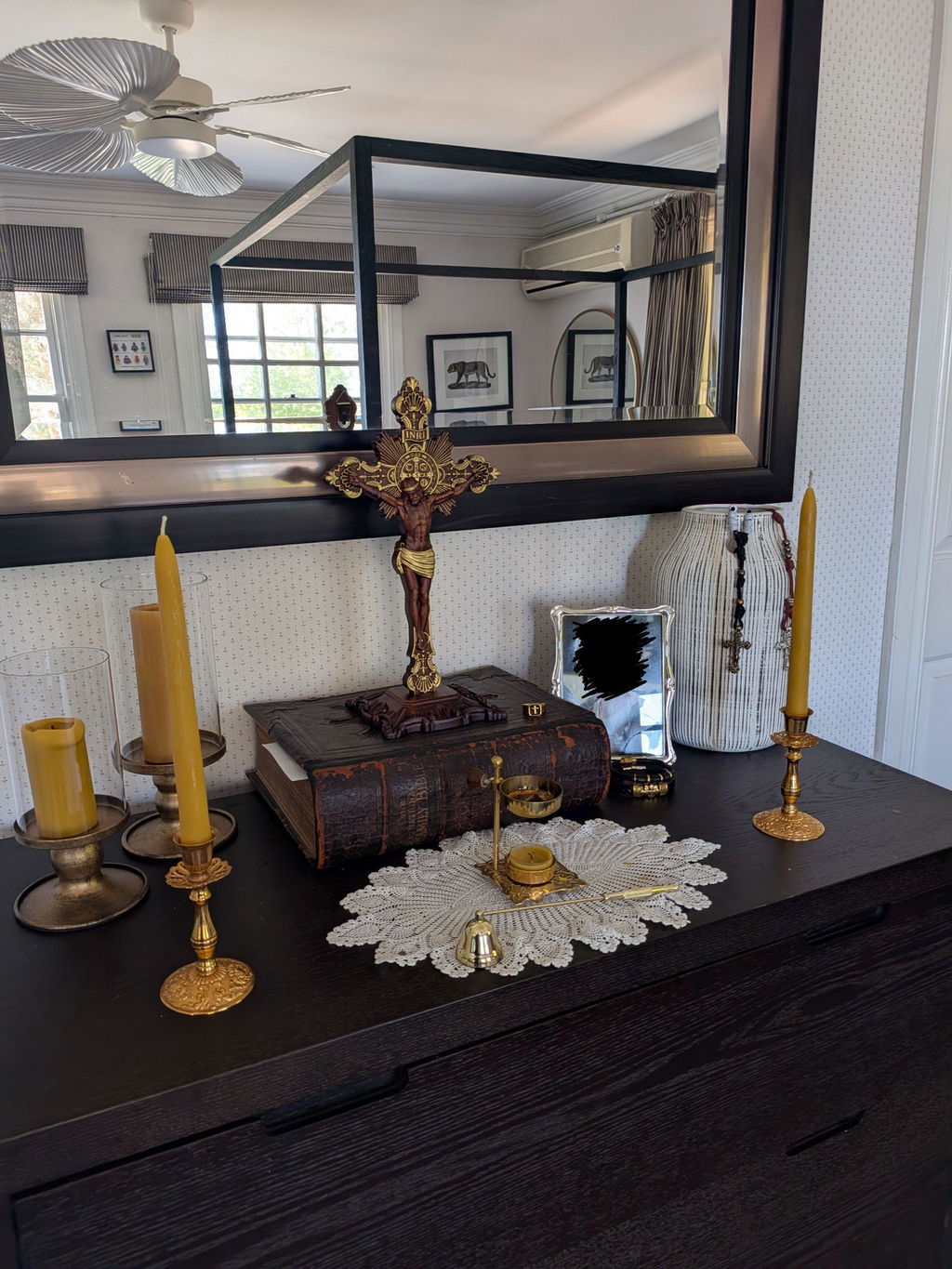
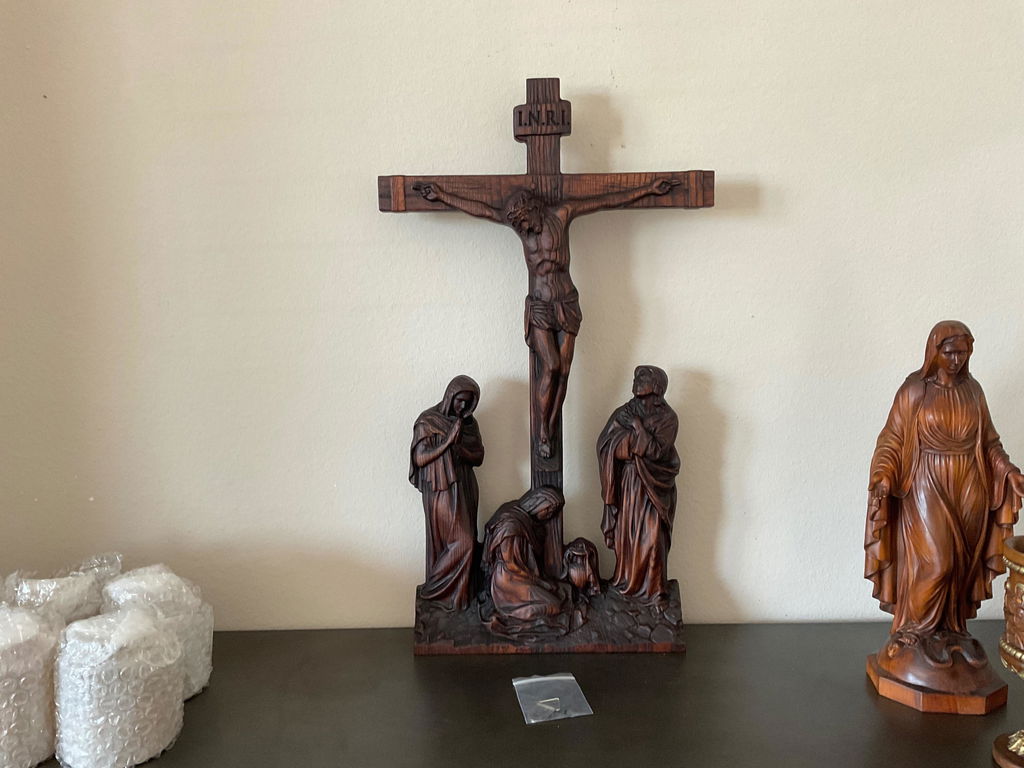
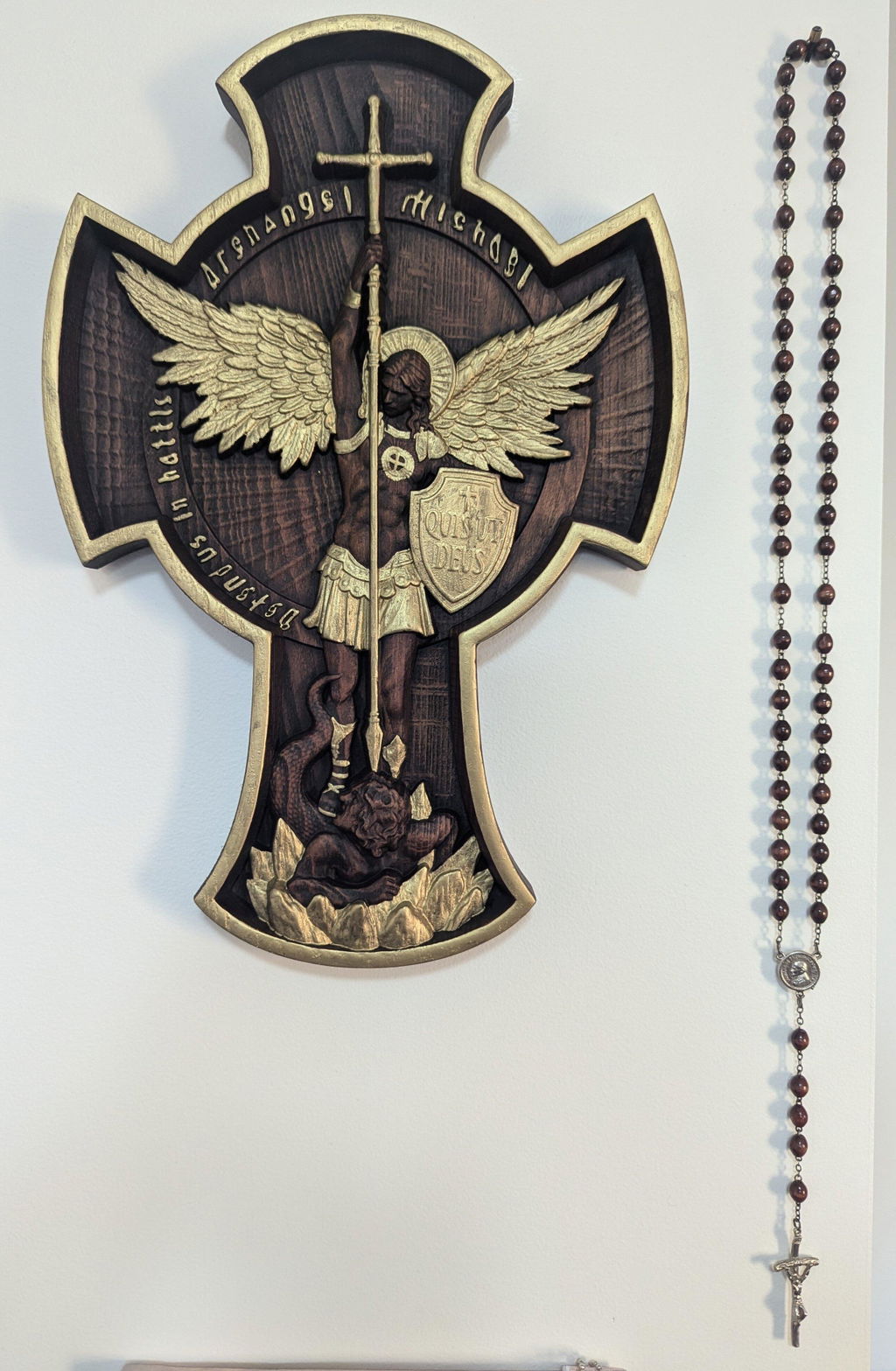
This kind of Christian-inspired wall decor works best when given visual breathing room. In a home office or reading area, it can hang near books, a wooden desk, or a softly shaded lamp. In a prayer corner, it may sit at the edge of an arrangement that includes a Bible, rosary, crucifix, prayer cards, or an icon meaningful to the household. Keeping the arrangement uncluttered allows every item to retain its own significance.
Placement can shape interpretation. At eye level, the carving becomes a direct invitation to pause. Positioned above a shelf, it acts more like an architectural accent. Against a light wall, the darker grain and deep carving are likely to stand out; among antique frames and warm textiles, the piece can blend into a layered, old-world setting. It can also provide an intentional contrast in a simpler room, where its ornament becomes the focal point.
Lighting deserves equal thought. Indirect daylight or a nearby lamp can reveal the relief without turning the skull into a dramatic spectacle. The goal is not to create a gloomy room. Warm neutrals, linen, books, ceramics, and living greenery can balance the seriousness of the motif. The resulting space can feel grounded rather than somber—a place for reading, prayer, journaling, or quiet examination of the day.
A Meaningful Gift, Offered with Context
Symbolic decor is most successful as a gift when it respects the recipient’s taste and spiritual outlook. This carving may suit someone interested in Christian art history, Catholic devotional aesthetics, baroque ornament, wood craftsmanship, or philosophical reminders about time. It could mark a housewarming, a new study or prayer space, a birthday, or another personal transition.
Because skull imagery is not equally meaningful to everyone, context matters. A short handwritten note can explain the intention: not morbidity, but gratitude for life and encouragement to use time wisely. That explanation transforms an unusual wall object into a thoughtful gesture. Before choosing it, consider whether the recipient already appreciates symbolic religious art, historic motifs, or contemplative home decor.

Living with a Reminder of What Matters
A reflective home is not defined by how many religious objects it contains. It grows through the attention given to ordinary habits: making time for prayer, welcoming others, reading carefully, practicing gratitude, and remembering those who need care. Art can support those habits when it opens a moment of awareness rather than becoming background decoration.
The ornate skull wood carving offers one such prompt. Its memento mori theme acknowledges mortality, while its natural material and abundant scrollwork keep the message connected to beauty. Seen through a Christian or Catholic lens, that combination can encourage neither fear nor sentimentality, but a balanced awareness: life is brief, creation is beautiful, and the present moment deserves faithful attention.
Whether displayed in a prayer corner, library, office, or thoughtfully composed gallery wall, this piece invites a slower look. Its meaning will remain personal to each household. At its best, it can become a quiet companion to reflection—a carved reminder to hold time gently and direct it toward what endures.