The Last Supper in Wood: Creating a Grace-Filled Space at Home
A home often tells its story through the objects kept close: family photographs, books worn by use, a candle beside a Bible, or a sacred image that brings the mind back to prayer. Among Christian subjects, the Last Supper holds a distinctive place because it joins faith with the familiar setting of a shared table. It recalls Jesus gathered with his disciples on the night before the Crucifixion, while also inviting reflection on communion, service, remembrance, and life together.
Rendered as carved wood, this scene has a warm and grounded presence. Rather than feeling separate from everyday life, it can become part of the room where a family eats, speaks, gives thanks, and welcomes guests. For those considering this Last Supper wood carving, its significance is not limited to decoration. It can serve as a gentle visual pause—an invitation to remember that ordinary meals may also be occasions for gratitude and care.
The Last Supper as a Christian symbol
The Gospel accounts of the Last Supper have shaped Christian worship, art, and prayer for centuries. Catholic readers may naturally connect the scene with the Eucharist, while Christians across many traditions recognize it as a moment of fellowship, covenant, humility, and approaching sacrifice. The image gathers these themes around one table: Christ at the center, the disciples near him, and a meal that carries meaning beyond the room in which it took place.
In a home, sacred art does not need to explain every part of a mystery. Its role can be quieter. A Last Supper image may prompt a brief prayer before eating, encourage patience during a difficult family conversation, or remind the viewer of Christ’s call to serve. It can also open natural conversations with children or visitors about why Christians remember this meal and how faith is practiced through hospitality, forgiveness, and shared life.

Why wood suits this sacred scene
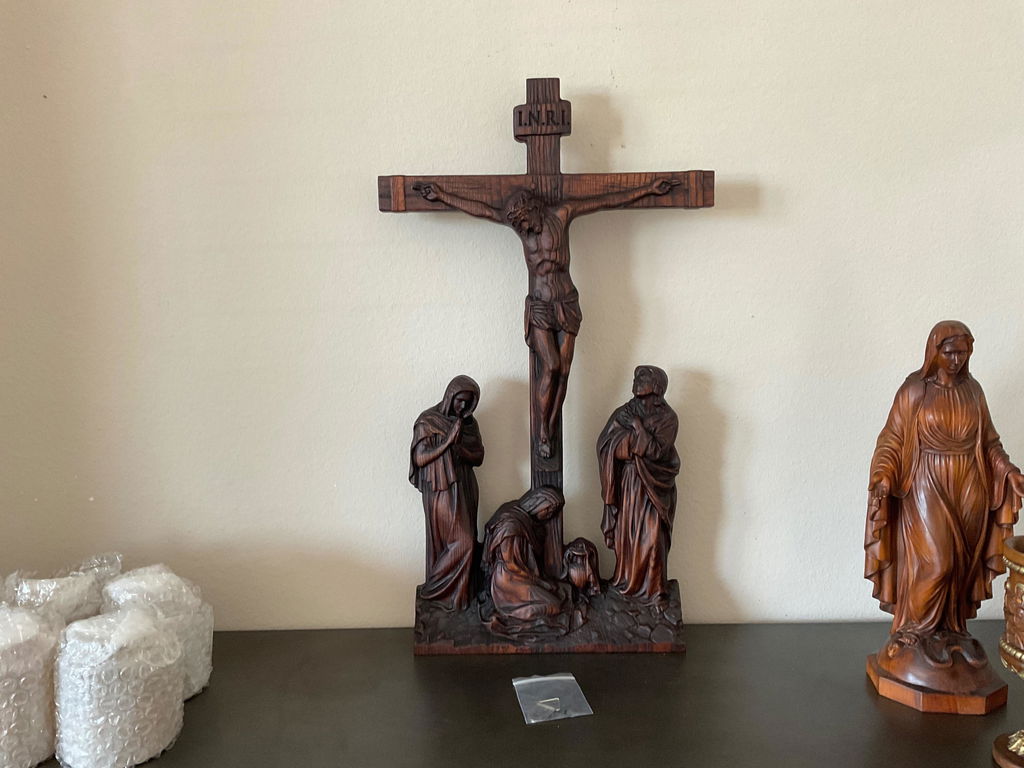
Wood has an immediate visual warmth. Its grain, tone, and tactile character soften a room in a way that complements linen, pottery, books, candlelight, and other natural textures. Carving adds another dimension: shadows settle within the recessed details, while raised forms respond to changing daylight. This movement between light and shadow can make a familiar scene feel newly noticed at different hours.
The product information describes the piece as hand-carved solid wood with manual polishing and a water-based finish. Those details connect the subject to patient craft. A carved scene is read not only through color but through depth, contour, and the marks of shaping. For Christian wood carving, that physical sense of care can suit an image centered on remembrance. The material does not need to be flawless or visually loud; much of its appeal comes from the natural warmth that allows it to live comfortably beside everyday furnishings.
A place near the family table
The dining room is perhaps the most intuitive setting for Last Supper wall art. Placed where it can be seen without dominating the room, the carving can support a calm, reflective atmosphere. It may sit above a sideboard, on a wall near the dining table, or within a grouping that includes understated candles or family keepsakes. Leaving some open wall space around a detailed carving helps the scene remain legible and gives the eye room to rest.
Its placement can also follow the rhythm of the household rather than formal decorating rules. In a kitchen breakfast area, it may accompany quick weekday meals as well as Sunday gatherings. In a living room, it can quietly connect a shared social space with the household’s faith. Warm, indirect lighting usually complements carved wood because it reveals relief and texture without creating harsh glare.

Including the carving in a prayer corner
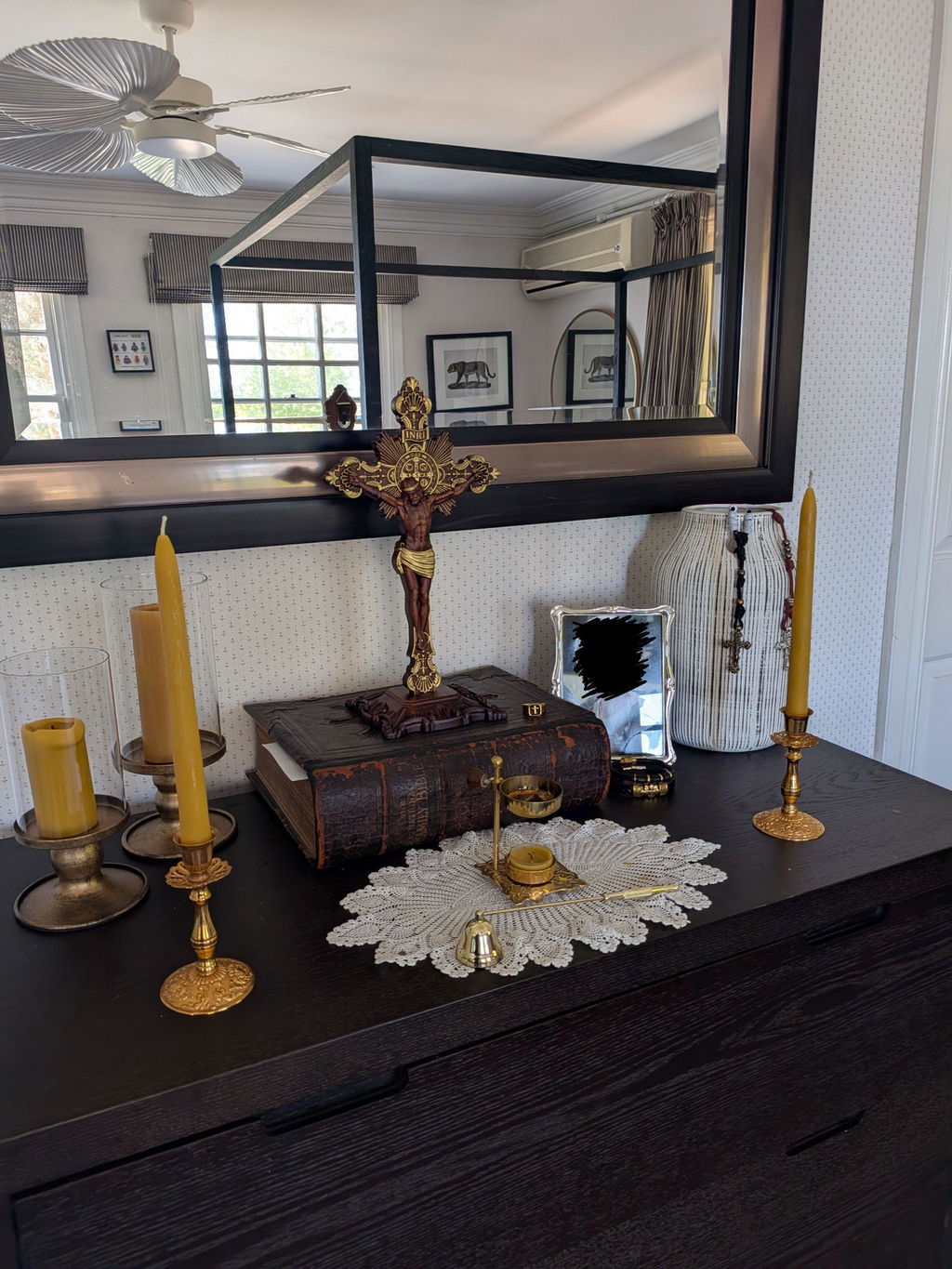
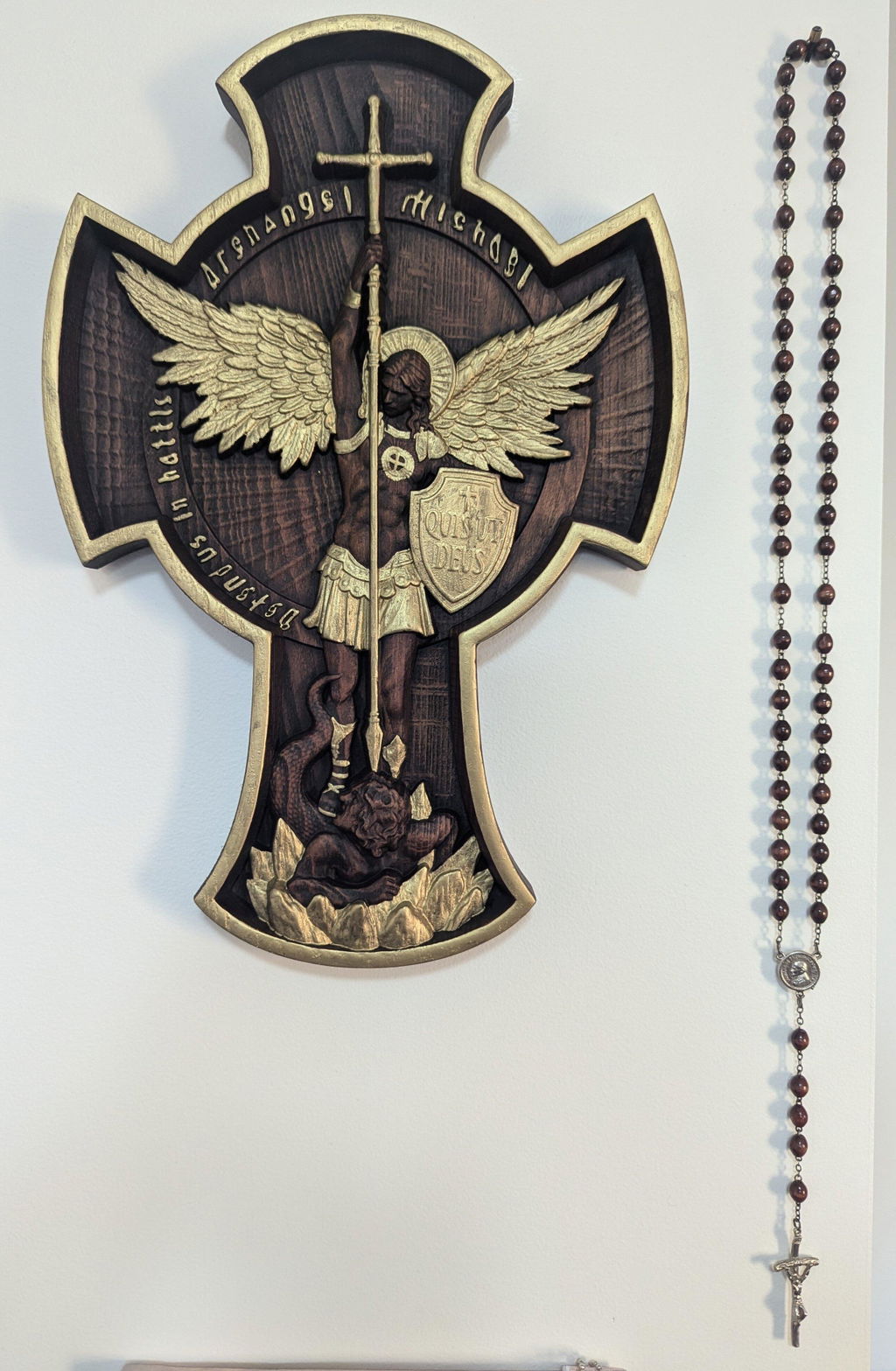
A prayer corner does not have to be large or elaborate. A small table, shelf, or quiet section of wall can hold a Bible, prayer book, rosary, candle, or seasonal devotional object. A Last Supper carving can act as the visual center, especially for reflection on Holy Thursday, the Eucharist, Christian fellowship, or gratitude before meals.
For a balanced arrangement, begin with the sacred image and add only what supports prayer. Too many objects may make the space feel busy. A simple cloth, a modest candle used safely, or a small vase of greenery can echo the warmth of the wood. During Lent and Holy Week, the area might remain especially restrained. At Easter, gentle light or fresh flowers can change the atmosphere without changing the central image.
The most meaningful prayer spaces are usually those that are actually used. The carving might become a cue for a short morning intention, an evening examination of conscience, or a moment of thanksgiving. It is not the object itself that creates devotion; rather, the visible scene helps direct attention toward the people, promises, and events it represents.
A thoughtful gift rooted in shared faith
Religious home decor can be a meaningful gift when it respects the recipient’s tradition and personal taste. A Last Supper carving may be considered for a Christian wedding, a housewarming, an anniversary, a family milestone, or the creation of a new prayer space. It can also be appropriate for parents or grandparents whose dining table has long been a gathering place for the family.
The gentlest way to give sacred art is with context rather than expectation. A handwritten note might recall a meal shared with the recipient, offer a simple blessing for the home, or explain why the Last Supper scene brought them to mind. This makes the gesture personal while allowing the recipient to decide where and how the piece belongs in their home. Anyone wishing to consider the imagery and carving details more closely can view the Last Supper wood wall art here.
Living with an image of communion and welcome
The Last Supper is both solemn and communal. It turns attention toward Christ, but it also places people around a table—close enough to listen, question, misunderstand, receive, and remember. That human setting may be one reason the subject continues to resonate in Christian and Catholic home decor. It connects worship with the daily work of making room for others.
In carved wood, the scene carries an earthy, enduring character suited to a prayer corner or family gathering place. Its value is not in making a room appear more religious, but in offering a steady reminder of gratitude, service, and faithful presence. Chosen thoughtfully and placed with simplicity, a Last Supper carving can become part of the home’s quiet spiritual rhythm: a sacred story held near the table where ordinary life continues to unfold.