The St. Benedict Medal in Christian Home Decor: A Quiet Sign of Faith
A home often tells its story quietly. A Bible on a side table, a rosary beside a favorite chair, or a cross near the doorway can reveal the values that shape everyday life. In a Christian home, sacred art does not need to dominate a room to matter. Its purpose can be as simple as turning attention toward prayer, gratitude, and the presence of God in ordinary moments.
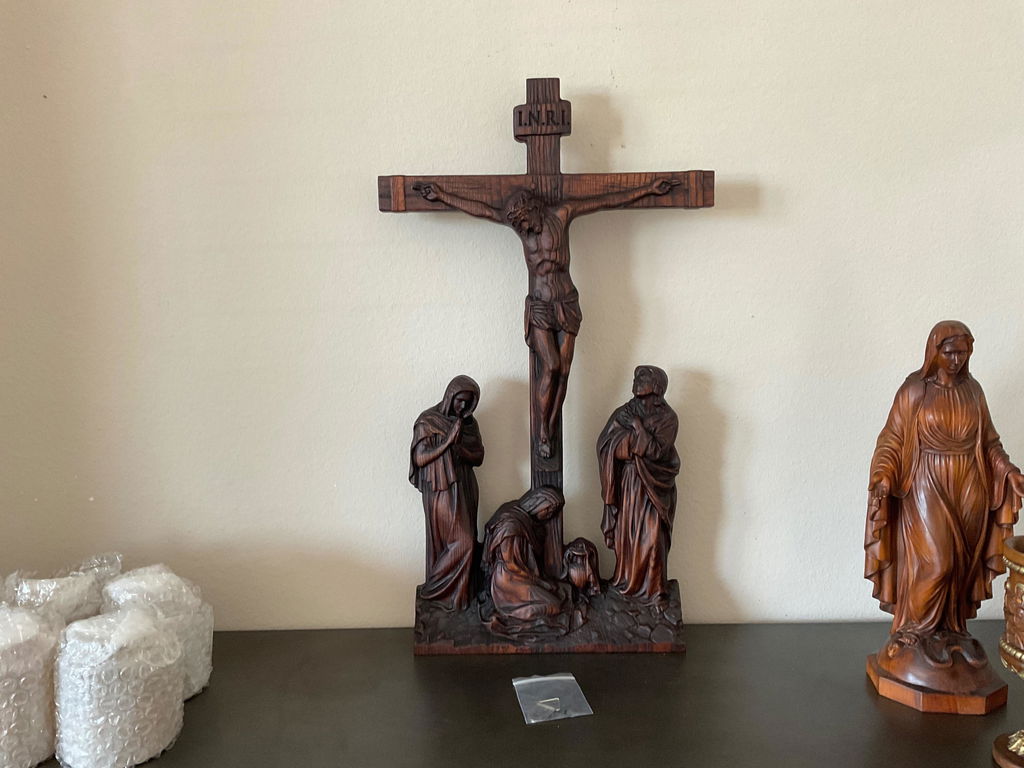
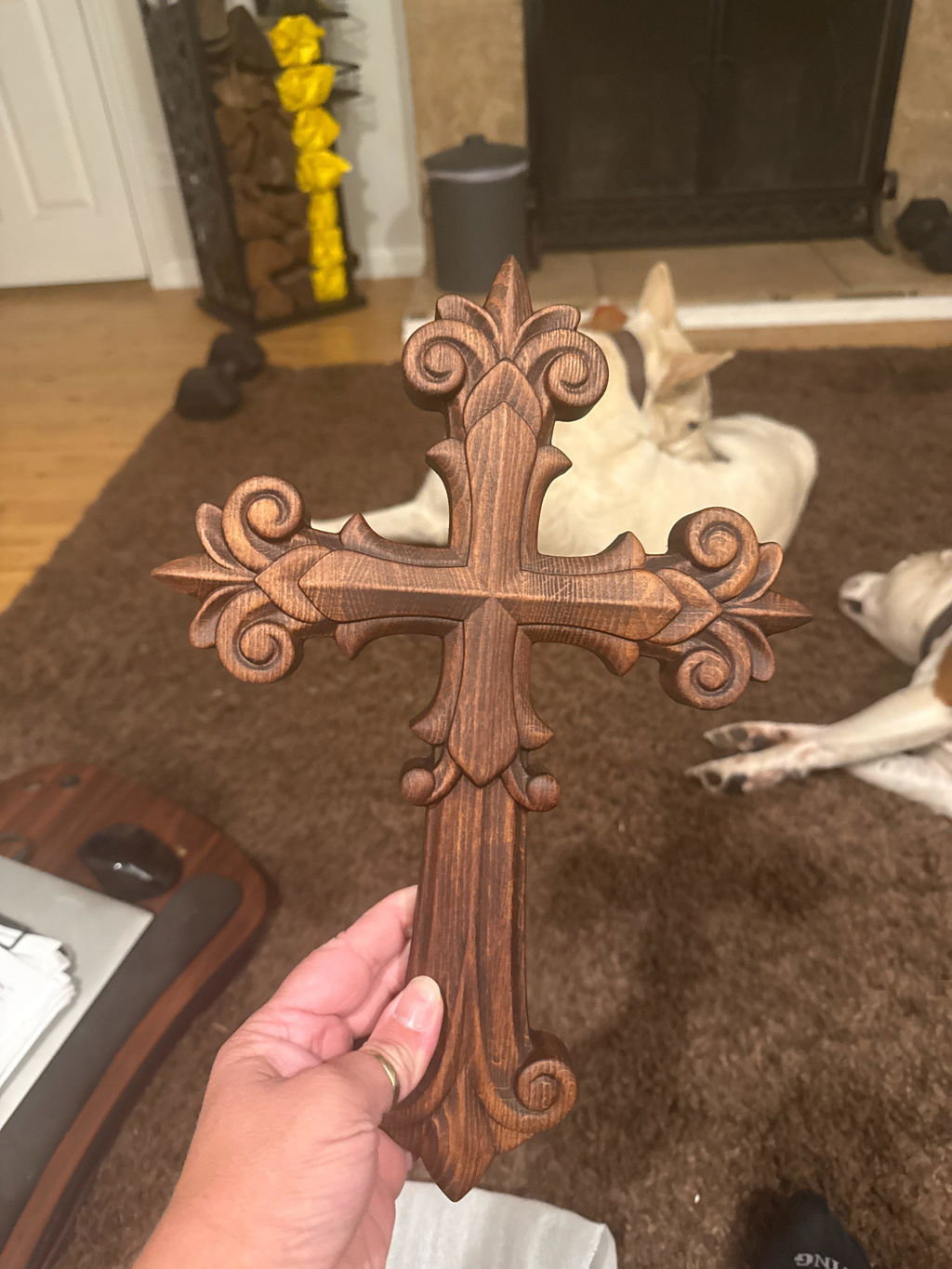
The St. Benedict Medal has long held a special place in Catholic devotional life. When its familiar symbols are translated into carved wood, the result brings together spiritual meaning and the natural warmth of a traditional material. The BGCOPPER St. Benedict carved wooden wall plaque offers one example: a relief-style design intended for display in a prayer corner, entryway, family room, or other reflective space.
What the St. Benedict Medal represents
St. Benedict of Nursia is remembered as a foundational figure in Western monasticism and as the author of the Rule of St. Benedict. That rule is known for a balanced rhythm of prayer, work, hospitality, and community life. The medal associated with him gathers several elements of Christian devotion into a compact visual form, especially the Cross and words or initials connected with traditional prayers.
Among its most recognizable details is the word PAX, Latin for “peace,” a word strongly associated with Benedictine spirituality. The Cross at the center points beyond St. Benedict to Christ. Other initials on the traditional medal refer to Latin petitions that ask the Holy Cross to be a guiding light and reject the path of evil. These details make the design more than a decorative pattern; they invite reflection on where a Christian seeks guidance, peace, and strength.
Catholic teaching treats medals and other blessed devotional objects as sacramentals, not magical charms. Their role is to encourage faith and prayer and to direct the heart toward God. A wall plaque depicting the medal can be understood in the same grounded spirit: it is a visible reminder of Christian commitment, rather than a substitute for prayer, the sacraments, or a life of charity.

Why carved wood feels at home with sacred art
Wood has a distinctive visual language. Grain, color variation, and a softly finished surface create warmth without requiring elaborate ornament. Carving adds another dimension: light moves across raised and recessed areas throughout the day, allowing symbols to become clearer from one angle and more subdued from another. That changing interplay of light and shadow is especially suited to a design meant for contemplation.
The product information for this plaque identifies solid beechwood and hand-finished relief work. Those details matter aesthetically because the material and the image are not separate layers; the sacred design is given depth through the wood itself. Small natural variations are part of the character of wooden decor, helping it feel less like a flat reproduction and more like an object made to share space with books, textiles, candles, and other familiar elements of a home.

Creating a thoughtful Catholic prayer corner
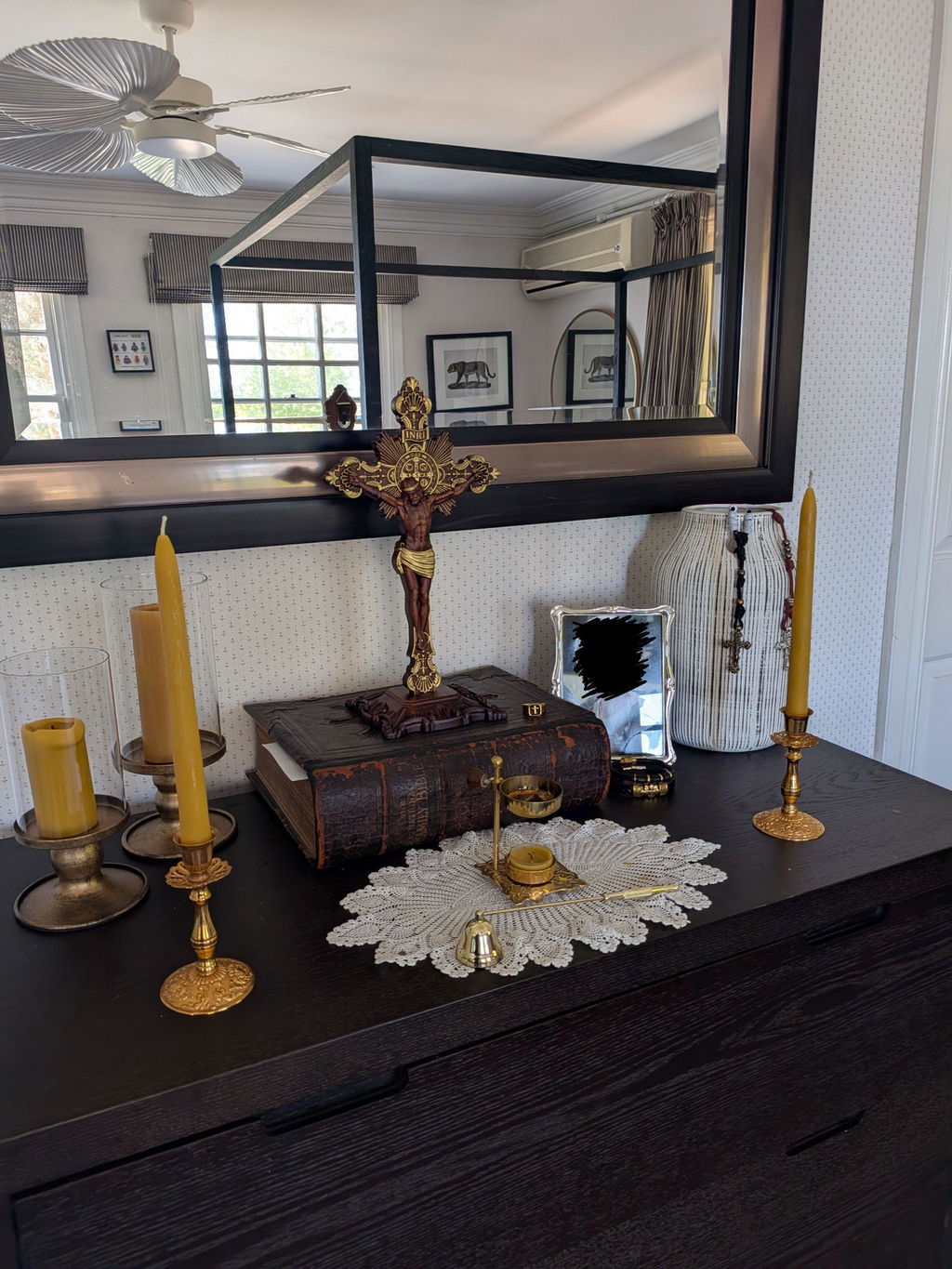
A prayer corner does not have to be a separate room. A small shelf, a quiet section of a bedroom, or a console in a family area can become a place to pause. The most helpful setting is usually one that is accessible, uncluttered, and connected to an existing habit of prayer.
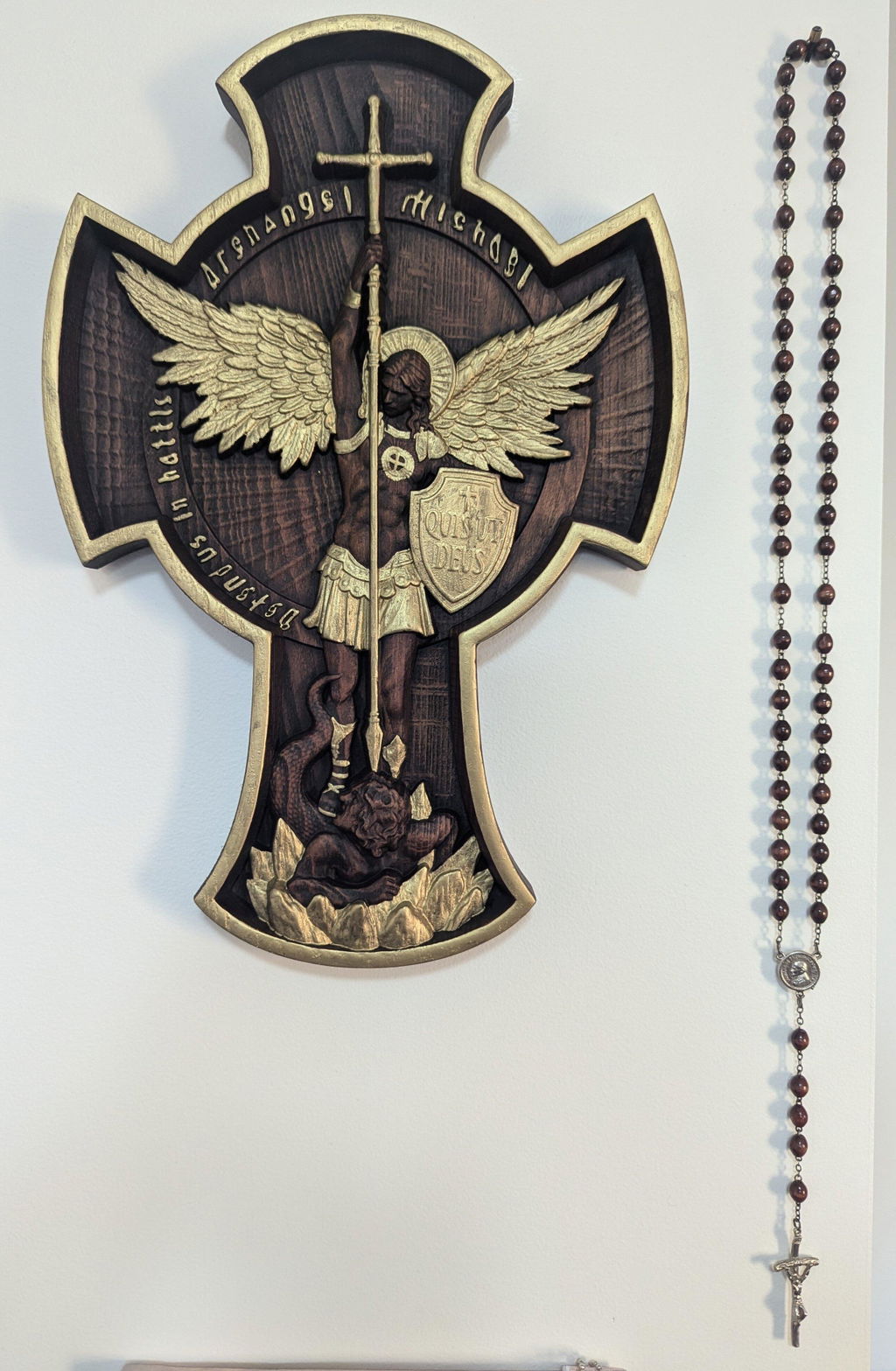
A St. Benedict plaque can serve as the visual anchor. Nearby, a person might place a Bible, prayer book, rosary, or candle used safely and attentively. Rather than filling every surface, leave enough open space for the eye to rest. Natural materials and restrained colors can support a calm atmosphere, while a chair or cushion makes the corner practical for daily use.
The plaque may also fit near the entrance of a home. In that setting, the word PAX can become a quiet reminder to carry peace into conversations and to extend hospitality to those who cross the threshold. In a study or workspace, the medal’s Benedictine associations with ordered prayer and work can encourage a more intentional rhythm. The meaning comes not from a perfect decorating arrangement, but from the practices that grow around it.
Styling faith-inspired wooden decor with restraint
Christian wood carving pairs naturally with warm neutrals, linen, stoneware, and simple metal accents. Against a light wall, the darker contours of a carved plaque can stand out clearly. Against deeper colors, the wood may feel more intimate and integrated. Either approach can work when the surrounding objects are chosen thoughtfully.
Consider scale and viewing distance before selecting a position. A devotional piece in a personal prayer corner can feel close and contemplative, while one in an entryway or family room may need enough surrounding space to be read as a focal point. Keep nearby frames or wall hangings from crowding the circular form. If the room already contains several religious images, repeating one or two materials—such as wood tones or muted finishes—can make the collection feel cohesive.

A meaningful gift for seasons of transition
Faith-inspired home decor can be a considerate gift when it reflects the recipient’s beliefs rather than simply filling a space. A St. Benedict Medal plaque may be appropriate for a Catholic housewarming, a wedding, the creation of a new prayer area, or a move into a first home. It can also mark a return to regular prayer or offer encouragement during a demanding season.
The accompanying message can remain simple and personal. A note wishing peace for the household, recalling the Benedictine welcome of guests, or sharing why the Cross is meaningful will often say more than a lengthy explanation. If the recipient is unfamiliar with the medal, including a short account of its symbols can help the gift become an invitation to learn rather than an unexplained object.
For someone considering such a gift, the product page for the St. Benedict wall plaque provides photographs and available options that can help with choosing a suitable presentation. It is worth thinking first about the person and the place where the piece may live: a private prayer corner calls for a different presence than a large shared room.
Letting sacred decor support everyday faith
The most enduring religious objects in a home are often those woven into daily life. They are noticed while leaving for work, gathering with family, or sitting down for a few minutes of silence. Over time, familiarity does not have to make them invisible. Instead, a symbol such as the St. Benedict Medal can gently renew a question: What would it mean to choose the light of the Cross and the way of peace today?
A carved wooden plaque cannot answer that question for us. It can, however, give the question a place in the home. Through its Christian symbolism, natural texture, and quiet presence, it joins beauty with remembrance—a modest role, but a meaningful one for a room shaped by faith.